Read next
The latest news, updates and expert views for ambitious, high-achieving and purpose-driven homeowners and property entrepreneurs.



Ask how long planning permission takes and the standard answer is eight weeks. But across London, the reality is often quite different.
Using AI-assisted analysis, reviewed and interpreted through the senior professional judgement of our team, we examined 21,331 householder planning decisions made during 2025. The results show an average elapsed period of around 9.1 weeks from the council-recorded receipt date to decision, with almost three in ten applications taking more than 56 days.
More importantly, where you apply can make a considerable difference. Borough averages ranged from around seven weeks at the faster end to roughly 13 to 15 weeks at the slower end.
And completed applications only tell part of the story. As of 8 August 2026, we also identified 815 London borough householder applications still recorded as undecided more than 12 weeks after receipt.
So, how long does planning permission really take in your London borough?
Let’s look at the numbers.
In London, a standard householder planning application, such as a home extension or loft conversion, officially takes 8 weeks to decide, while major or complex developments take 13 weeks.
In practice, busy borough planning departments often take longer, and the official clock only starts once your application has been validated.
Across 21,331 householder decisions in 2025, our analysis found the real London average was 9.1 weeks from the council-recorded receipt date to the decision, with borough averages ranging from 6.9 weeks in Redbridge to roughly 13 to 15 weeks in Hammersmith and Fulham.
No two planning departments work under the same conditions.
Staffing is the starting point. London planning teams carry an average of 8.4 vacancies each, against 5.7 nationally, so the caseload sitting on each officer's desk varies sharply from one borough to the next.
The work itself differs just as much. A borough dominated by conservation areas, listed buildings and tight urban plots generates far more objections, amendments and committee referrals than one handling straightforward suburban extensions.
Layer on each council's own validation standards, committee cycles and appetite for Extensions of Time, and the differences compound.
The result is that two identical extensions, submitted on the same day, can be decided months apart simply because of the borough boundary between them.
So, if you want to know how long planning permission actually takes where you are, rather than relying on the statutory eight-week target, the ranking below gives you the real picture, borough by borough.
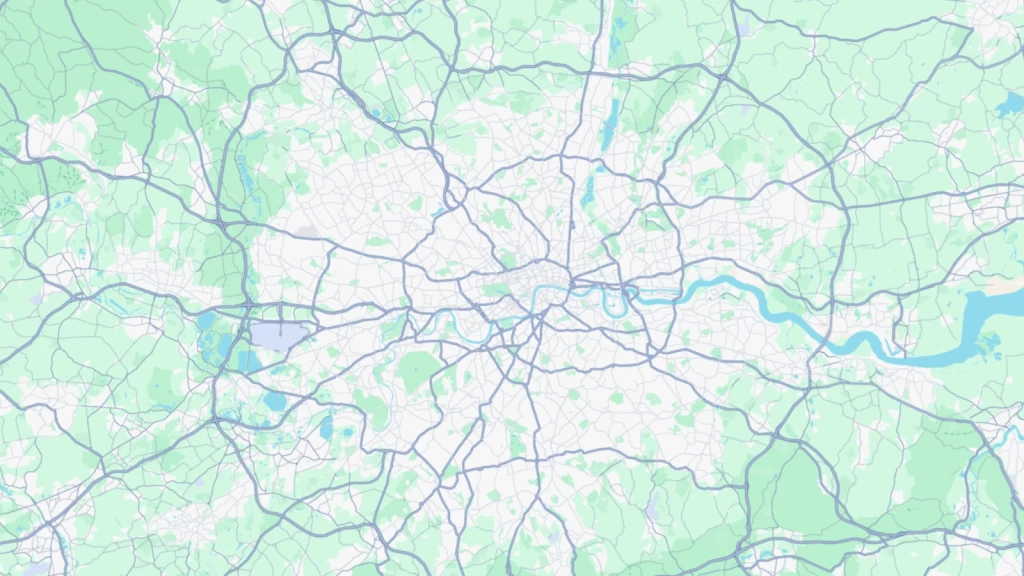
Below is our practical ranking of all London planning authorities, based on our analysis of 2025 householder and comparable residential extension applications.
For most boroughs, the figure measures the elapsed time between the council-recorded receipt date and the decision.
Where councils do not consistently label householder applications, which applies to Hammersmith and Fulham, Tower Hamlets, Lambeth, Merton and Bexley, we analysed comparable domestic extension proposals instead.
This measure tends to read slightly higher than a pure householder figure, so those five boroughs may sit modestly lower in a strict like-for-like comparison.
With those methodological qualifications in mind, the full borough-by-borough ranking is set out below.
Our research combines a borough-by-borough analysis of 21,331 completed decisions with a live review of applications pending beyond 12 weeks. Together, these datasets provide a fuller picture of real elapsed timelines and where unresolved cases may be accumulating.
Read on to see what the still-undecided applications reveal about potential backlog pressures that completed-case averages alone may conceal.

Completed applications only tell us what happened to cases that have already reached a decision. To see the other side of the picture, we also analysed householder applications received between 1 January 2024 and 15 May 2026 that were still recorded as undecided on 8 August 2026.
Across the 32 London boroughs, we captured 815 applications that had been in the system for more than 12 weeks after receipt. The largest totals were Richmond upon Thames with 60, Wandsworth with 57, Camden and Islington with 54 each, Hounslow with 49 and Ealing with 44.
Richmond shows why this matters. Its completed applications averaged a relatively quick 8.3 weeks, yet it had the highest captured number of applications still pending beyond 12 weeks. An average based only on decided cases can therefore look healthy even while a smaller group of difficult or stalled applications remains unresolved.
The pending figures are a snapshot, not an audited backlog. Council portals update at different speeds, and several authorities have application-labelling gaps, particularly Hammersmith and Fulham, Tower Hamlets, Lambeth, Bexley and the City of London, so their pending counts will understate the true position.
The live count is therefore best used as an additional pressure indicator alongside the completed-case averages, rather than as a standalone performance measure.
Three boroughs show why the numbers need careful reading.
Hammersmith and Fulham is the clearest case. Its published records do not carry a clean householder label, so a strict like-for-like calculation is not possible, and our figure is instead built from comparable domestic extension proposals. On that measure, the raw average came out above 14 weeks. Because this method tends to overstate the pure householder position, we present the borough as roughly 13 to 15 weeks rather than claiming false precision.
Even so, the contrast with the council's own guidance is striking: it tells applicants that uncomplicated householder applications usually take six to eight weeks once validated. That is the gap between a stated target and the calendar record of what actually happened.
Enfield, at the fastest end of the table, calls for a different kind of caution. Its recorded decisions cluster unusually tightly on the eight-week deadline itself. That can reflect a genuinely deadline-driven decision culture, but it can also reflect how dates are entered on the council's portal. We therefore describe Enfield as around 6.9 weeks rather than as a precise figure.
Ealing, finally, is a borough we know well from working with the council on several projects. Our 2025 analysis found an 11.0-week average and a median of 60 days, which means the typical Ealing householder decision, not just an unlucky few, ran past the statutory eight weeks. A further 44 applications were still recorded as pending beyond 12 weeks in our live snapshot. Those figures match our first-hand experience of how long Ealing applications can take to reach a decision.
Because official planning performance statistics answer a different question. They generally count a decision as being made in time if it is issued within the original statutory period or within a longer period agreed with the applicant.
Government planning guidance confirms that the usual statutory determination period is eight weeks for most applications and 13 weeks for major development, with longer periods for certain categories.
MHCLG's January to March 2026 Accredited Official Statistics show how large the difference can be:
91% of major applications were recorded as determined within 13 weeks or an agreed time, but only 19% were determined within the original 13-week period.
87% of minor applications were recorded as in time, but only 38% were determined within the original eight-week period.
90% of other applications, a category that includes householder development, were recorded as in time, but only 56% were determined within the original eight-week period.
For householder applications specifically, 93% were reported as decided within eight weeks or the agreed time in the year ending March 2026.
The words “or the agreed time” are crucial. A householder application can take 10, 12 or 14 weeks and still appear in the official statistics as an on-time decision if a later deadline has been agreed. Our ranking instead focuses on elapsed calendar time from the council-recorded receipt date to decision.
We deliberately focused on householder applications, and comparable domestic extension proposals where councils do not label them consistently, because they provide the cleanest basis for comparing planning times between boroughs.
Larger applications are much harder to compare on elapsed time alone. Schemes creating new homes or substantial new floorspace are more likely to involve developer contributions, including the Community Infrastructure Levy and, where necessary, Section 106 planning obligations. CIL may apply to development creating 100 square metres or more of new floorspace or a new dwelling, although the precise liability depends on the development and the relevant charging schedule.
More importantly for our timing analysis, an application requiring a Section 106 agreement may be resolved for approval before planning permission is formally issued. The legal agreement can then take additional weeks or months to negotiate and complete.
Published records may therefore show an officer or committee resolution and even a draft decision notice before the final decision notice is issued. London examples expressly show applications resolved to grant subject to completing a Section 106 agreement, with the final decision notice following later.
Government guidance confirms that the recorded decision date is the date on which the decision notice is actually issued. Including these applications in a simple receipt-to-decision comparison could therefore make a council appear slower because of time spent completing legal obligations after the planning merits have largely been resolved.
Householder applications are generally much less affected by this additional legal stage, making them a more consistent benchmark for comparing how quickly London boroughs process broadly similar applications.
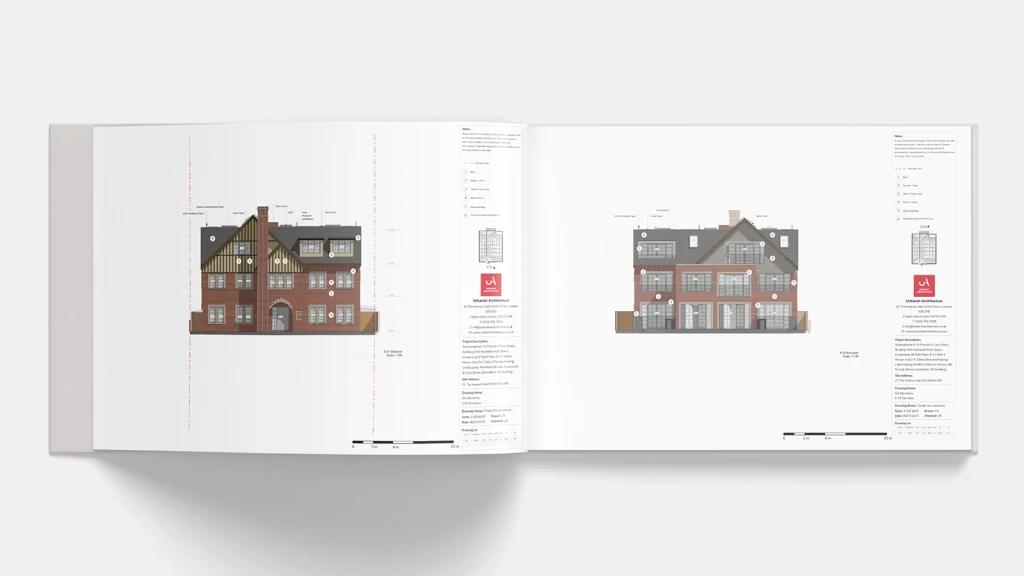
Homeowners and developers often ask us to explain the planning process and what they can expect as their application progresses. The basic sequence is straightforward, even though the stages often overlap:
Submission: the application is sent to the council.
Validation: the council checks the forms, fee, drawings and supporting information.
Consultation: neighbours and relevant consultees are given an opportunity to comment.
Planning assessment: the case officer considers policy, design, planning history, neighbouring amenity and technical evidence.
Amendments or further information: these may be requested if issues can be resolved during the application.
Decision: the application is determined under delegated powers or, where required, by planning committee.
Applications are assessed in two broad parts, externally and internally.
The external side covers consultation with neighbours and relevant technical or statutory consultees. The internal side is the planning judgement itself. In practice the two overlap, so a late consultee response, an amendment or an outstanding technical point can extend the overall process.
A validation delay occurs before the formal statutory determination period begins. If the council considers that a required drawing, certificate, fee or supporting document is missing, it will usually request further information before validating the application and starting the statutory clock.
An applicant may therefore spend days or weeks resolving validation queries before reaching week one of the determination period. This is one reason our receipt-to-decision figures are useful: they reflect more of the time applicants actually spend waiting.
When managing an application for a client, we check and coordinate the submission against the council’s validation requirements and monitor it closely through this initial stage. If a query is raised, we assess whether the request is supported by the national and local validation requirements rather than simply accepting that further information must be provided.
Not every validation request is correct or proportionate. Where we consider that an unnecessary document has been requested, or that validation is being delayed without proper justification, we raise the matter directly with the council and set out why the application should be validated. In our experience, councils have on numerous occasions acknowledged an error, withdrawn an unnecessary request or corrected their handling of the application.
Although no approach can prevent every validation issue, careful preparation, close monitoring and a willingness to challenge unjustified requirements can protect clients from avoidable delay before the application formally begins.
Extensions of Time are now a significant part of the planning system.
MHCLG reported that 43% of all planning decisions in England during January to March 2026 involved a performance agreement, the statistical category that includes Extensions of Time and Planning Performance Agreements. The proportion was 77% for major applications, 54% for minor applications and 37% for other applications.
An Extension of Time is a written agreement between the applicant and council to move the determination deadline. It is not necessarily a bad outcome. If an officer needs a few more weeks to agree an amendment that allows the application to be approved, waiting can be more sensible than forcing a refusal at the statutory deadline.
The concern is repeated extensions without a clear route to a decision. Before agreeing one, we would usually want to know why more time is needed, what issue remains outstanding, whether the officer is broadly supportive and what the new decision date will be.
The data shows how long applications take, but it does not by itself prove why a particular borough or application is slow. In practice, delays can arise from a combination of council workload and project-specific issues, including:
validation problems before the statutory clock starts
high case-officer workloads or a change of case officer
design amendments and re-consultation
neighbour representations requiring further assessment
highways, heritage, ecology, tree, flood-risk or drainage responses
missing or late technical information
planning committee timetables
Greater London Authority or Transport for London involvement where relevant
viability, affordable housing or section 106 negotiations on larger schemes
Extensions of Time
This is also why householder figures should not be used as a forecast for new-build housing, flat conversions or major development. Those applications can involve materially more policy, technical and legal work.
Planning delays are not only caused by difficult sites, objections or missing information. Across England, many councils are being asked to operate an increasingly complex planning system with fewer experienced officers and less resource than they had a decade ago.
The RTPI’s State of the Profession 2025 found that total expenditure on planning in England had fallen by 16.6% in real terms since 2010. Spending on development management was 9.6% lower, while planning policy expenditure had fallen by 28.8%.
The government’s own 2025 survey of local planning authorities confirms the operational consequences. Among responding authorities, 79% reported recruitment difficulties and 93% identified skills gaps, with 59% saying those gaps affected the speed at which planning applications were determined. Among departments with hard-to-fill vacancies, 89% reported increased workloads for other staff and 80% reported difficulties meeting workload demands. Although retention pressures had improved nationally, 44% still reported difficulties.
The position was more acute in London. Some 93% of responding London borough planning departments reported recruitment difficulties, compared with 79% nationally, while 60% experienced retention difficulties. London boroughs reported an average of 8.4 vacancies per department, against 5.7 across England.
When an experienced case officer leaves, their applications must be redistributed, often to colleagues already managing substantial caseloads. Amendments, technical consultations and officer reports can then take longer even where the planning issues are relatively straightforward.
The effects are visible beyond council performance tables. In its August 2024 Future Trends survey, RIBA found that 57% of responding architectural practices had experienced projects delayed by between one and six months because of local authority planning delays, while 42% reported delays of six months or more.
The issue has also received sustained national coverage. The Financial Times reported that one in five planners expected to retire or leave the profession within three years and that nearly two-thirds of public-sector planners believed their teams lacked the capacity to meet demand.
The Labour Government has begun responding. A £46 million package supported planning capacity during the 2025/26 financial year, including recruitment and training for 300 graduate and apprentice planners, followed by a further £48 million announced at the Autumn Budget 2025 to recruit an additional 350 planners.
The programme now aims to support approximately 1,400 planning recruits during this Parliament, but this remains a recruitment objective rather than 1,400 officers already in post. In July 2026, ministers also confirmed a new national default fee schedule set at around 90% of the estimated cost of processing each application type, due to come into force on 8 December 2026, subject to Parliamentary approval. For householder applications, the fee is expected to rise by around 8%. The separate rules allowing councils to set their own local fees remain to be introduced.

First establish whether the application is genuinely progressing. Ask your case officer:
An application at week ten, with an officer actively working towards approval, is very different from one that has reached month six without substantive progress. Once the statutory period, or any agreed extended period, has expired, the applicant may be able to appeal against non-determination. As with other planning appeals, responsibility for considering the planning merits then passes from the council to the Planning Inspectorate.
The timing of that decision matters. Before recommending an appeal, we consider the officer’s position, the unresolved planning issues and the likely timescale and prospects of each route. As residential architects and planning consultants, we treat a non-determination appeal as a strategic remedy rather than an automatic response to a missed deadline, because appealing too early may close off the prospect of obtaining a quicker, favourable decision from the council.
An appeal is generally most appropriate where the application has genuinely stalled. If the officer remains supportive and a decision is credibly imminent, continuing with the council may still be the quicker and more proportionate course.
For project programming, rather than statutory compliance, we would generally allow:
Householder applications: around nine to twelve weeks from validation as a sensible London starting allowance, with clear borough variation.
Minor applications: around three to four months for many projects, with additional contingency where heritage, highways, ecology or committee involvement is expected.
Major applications: often six to twelve months in London, and sometimes longer, particularly where a Planning Performance Agreement, GLA referral, viability work or a section 106 agreement is involved.
These are professional programming allowances, not statutory deadlines. The statutory periods remain eight weeks for most applications and 13 weeks for major development, but the MHCLG figures above show that a large proportion of minor and major applications are not actually decided within those original periods.
You cannot control a council's staffing levels or workload, but you can reduce the reasons your own application may legitimately be delayed. Before submission:
identify the site's planning constraints
check the council's local validation requirements
avoid preventable validation problems
make sure all drawings are internally consistent
provide technical reports that are clearly required
assess overlooking, daylight and neighbour impacts before applying
anticipate the likely consultees
understand whether committee consideration is likely
respond quickly to reasonable officer requests
A well-prepared application that addresses all relevant planning considerations cannot guarantee approval or a fast decision. It can, however, make it easier for the council to assess the proposal, reduce the risk of avoidable delays and improve the prospects of a favourable outcome.

Some homeowners and developers prepare and submit planning applications themselves. That may be realistic for a straightforward proposal where the relevant planning policies, drawings and validation requirements are clearly understood.
For more complicated or sensitive projects, appointing a senior architect, experienced planning consultant or appropriate technical specialist can reduce the risk of avoidable problems. Their value is not that they can control the council’s timetable, but that they can identify likely issues before submission and provide the information needed for the authority to assess the proposal efficiently.
An architect can develop a design that responds to local planning policy, the character of the site and neighbouring properties while still working towards the applicant’s objectives. They can also coordinate the drawings and supporting information so that the submission is clear, consistent and less likely to encounter preventable validation problems.
A planning consultant can advise on the appropriate application route, assess the relevant policies and planning history, prepare the planning case and communicate with the council during the application. Where an officer raises concerns, experienced professional input can also help determine whether an amendment is necessary and how it should be presented.
For more complicated or strategically sensitive projects, we may recommend seeking formal pre-application advice before submitting the planning application. This allows the council to comment on the principle of development, emerging design and likely technical requirements while changes can still be made relatively efficiently.
Pre-application advice is not binding and can add time and cost at the beginning of the process. However, where the council’s likely position is uncertain, it may help identify potential objections, necessary reports and design changes before the statutory determination period begins.
Some proposals additionally require specialist evidence relating to matters such as heritage, transport, trees, ecology, flood risk, drainage, daylight or viability. Identifying these requirements early is usually more effective than commissioning reports only after an application has stalled.
Ecology is particularly time-sensitive because certain surveys can only be undertaken during specific seasonal windows. Missing the appropriate survey period can postpone submission by several months. If the requirement is identified only after submission, it may prevent the council from determining the application until adequate evidence is available and, in some cases, make withdrawal and resubmission necessary.
At Urbanist Architecture, we coordinate specialist input as part of the wider planning strategy. We identify the surveys and assessments likely to be required, prepare clear project-specific briefs, coordinate the appropriate consultants and review their reports from a design and planning perspective. We also ensure that their findings and recommendations are properly reflected in the design, supporting documents and overall planning case.
That coordinated involvement continues after the application has been submitted. Throughout this stage, our objective remains clear: to pursue planning permission while protecting the integrity of the proposal, avoiding unnecessary compromise and making the most of the site’s potential.
We monitor the application’s progress, review consultation responses and maintain communication with the case officer. Where concerns arise, we seek to understand the officer’s position, negotiate where appropriate and coordinate proportionate amendments or additional information that may help move the application towards a decision.
This cannot compel the council to act more quickly or guarantee a particular outcome, but active management can reduce the risk of questions remaining unanswered or potentially resolvable matters being allowed to stall the application.
The statutory answer remains simple: around eight weeks for most planning applications and around 13 weeks for major development.
The practical answer is more varied, and the position differs substantially between boroughs. Our analysis of 21,331 London householder decisions produced a 2025 average of 9.1 weeks from the council-recorded receipt date to decision. Individual borough averages ranged from around seven weeks to approximately 13 to 15 weeks on the available evidence.
The longer-term trend provides some encouragement. Average elapsed times for London householder decisions were:
The London-wide average therefore returned close to its 2019 level by 2025, after reaching 10.6 weeks in 2022. That is a genuine improvement, but it does not mean that delays have disappeared or that every borough has recovered at the same rate.
The 2025 median was 56 days, while the 90th percentile was approximately 91.5 days, or 13.1 weeks. In practical terms, this means that one in ten decided applications took around 13 weeks or longer.
Completed applications are also only part of the story. Our live snapshot identified 815 London borough householder applications still recorded as undecided more than 12 weeks after receipt. Richmond alone had 60, despite having one of the faster completed-case averages.
The typical application may therefore be moving more quickly than it did at the post-pandemic peak, while a significant minority continues to experience substantially longer delays. That is why asking whether a council is simply “fast” or “slow” only gets you so far. What matters is the type of application, how the council records and validates it, whether the case is actively progressing and whether it is becoming part of the long tail.
This article is based primarily on AI-assisted research undertaken by Urbanist Architecture using London planning application records accessed through Searchland, a professional property-data and mapping platform used by our team. The data extraction, comparison and initial analysis were supported by AI, while the methodology, interpretation, planning context and conclusions were reviewed and determined using the senior professional judgement of our team.
The decided-application analysis covers 2025 decisions and was run on 8 August 2026; the pending analysis is a live snapshot from the same date. Where practicable, we checked material public information against authoritative sources, including GOV.UK guidance, MHCLG planning statistics, local authority planning information and published decision records. Because council portal data can be updated, reclassified or corrected after publication, the live pending figures should be read as a dated snapshot rather than a permanent count.
We look forward to learning how we can help you. Simply fill in the form below and someone on our team will respond to you at the earliest opportunity.
The latest news, updates and expert views for ambitious, high-achieving and purpose-driven homeowners and property entrepreneurs.

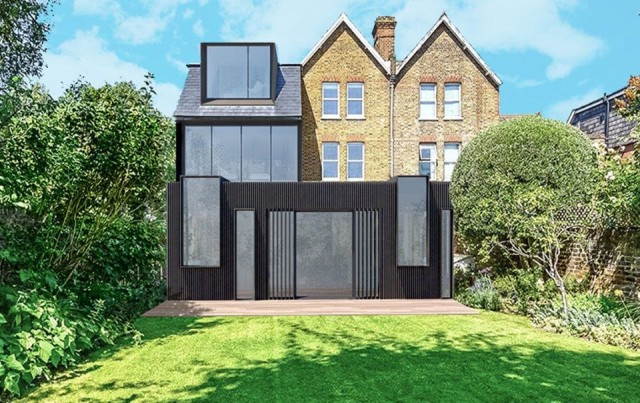


We specialise in crafting creative design and planning strategies to unlock the hidden potential of developments, secure planning permission and deliver imaginative projects on tricky sites
Write us a message