Read next
The latest news, updates and expert views for ambitious, high-achieving and purpose-driven homeowners and property entrepreneurs.


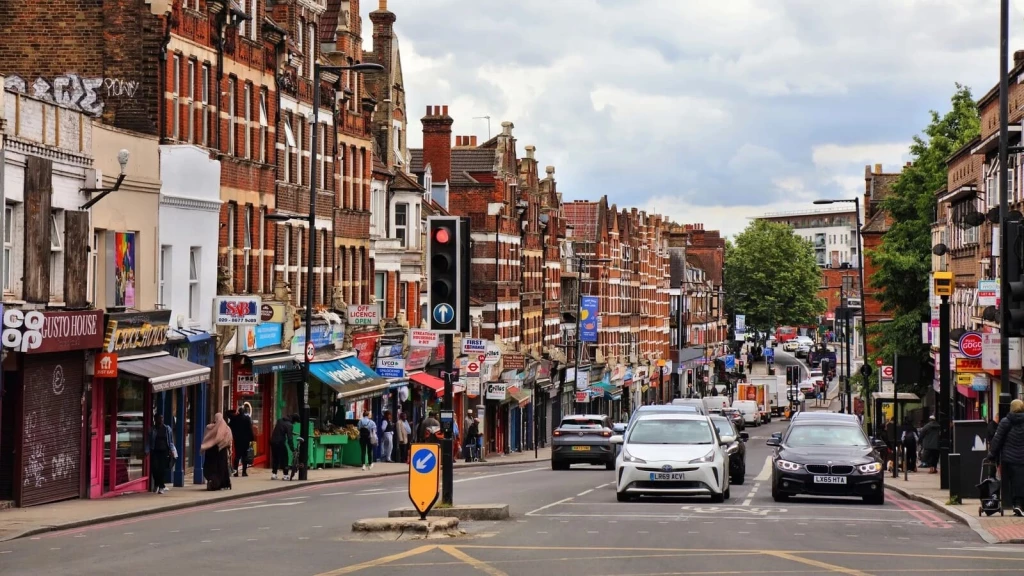
There is a particular kind of high street that appears healthy until you ask the people who use it.
Its shutters go up each morning. There are customers, deliveries and signs of trade. By the usual measure, vacancy, it is doing its job. Yet residents walk past several versions of the same business to reach a service they can no longer find locally. They can see plenty of shops. They cannot find enough choices.
That is the tension behind the Financial Times investigation into Uxbridge Road, between Shepherd’s Bush and Acton Vale. Its count identified at least 21 fast-food outlets along the campaign’s stretch, roughly one every 65 metres. A quarter of the borough’s betting shops were also reported to be on Uxbridge Road.
Residents involved in the Fix Uxbridge Road petition have called for a safer, better maintained and more varied street. Some fear that the answer could be an unaffordable, sanitised high street. Both concerns deserve to be taken seriously.
Uxbridge Road reveals a harder problem: a high street can remain busy while offering local people less of what they need. Its future is shaped by decisions that are largely invisible from the pavement: who controls the premises, what it costs to open a business and which changes existing planning permissions allow.
These decisions help explain why demand for a more varied street does not necessarily translate into one. Residents may know exactly what is missing, while the businesses that could provide it struggle to find a way in.
The future of London’s high streets depends on closing that gap. A new blueprint must connect local needs with affordable premises, adaptable buildings and viable businesses, giving a wider range of services the chance to take root.
When residents see a new outlet, the understandable question is often: “Why did the council allow another one?” The truthful answer depends on what was there before.
A proposal to establish a new hot food takeaway will generally need planning permission because takeaways where hot food is sold principally for consumption off the premises are sui generis, outside the ordinary use classes.
A council can then assess the proposal against relevant policy and material planning considerations, drawing on evidence about concentration, health, amenity, servicing and the effect on the centre. The same label should not automatically be applied to every restaurant or fast-food business: the lawful planning use turns on what the premises actually does and any existing permission.
However, if the premises already has a lawful takeaway use, a different operator can usually take it over without submitting a new change-of-use application. The planning permission attaches to the land, subject to its terms; it does not ordinarily expire when the menu or company name changes.
It is also possible for a range of shops and services to change between activities within Use Class E without a new planning application, unless a relevant restriction applies. Planning conditions, actual use and possible breaches should be checked address by address rather than assumed from a shop sign.
That is why the legal distinction between preventing another use and changing an established mix is so important. The first can be a development-control decision. The second may involve leases, investment and negotiation over many years.
The NPPF 2026 offers a more useful planning starting point than the familiar argument over how many shops are open. Policy TC1 asks plans to draw on a town-centre strategy, consider a broader mix of uses, bring vacant premises back into use and identify places for public realm improvements.
For new proposals within defined centres, TC2 gives substantial weight to diversification and to retaining access to shops and facilities serving everyday needs. Those provisions support a borough making a positive case for the functions its centres should perform, rather than relying only on objections to individual applications.
There are also sharper tests for specific proposals. Under HC5, a proposed hot food takeaway near a school should be refused unless it is in a designated town centre; separately, evidence that a concentration of takeaways harms local health, causes pollution or contributes to antisocial behaviour can justify refusal.
That matters for Uxbridge Road, but the council must first establish the exact planning status of the premises and the evidence for any new application. National policy cannot retrospectively remove a lawful takeaway use, choose the next tenant of an existing unit or lower the premium demanded for a lease. Its greatest value here is to help prevent further harm and guide what can be created when a genuine planning opportunity arises.

Gambling premises add another layer. Planning permission and gambling licensing are separate regimes. In the Uxbridge Road case, police opposition to a proposed adult gaming centre helped bring one application to an end, according to the FT. That is a meaningful outcome for the campaign, but it does not resolve the mix of uses already trading along the road.
The government has announced stronger controls over new vape shops and gaming premises. The 2026 gambling legislation also provides for evidence-based local gambling impact assessments capable, in specified circumstances, of changing how the licensing authority approaches new applications.
Describing this as a simple power to close unwanted betting shops would be misleading. Its application depends on the statutory process, evidence and the licensing objectives; it does not automatically displace existing permissions or tenancies.
A separate enforcement response is also emerging. On 15 September 2026, the government announced 500 additional investigators under its anti-money-laundering strategy and linked the work to sham businesses on high streets. Where there is evidence of crime, investigation and enforcement matter. But the presence of a barber, vape retailer or money exchange is not itself evidence of wrongdoing. A fair high street strategy must protect legitimate traders while dealing firmly with proven breaches.
Hammersmith & Fulham’s council petition report, read alongside its public committee information, is a useful reminder that a street complaint reaches several parts of local government at once: planning, licensing, enforcement, cleaning, public health and economic development. If those teams respond in isolation, the public sees activity but struggles to see a strategy.
Even the best local policy cannot deliver a different business if that business cannot secure a unit.
The FT reports two prospective occupiers who were quoted substantial upfront premiums for Uxbridge Road premises, in addition to annual rent. They are individual accounts, not evidence of a standard price across the road. Yet they expose a question that receives surprisingly little attention in debates about high street choice: what does it actually cost, and whom do you need to know, to get through the door?
One entrepreneur was quoted a £90,000 premium on top of £35,000 annual rent and opened elsewhere. For a small business, the obstacle may be that premium, a deposit, the cost of extraction or accessibility works, an unsuitable lease term, or the wrong-sized unit. Where alterations are needed, the lease may also require the landlord’s consent through a licence to alter, adding another step between finding premises and being able to use them.
A landlord may reasonably want a dependable tenant. A leaseholder may seek a return on improvements and goodwill. Across a street with many owners and tenancies, however, individually rational decisions may produce a collective result that few residents want.
That is the hardest part of the problem. The council can have a vision, and residents can support it, while the practical opportunity to occupy a shop is controlled elsewhere. A statement that the high street needs independent businesses is of limited value unless somebody can show how those businesses obtain suitable premises on viable terms.
Property investors understand that buildings must adapt. Schroders’ discussion of reinvigorating high streets through real estate belongs in this conversation. Yet physical adaptability and access to the resulting space are different questions. Refurbishing a frontage or dividing a unit will change little for local enterprise if the occupation costs still select only a narrow group of tenants.
Where a building contains underused offices, the assessment should compare the case for retaining affordable workspace with the potential for office-to-residential conversion, including what either choice would contribute to the street.
Making premises accessible is only part of the challenge. A new business also needs enough customers to survive, and the services residents want may require different amounts of space, investment and spending power. A useful strategy must therefore connect gaps in the local offer with businesses capable of filling them on viable terms.
The street’s role matters too. Centre for Cities’ analysis of London’s different types of high streets explains why a neighbourhood shopping street cannot sustain the same range of businesses as a major town centre drawing customers from a much wider area. For me, the implication is that diversification should begin with useful additions that fit the street’s catchment and spending power. A successful local high street may have a relatively modest offer while making everyday life considerably easier.
That requires care when judging the existing mix. A barber, phone repair shop or inexpensive takeaway can be essential to a neighbourhood, and several similar businesses may reflect strong demand. Personal preferences about shopfronts or business types are a poor basis for deciding which services deserve space.
Equally, an unmet need does not automatically create a viable business opportunity. Centre for Cities links London’s comparatively low high street vacancy to demand and local spending power. Residents may welcome a bakery, but it still needs enough customers and occupation costs it can afford. The useful distinction is between a service that lacks sufficient demand and one that could succeed if suitable premises became accessible.
Research into use diversity across five UK city centres helps separate the range of activities from the number of empty units. Yet counting business types takes us only so far: two streets with a similar mix may offer very different levels of affordability, accessibility and usefulness to local people.
For Uxbridge Road, meaningful diversification starts with identifying services residents need and the conditions under which those services could survive. That gives improvement a clearer purpose: widening affordable choices while sustaining the businesses that already make the street useful to local people.
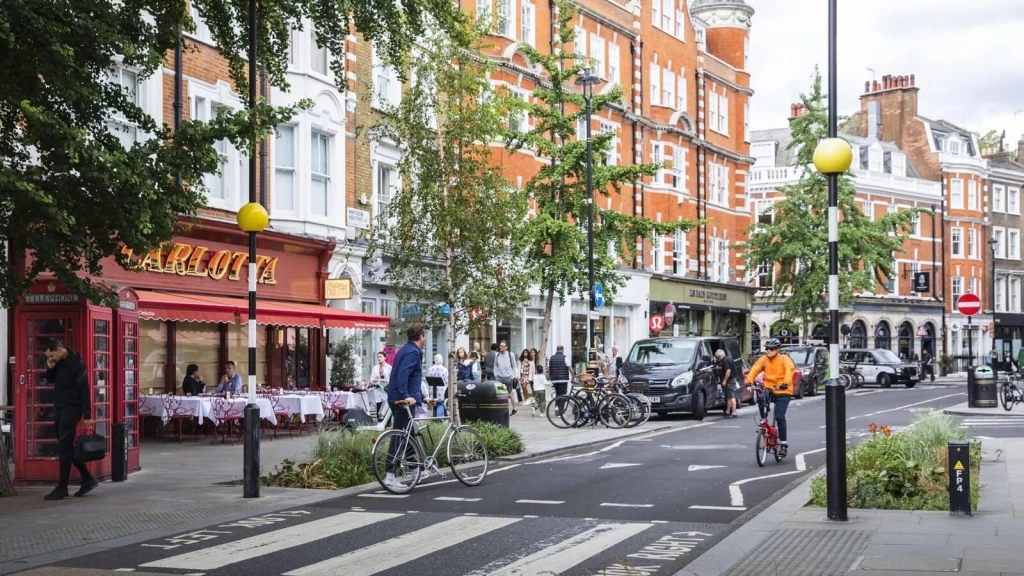
There is a legitimate fear that “improvement” means replacing affordable businesses with the same expensive brands found elsewhere. Nor would it be fair to equate a shop’s appearance with the value of the service inside it.
A local repair shop may have a tired frontage and still perform more useful work than a beautifully designed business nobody nearby can afford. As our discussion of the New London Vernacular argues, responding to local character begins with understanding how a place works, not simply borrowing its architectural appearance.
The question is not whether Uxbridge Road should become more like Notting Hill. The FT reports that 56% of people in the immediate area are income deprived, against 24% across the borough. The important test is whether residents can obtain ordinary services, spend time comfortably and see a future for their own enterprise on the street.
English Heritage’s history of the high street shows how often its form and social role have changed. The Academy of Social Sciences’ argument for restoring social as well as economic functions and the Institute of Welsh Affairs’ account of community-led town-centre ventures reinforce a useful point: high streets have long provided places to meet, learn and access services alongside places to shop.
A library, clinic, workspace or community venue can strengthen that everyday role, giving people a reason to visit and supporting nearby businesses. Making these uses last, however, requires both suitable premises and a sustainable operating model. Where historic buildings are involved, changing the use of a listed building means matching the activity’s space, access and servicing requirements to what the building can accommodate without undermining its heritage significance.
The financial arrangements deserve equally close attention. A pop-up supported by a temporary rent concession may bring a space to life for six months, but its longer-term value depends on whether the operator can afford to stay once that support ends. A promising use needs a credible route from an initial trial to continued occupation.
Diversification should therefore widen opportunity on both sides of the shopfront: giving residents access to more useful services and giving local businesses and community organisations premises they can occupy on terms that allow them to endure.
This wider role is becoming central to the future of London’s high streets. Regeneration strategies increasingly envisage places where shopping sits alongside food, culture, leisure and public services, creating community hubs with reasons to visit throughout the day.
Online shopping and delivery apps have made some purchases possible without a trip to the high street, increasing the importance of activities that bring people together in person. Delivery can also sustain local traders, so the opportunity is to combine these channels with a stronger offer on the street.
Housing and transport investment can help support that offer outside central London. The proposed regeneration of Edgware town centre brings together new homes, an improved transport interchange, shops, leisure facilities and public space. At Tottenham Hale, regeneration similarly connects housing with workspace and community facilities around a major transport hub.
These approaches can strengthen local demand, but passing through a station does not automatically mean spending time or money nearby. The connections between homes, platforms and businesses need to make the high street part of everyday journeys.
Placemaking helps turn those journeys into opportunities to stay. Traffic reduction, wider pavements and carefully chosen pedestrianised areas can create room for outdoor dining, markets, cultural events, seating and green infrastructure.
Their value depends on making the street comfortable and accessible while accommodating deliveries and the people who rely on public transport. For an occupied street such as Uxbridge Road, these improvements should help existing traders reach more customers and give residents more reasons to spend time locally.
In my paper, Transforming urban retail environments: A strategic framework for digital-age regeneration, I argued that regeneration should begin with an understanding of local demand. That understanding should guide the choice of new uses, the adaptation of buildings and the integration of physical and digital services, with communities involved throughout and success measured over time.
Uxbridge Road puts that framework to a harder test. Much regeneration thinking starts with an empty department store or a run of vacant shops. Here, the challenge lies partly within premises that are already occupied. Understanding what could change therefore requires a closer look at existing planning permissions, lease arrangements, entry costs, underused upper floors and the needs of the people who use the street.
Urban design and masterplanning can help translate that understanding into proposals for buildings, routes, public spaces and a better mix of uses. Delivering those proposals, however, also depends on the people who control the premises. A masterplan may identify a promising new use without giving anyone the means to renegotiate the tenancy that prevents it.
The same practical test applies to proposals for immersive retail and events. Research on the experience economy in UK city centres explores the connections between in-store activity, leisure destinations and the wider public realm. These ideas can give people more reasons to visit, but their value on a neighbourhood high street depends on more basic conditions: whether residents can walk comfortably to affordable everyday services, whether a credible local business can afford to open, and whether people feel welcome to spend time there.
Digital services can strengthen that offer. Online ordering, local delivery and better ways to reach customers may help a small retailer build a viable business. Their usefulness still rests on having a sound lease, a workable shop and a safe route to the door. Those foundations deserve attention before investment in an augmented-reality demonstration or a programme of events.
The consequences of overlooking them extend beyond individual businesses. The Guardian’s account of the political consequences of deteriorating high streets shows why visible decline matters to public trust. Yet reports of retailers competing for scarce suitable space suggest that demand for physical premises remains strong in some formats and locations.
The question is why that demand translates into thriving businesses in some places while other streets struggle to accommodate the services people want. Answering it means examining the fit between demand, premises and occupation costs, rather than assuming that physical shopping has lost its purpose.
Some retailers give people a reason to visit that goes beyond simply buying a product. In LEGO stores, customers can build and play; Apple offers free sessions where people can develop creative and practical skills; and Waterstones hosts author events and book clubs. The formats differ, but each adds something that cannot be replicated by collecting an online order. People leave having made something, learnt something or met someone.
The lesson for a street like Uxbridge Road is not to recruit four major chains or install expensive interactive technology. A local bakery might teach bread-making; a repair shop could run a monthly fixing session; a bookshop might host readings in more than one community language.
These are possibilities to test with traders and residents, not a list of businesses planners can require. The format has to fit the unit, the operator’s time and the spending power of the neighbourhood. An event that draws a crowd but cannot cover staff costs or rent will not last.
That is why the more useful question is whether local businesses have affordable, adaptable space and enough control of it to experiment. Experiential retail is at its most valuable when the activity deepens a service that people already want, and when the shop can still function on an ordinary Tuesday.
Before choosing a rental auction, a planning policy, an enforcement exercise or a public-realm scheme, boroughs should establish what the street needs and what is preventing change. I would like to see a high street function review: a practical, street-by-street diagnosis, published in a form residents, traders and landlords can examine and challenge.
Boroughs already have tools to support this work. The London Datastore provides access to city data, while the High Streets Data Service and Partnership gives participating boroughs and Business Improvement Districts information on footfall, spending and vacancy to inform policy and target investment.
These figures can show where patterns are changing and help track the effects of an intervention. Understanding what lies behind them requires conversations with residents and traders. Spending data alone cannot explain why an everyday service is missing, why some people avoid the street or why a local entrepreneur cannot secure premises.
Bringing those sources of evidence together, the review should answer five questions:
What does the street provide? Record actual and lawful uses, opening hours, vacancy, upper-floor occupation and the condition of frontages and public space. Count repeated uses, but also check whether an apparent gap is met nearby.
Who can use it? Assess walking routes, accessibility, prices and safety. Ask whether children, older people and residents on different incomes can reach and afford the things they need. Footfall alone cannot reveal these differences.
Who can enter the market? Identify units coming available, published asking rents, fit-out barriers and likely lease terms. Examine whether opportunities reach new and independent operators. Sensitive lease information need not be published for the underlying barriers to be recognised.
Which harms can be evidenced? Examine waste, servicing, antisocial behaviour, school routes and health outcomes without assuming that every business of a particular type causes them. The findings should determine the response.
Who will deliver the change? Identify the owners, council teams, community organisations and prospective occupiers able to act. Set out the funding or commercial agreements needed, assign responsibility and agree when progress will be reviewed.
The findings would give boroughs a clearer basis for directing existing programmes and investment. City Hall’s high street programme already considers housing, jobs, affordable workspace, businesses and public space together. The London Growth Plan’s business agenda addresses finance, skills and barriers to enterprise, while London Councils’ account of current borough initiatives shows that funding and local strategies are already being put to work. A street-level review would help connect those resources to specific needs, premises and people.
To judge whether that investment delivers, I would publish a short scorecard alongside the initial review and update it at agreed intervals. It should track the range of useful local functions, access to affordable services, genuinely available small units, new businesses still trading after two years, residents’ experience and the condition of buildings and public space. It should also make trade-offs visible, including improvements accompanied by rising occupation costs or the loss of affordable services. A rising rent roll is not the same thing as rising community value.
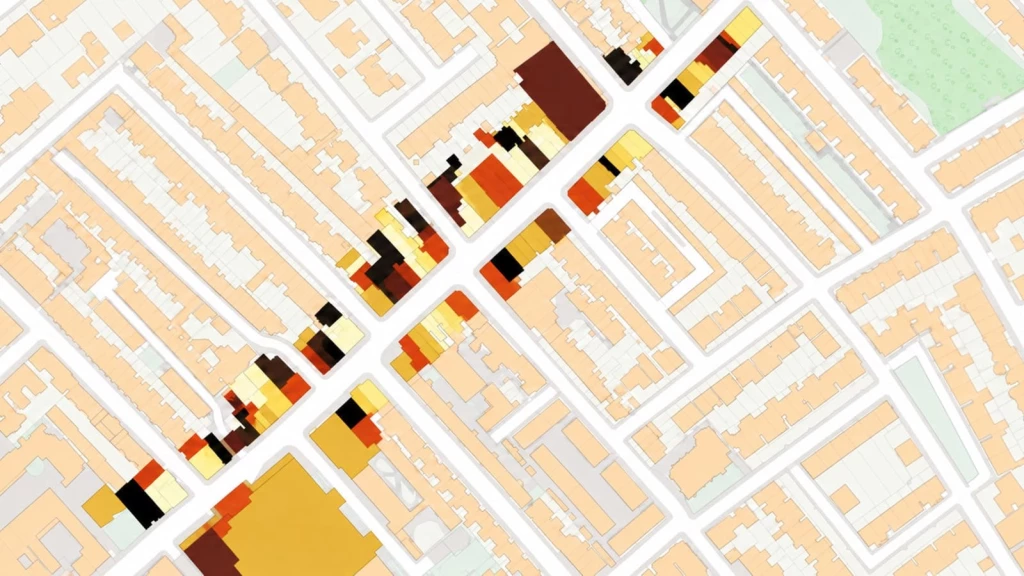
Once a borough understands what is missing and what stands in the way, it can focus on making change possible. That means connecting businesses with suitable premises, helping owners test viable new uses and improving the spaces between them.
The following five actions give boroughs a practical way to turn the review’s findings into opportunities for residents and traders.
The first step is coordination. Appoint a named high street lead with enough authority to bring together planning, licensing, public health, environmental services, property owners, agents, traders and residents.
This is a working role, not another consultation exercise. Its value lies in knowing when a unit might become available, which occupier could make it work, and what barrier is preventing a deal.
Create a voluntary premises opportunity register for participating owners and agents. It would show upcoming vacancies, suitable unit sizes, permitted uses, basic fit-out requirements and a contact route before a shop reaches the open market.
A local entrepreneur should not have to discover an opportunity after an informal assignment has already been agreed. The register would not compel a landlord to accept an unsuitable tenant; it would make the chance to compete more visible.
A council, social investor, community organisation or supportive landlord could help a promising local business through a short trial lease, a gradually increasing rent or modest fit-out support. The route to a normal, sustainable tenancy should be clear from the start.
If a shop closes as soon as the support ends, the underlying problem has not been solved. The aim should be to help viable businesses establish themselves, build demand and eventually operate without subsidy.
The space itself can often work harder. A large or deep shop might be divided between two compatible small businesses, while an unused upper floor could become workspace or housing where planning, access, fire safety, heritage and viability allow. Forecourts, market pitches and side streets can also give new businesses a lower-risk way to test demand before committing to a permanent shop.
But these opportunities depend on more than planning policy. They need good design, workable access and servicing, realistic costs and careful management. Changing the use shown on a plan may create permission, but it does not by itself create a successful place.
Clear walking routes, lighting, places to sit, well-maintained frontages, reliable waste arrangements and a credible response to crime improve conditions for traders and residents alike. Together, they make a street more comfortable to use and encourage people to stay, meet and spend.
An active frontage strengthens the connection between buildings and street life. Visible activity, welcoming entrances and windows overlooking the pavement can make a walk more engaging and give people reasons to stop, particularly when the services inside are accessible and useful to the community.
On streets like Uxbridge Road, these improvements should be developed with existing businesses and residents, with careful attention to how the costs are shared. A more attractive street will deliver lasting community value only if the people and traders who depend on it can continue to afford their place there.
The government’s £210 million high street package includes funding for derelict buildings and high street rental auctions. These are useful tools where eligible buildings are empty or deteriorating. Rental auctions can bring persistently vacant premises back into use, and the council can specify suitable uses within that process.
But consider Uxbridge Road’s central complaint. If a unit is occupied by a lawful business that pays its rent, a power designed to let an empty unit does not create a new vacancy or dictate a different tenant. Funding a refurbished building may create an opportunity on one site; it does not, by itself, change the economics of every occupied shop beside it.
This is why I would make a distinction in public funding between rescuing vacant space and improving the function of an occupied street. Both deserve attention. The latter may require patient brokerage, business support, enforcement where justified, and owners willing to take a longer view of value. It is less photogenic than reopening a boarded-up shop, but it may be the more consequential intervention in a place like Uxbridge Road.
There is no honest five-step method for requiring a high street to contain precisely the shops a survey names. The credible ambition is to make more of those businesses possible, while improving the street for the people and traders who already rely on it.

London’s high streets will not all become destinations, and they should not have to. Some will remain places to buy groceries, repair a phone, visit a clinic, meet a neighbour and get home. That everyday role is an urban strength.
What Uxbridge Road reveals is a gap between our powers and our ambitions. We regulate some proposed changes of use, but much of a street’s future is decided through existing permissions, lease negotiations and the commercial calculation made at each separate property. We invest in the public realm, but often have too little visibility of who can afford to occupy the rooms facing it. We celebrate low vacancy, but may never ask what residents had to travel elsewhere to find.
The Mayor and London boroughs could change that by testing a common high street function review on a small number of contrasting streets: one with persistent vacancy, one with high occupancy but limited variety, and one facing rapid rent growth and displacement. Give each a named local lead, publish the diagnosis, agree a realistic property and public-realm programme, and report what changed after two years. The comparison would reveal which tools genuinely work in which conditions.
That would also make future investment more intelligent. Before committing money to a new building, a council could identify the businesses ready to use it and the lease terms under which they could survive. Before seeking tougher controls, it could establish what those controls would actually prevent. Before celebrating footfall, it could ask whose needs remain unmet.
A better high street cannot be specified like the tenant list of a shopping centre. It has to be grown through the interaction of demand, opportunity, buildings, public space and trust. The task for London is to make that interaction visible, then give the people capable of improving it a practical way to act.
The shutters being up is a beginning. What happens behind them, who can open the next one, and whether local people benefit: that is the measure of a high street worth defending.
We look forward to learning how we can help you. Simply fill in the form below and someone on our team will respond to you at the earliest opportunity.
The latest news, updates and expert views for ambitious, high-achieving and purpose-driven homeowners and property entrepreneurs.





We specialise in crafting creative design and planning strategies to unlock the hidden potential of developments, secure planning permission and deliver imaginative projects on tricky sites
Write us a message