Read next
The latest news, updates and expert views for ambitious, high-achieving and purpose-driven homeowners and property entrepreneurs.


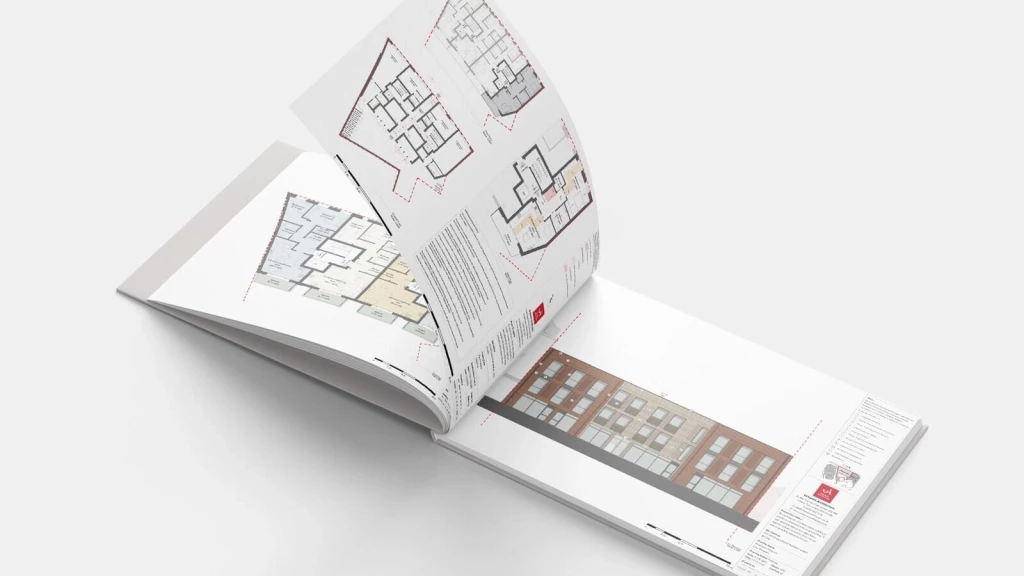
Walk through almost any recently regenerated part of London, and you will recognise the pattern. Brick facades. Portrait windows. Deep reveals. Parapets. Recessed balconies. Ground-floor maisonettes. A restrained, orderly, street-based form that feels familiar before you have worked out why.
You see it in estate regeneration schemes. You see it on former industrial land. You see it around transport nodes, canals, town centres and brownfield sites that once had no meaningful relationship with the street. It is polite, repetitive, commercially safe and often quietly Georgian in its proportions.
This is the New London Vernacular.
At its best, it gives London new housing that feels calm, robust and legible. It repairs streets, reduces the pressure on shared circulation, supports tenure-blind housing and creates places that may age better than many of the cladding-led experiments of the early 2000s.
At its worst, it is the architectural equivalent of planning camouflage: a brick costume placed over a bulky, poorly resolved scheme in the hope that the word “contextual” will make the problem disappear.
And this is where the debate becomes interesting.
Because the New London Vernacular is not the problem. The problem is how lazily it is sometimes used.
The real question is not whether new buildings in London should use brick, parapets or portrait windows. The real question is whether those choices come from a genuine understanding of place.
In this article, I will explain what the New London Vernacular is, why it emerged, how it relates to London’s different urban types, where it works, where it fails, and how architects, planning consultants, and developers should use it intelligently when designing new build housing developments in London.
Because good contextual design does not begin with a brick sample. It begins with reading the city.
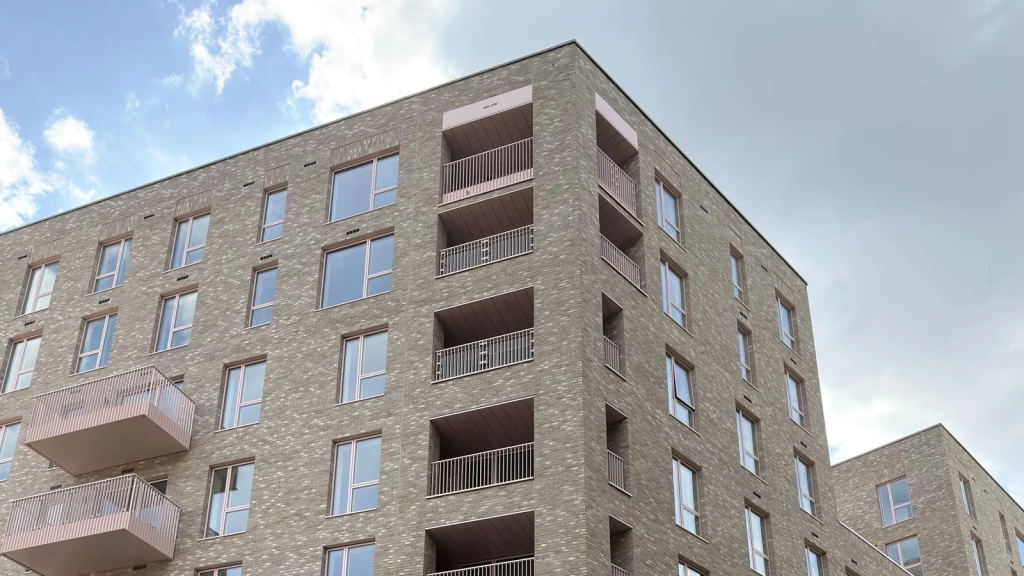
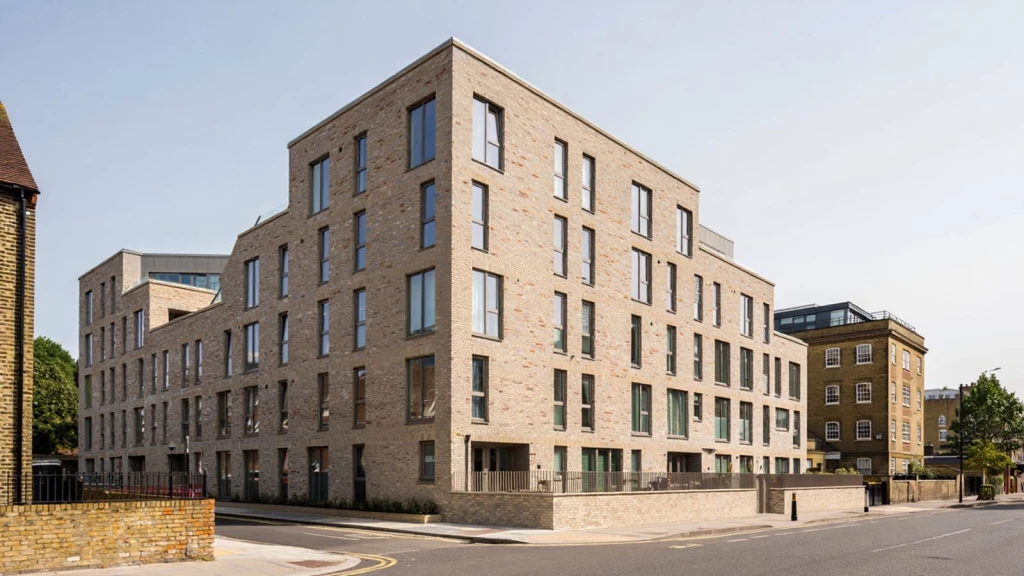
The New London Vernacular is a contemporary housing language that borrows from London’s historic street-based architecture without directly copying it.
It takes familiar ingredients from Georgian and Victorian London: brickwork, vertical window proportions, front doors onto the street, parapet rooflines, clear public/private thresholds and repetitive street rhythm. Then it strips away much of the ornament.
In practice, it has become a familiar design language for residential architects working in London: restrained, modern, and often sitting somewhere between a terrace, a mansion block and an apartment building.
The New London Vernacular was a response to a particular moment in London housing design, where different delivery models began producing remarkably similar architectural outcomes. As the 2012 Urban Design London and Design for Homes pamphlet observed, schemes for councils, housing associations, private buyers and investors were increasingly adopting a shared language of street-based blocks, brick elevations, individual entrances, portrait windows and Georgian-influenced proportions.
Its recurring design moves included front doors onto the street, lower-level maisonettes, taller ground floors, parapet rooflines, recessed windows, reduced shared circulation and balconies set back within the brick facade.
In simple terms, the New London Vernacular usually means:
Brick as the dominant material
Strong street frontage
Portrait-format windows
Deep window reveals
Parapet roofs
Recessed balconies
Ground-floor maisonettes
Clear entrances from the street
A regular, often grid-like elevation
A contemporary but familiar London character
That is the visible part.
But the more important part is hidden beneath the facade.
The New London Vernacular emerged because London needed to deliver more homes at higher densities while avoiding the mistakes of poorly managed post-war estates and the placelessness of one-off “iconic” regeneration architecture.
The London Housing Design Guide framed the challenge as creating a new London vernacular that could sit within the city’s existing fabric, while making clear that this did not mean a single architectural style, but a response based on robust design guidance and a deep understanding of architectural and social context.
That distinction matters.
The New London Vernacular was never supposed to be a fixed style. It was supposed to be an intelligent design response.
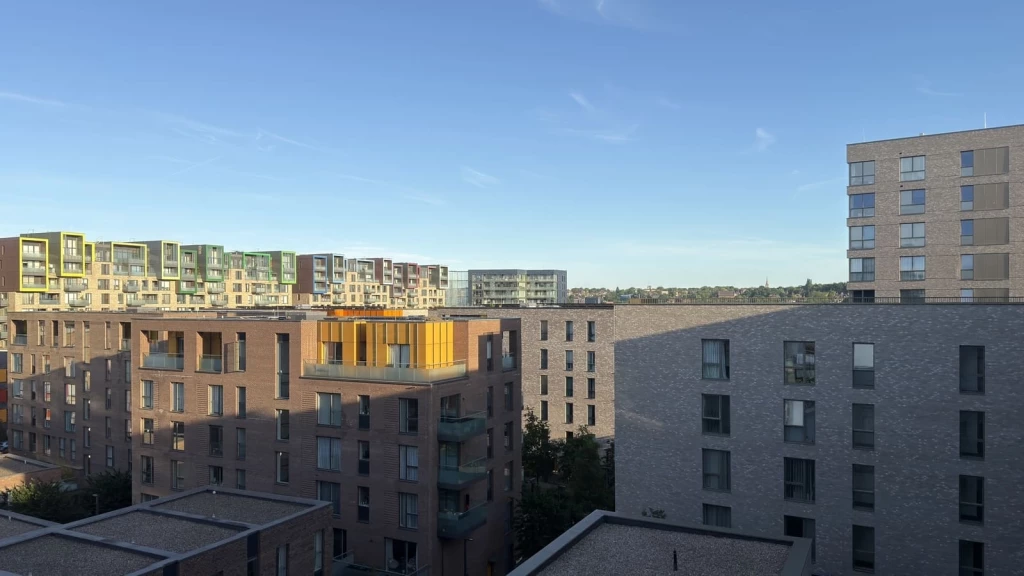
The New London Vernacular became popular because it solved several problems at once. It gave planning officers something recognisable, developers a lower-risk construction language, housing associations a way to reduce expensive shared circulation, and residents front doors, defensible thresholds and homes that felt more house-like.
After the era of trophy buildings and colourful regeneration architecture, London’s residential architecture moved towards something calmer, more repetitive and more background.
And that is not necessarily a problem. Most good cities are not made from buildings that all try to shout. They are made from streets, terraces, mansion blocks, mews, warehouses, high streets and civic buildings that know when to speak and when to hold the street.
The problem starts when background architecture becomes thoughtless architecture.
A brick facade does not make a scheme contextual. A parapet does not make it London-like. A grid of portrait windows does not compensate for poor massing, weak ground-floor design, unresolved servicing, inactive frontages or a building that ignores the grain of the street.
This matters even more in the context of London's housing emergency package, which was introduced to improve viability, unlock stalled schemes and accelerate housing delivery, including social and affordable housing. But faster delivery cannot mean weaker design thinking. If anything, it makes contextual judgement more important, because pressure to build quickly can easily turn familiar architectural language into a shortcut.
That is why we need to separate the New London Vernacular as a design tool from the New London Vernacular as a planning shortcut.
Before choosing an architectural language, we need to understand the urban type. This is not an academic exercise. It is the foundation of a good planning strategy.
The London Plan requires boroughs to undertake area assessments to define the characteristics, qualities and value of different places. Those assessments should consider urban form and structure, including townscape, block pattern, urban grain, frontages, building heights and density, as well as heritage, land uses, transport networks, open space, views and landmarks.
Policy D3 of the London Plan requires development to make the best use of land through a design-led approach. In other words, site capacity should be optimised by identifying the most appropriate form, layout and land use for the site, rather than simply pushing for the highest possible number of units.
This is where urban types become a practical design tool.
To that end, we have identified seven broad urban types that are recognisable across London: compact grid, loose grid, slabs and towers, courts and cul-de-sacs, urban renaissance, big box and urban centre. Through our work across London, we have also seen that they rarely exist in isolation. London’s built environment is usually shaped by overlapping patterns, layered histories and mixed urban characters.
That is why, before asking whether the New London Vernacular is the right architectural response, designers first need to understand the urban type they are working within. The question is not simply “does it look like London?” but “does it respond intelligently to the grain, scale, rhythm, movement pattern and character of this part of London?”
Kevin Lynch would have put it another way: a successful city is one people can read. Its paths, edges, districts, nodes and landmarks help residents build a mental map of where they are and where they are going.
For London, this matters because a site is rarely just a plot. It is part of a route, a boundary, a local centre, a neighbourhood identity or a view sequence. If a new building weakens that mental map, it is not contextual, however carefully it matches the brickwork.
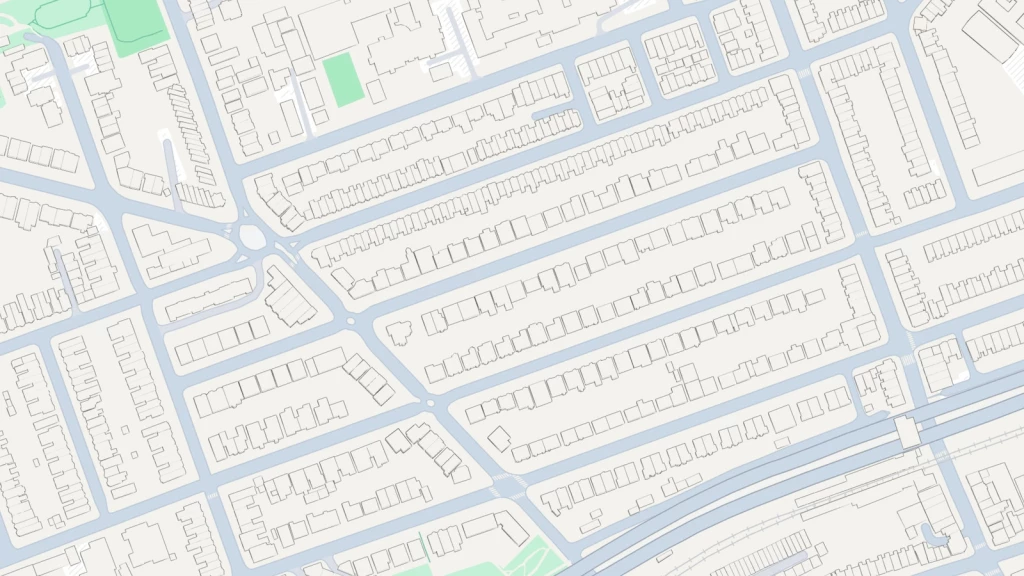
The compact grid is the London most people instinctively think of when they imagine a traditional urban street.
It is the world of Victorian and Edwardian terraces, short plots, narrow streets, repeated front doors, shallow front gardens, brick boundary walls, bay windows, chimneys, party walls and small-scale mixed uses on corners or main streets.
You find it across inner London and inner-suburban London: Islington, Hackney, Camden, Lambeth, Walthamstow, Battersea, Chiswick, parts of Brentford, parts of Haringey and many older railway suburbs.
Its key characteristics are:
Connected streets with very few dead ends
Fine urban grain
Perimeter blocks
Narrow plots
Strong building lines
2-4 storey domestic scale
Shallow front gardens
On-street parking
Brick construction
Corner shops, pubs and small mixed uses
High walkability and strong legibility
Across London, compact grid areas are usually found where streets, plots and buildings work together to create a clear urban rhythm: connected routes, few dead ends, low-rise terraces and pairs, modest setbacks, defined front boundaries and a finer-grain pattern of development.
This is one of the urban types where the New London Vernacular can work well.
But only if it behaves.
A compact grid does not want a single oversized block pretending to be a terrace. It wants rhythm, plot logic, door frequency, vertical proportion, variation, material depth and a careful relationship between public and private space.
The design challenge is not simply to use brick. The challenge is to understand the cadence of the street.
Where a new building replaces a gap site, corner plot, garage court or underused commercial site, a New London Vernacular approach may help the proposal sit comfortably within the street. But the massing must be disciplined. The building line must be right. The ground floor must be active. The elevation should respect the vertical rhythm of neighbouring plots.
In compact grid areas, the danger is bulk disguised as politeness.
A large apartment block with a flat brick facade and repeated punched windows may technically borrow from the terrace, but if it ignores plot width, roof rhythm, front-door frequency and street enclosure, it will feel wrong.
The compact grid rewards subtlety. It punishes laziness.
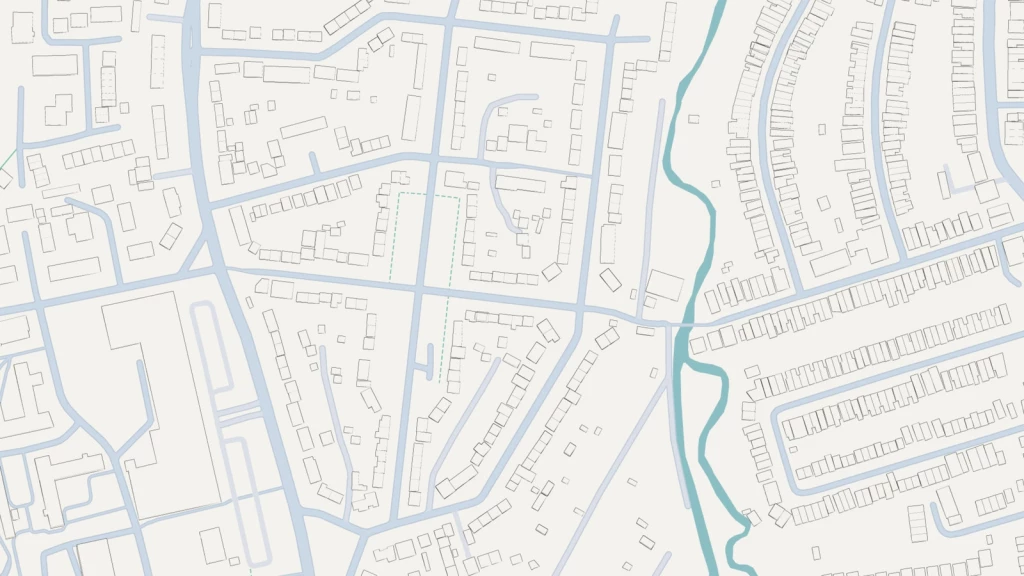
The loose grid is suburban London.
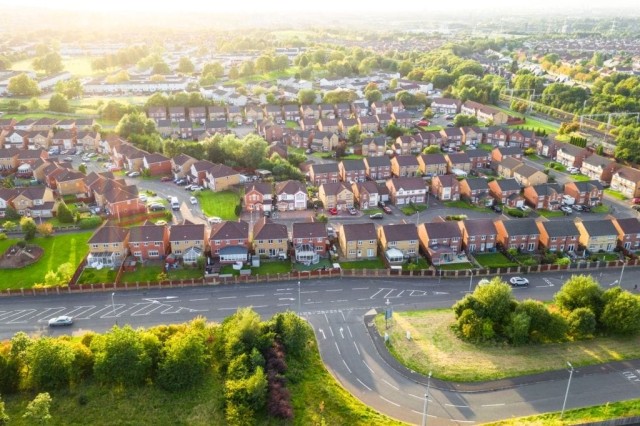
This is the London of interwar semis, curved streets, large front gardens, driveways, gaps between buildings, grass verges, hipped roofs, bay windows, mock Tudor detailing, generous back gardens and lower densities.
You find it across outer London: Harrow, Hillingdon, Barnet, Bromley, Sutton, Redbridge, Enfield, Ealing, Hounslow, Merton and large parts of Metroland.
In urban design terms, the loose grid is one of London’s most recognisable outer suburban types, closely linked to Metroland expansion and the growth of neighbourhoods around the Underground. Its defining features include large irregular blocks, wide curving streets, closes and cul-de-sacs, lower densities, generous plots, deep rear gardens, detached and semi-detached houses, and a largely two-storey character.
Its key characteristics are:
Detached and semi-detached houses
Wider plots
Deeper front and rear gardens
Curving streets
Lower density
Gaps between buildings
Private driveways and garages
Green verges and street trees
A softer suburban character
Less enclosure than compact grid streets
This is where the New London Vernacular becomes more difficult.
A brick apartment block may work on a main road, a corner site, a local centre, a station approach or a larger redevelopment site. But it may fail badly in the middle of a quiet semi-detached street.
The loose grid does not usually need a mini-Georgian apartment block dropped into it. It needs sensitive intensification.
That may mean villa blocks, mansion-block forms, paired houses, mews-style development, carefully handled corner buildings, suburban infill, or gentle density around transport nodes. In some cases, a New London Vernacular approach may be useful, but it should be adapted to the suburban condition: more landscape, more breathing space, more attention to gaps, roof form, boundary treatment and garden character.
The biggest mistake is assuming that every London site can take the same brick block simply because London needs more homes.
London does need more homes. But the best way to win support for intensification in suburban areas is to show that density can grow out of the place rather than crash into it.
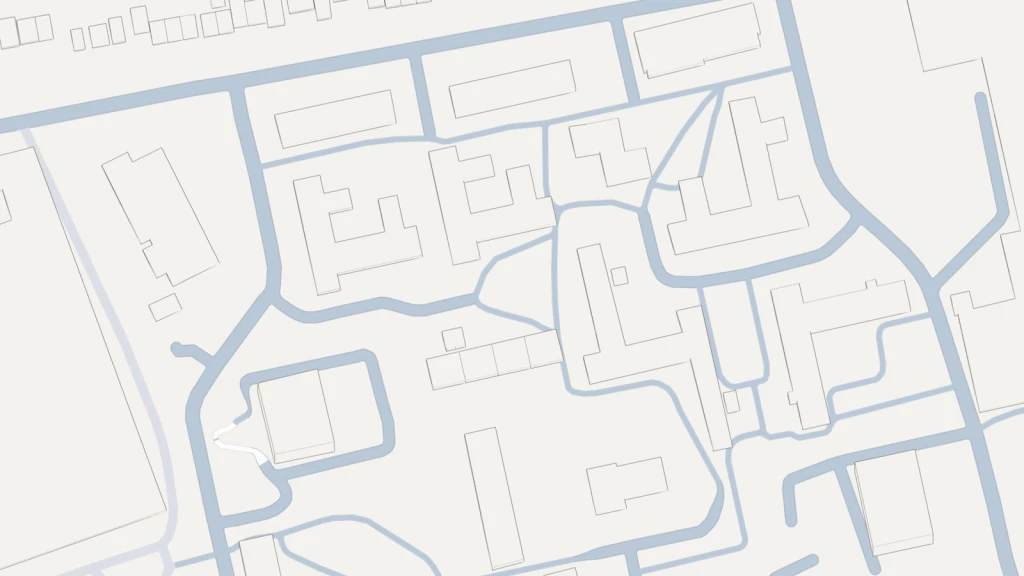
The slabs and towers type belongs to post-war estate urbanism.
This type cannot be understood without the modernist dream associated with Le Corbusier: tall buildings set in open space, sunlight, greenery, separation of uses and a city ordered by movement systems rather than traditional streets.
That ambition was not always cynical. It was often presented as a humane alternative to overcrowded terraces. But in practice, when the street disappeared, many schemes lost the ordinary ingredients that make London legible: front doors, corners, overlooked pavements and active ground floors.
This is the London of freestanding blocks set in open space, tower blocks, slab blocks, deck access, estate roads, communal grassed areas, parking courts, pedestrian routes separated from vehicles, and often unclear relationships between buildings and public space.
You find it across London: Southwark, Lambeth, Tower Hamlets, Hackney, Islington, Brent, Camden, Haringey, Newham, Wandsworth and many outer boroughs.
Slabs and towers are typically characterised by freestanding buildings set within open space, often combining high-rise towers with lower-rise slab blocks. This urban type commonly includes segregated access roads and pedestrian routes, large parking courts, and a layout that can feel detached from the surrounding street-based pattern.
Its key characteristics are:
Buildings set in open space
Point towers and slab blocks
Communal landscape
Internal estate roads
Segregated pedestrian routes
Large parking areas
Weak street definition
Few front doors directly onto streets
Poor legibility in some estates
Often generous internal space but problematic public realm
This is one of the places where the New London Vernacular can be genuinely useful.
Not because brick magically solves estate problems, but because street-based housing can repair some of the structural weaknesses of the type.
In estate regeneration, a New London Vernacular approach can help reintroduce:
Streets
Front doors
Clear public/private thresholds
Perimeter blocks
Active edges
Human scale
Tenure-blind housing
Better-defined communal space
But there is a danger here too.
Post-war estates are not blank canvases. Some contain mature landscapes, social histories, strong communities, public art, generous open space and architectural value. A lazy regeneration strategy can erase all of that under the banner of “repair”.
The right approach is not to replace every estate with the same brick perimeter block. The right approach is to understand what is failing, what is valuable, and what kind of urban structure should come next.
Sometimes the answer is comprehensive redevelopment. Sometimes it is infill. Sometimes it is a public realm repair. Sometimes it is entrance upgrades, landscape investment, clearer routes and selective new housing.
The New London Vernacular can help. But it should not be used as a polite way of forgetting the past.
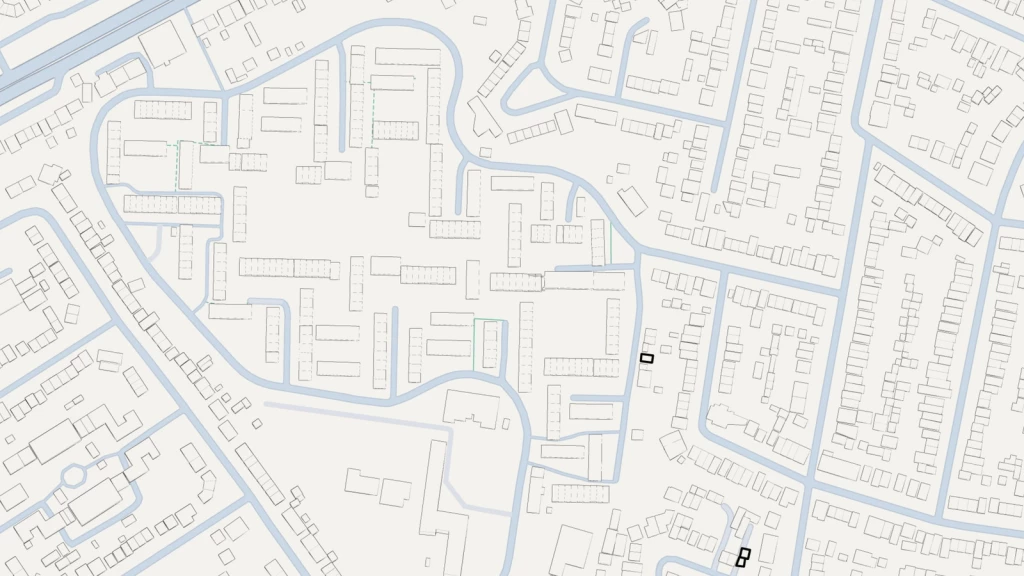
Courts and cul-de-sacs are the late 20th-century answer to the car.
They are often influenced by Radburn principles, where pedestrians and vehicles are separated, houses are grouped around courts, access roads loop inwards, and the wider street network is deliberately avoided.
You find this type in both public-sector housing estates and private housebuilder estates from the 1970s, 1980s and 1990s.
Across London, courts and cul-de-sacs tend to create quieter, more enclosed residential environments, shaped by access roads, grouped low-rise buildings, integral car parking, traffic separation and layouts that often turn away from the wider street network.
Its key characteristics are:
Loop roads
Cul-de-sacs
Parking courts
Residential pods
Weak through movement
Confusing fronts and backs
Pedestrian routes that may feel unsafe
Limited mixed use
Poor legibility
Often inward-looking layouts
This is not primarily a facade problem.
It is a movement problem.
If a court or cul-de-sac estate is being redeveloped or intensified, the most important design question is not whether the new homes should have brick elevations. The question is whether the proposal improves connectivity, legibility, surveillance and the relationship between buildings and public space.
A New London Vernacular approach may help if it turns inward-looking courts into outward-facing streets. It may help if it introduces front doors, active edges and clear thresholds. It may help if it repairs exposed backs and poorly defined leftover space.
But if the layout remains a dead-end pod and the only change is a more fashionable brick elevation, nothing meaningful has been solved.
This is one of the great traps in London housing design: confusing architectural appearance with urban repair.
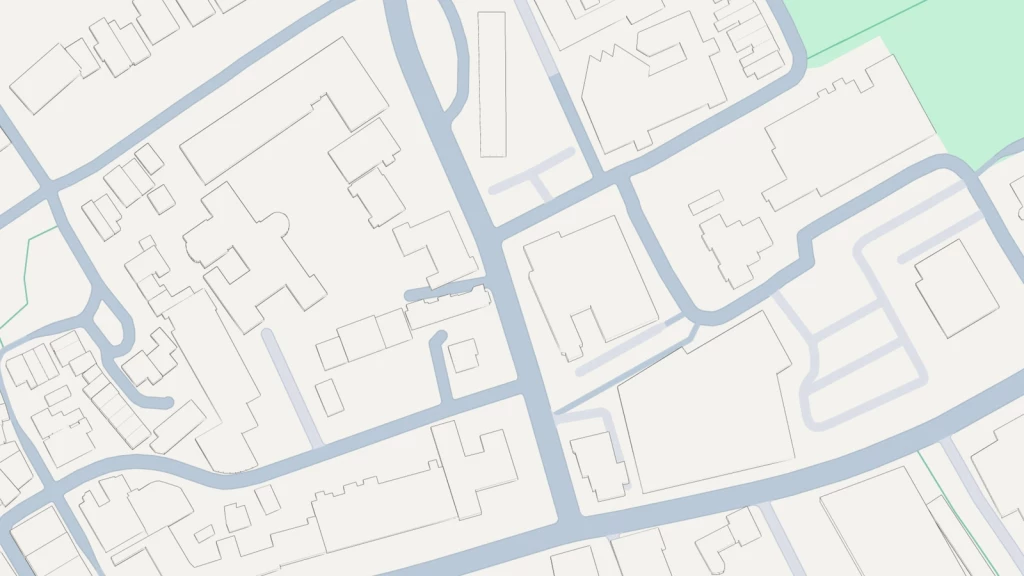
Urban renaissance is the natural habitat of the New London Vernacular.
This type grew from the late 1990s and 2000s push towards brownfield regeneration, mixed-use development, higher densities, perimeter blocks, public realm, walkability and design-led planning.
You find it around former industrial land, canal-side regeneration sites, town-centre redevelopment areas, station-adjacent sites and estate renewal schemes.
From our experience working across London, urban renaissance areas are typically regeneration-led or brownfield developments that return to more traditional perimeter-block urbanism. They are usually defined by buildings that front and enclose streets and public spaces, smaller blocks, higher densities, mixed housing types, mixed tenure and, more recently, a renewed use of brick facades, recessed balconies, ground-floor maisonette-style homes and parapet rooflines.
Its key characteristics are:
Brownfield redevelopment
Perimeter blocks
Mixed uses
Flats, maisonettes, townhouses and mews
Higher density
Street-based layouts
Shared surfaces and new public realm
Recessed balconies
Brick facades
Parapets
Ground-floor maisonettes
Private and affordable housing integrated within one scheme
This is where the New London Vernacular often works best.
Why?
Because the urban structure and architectural language are aligned. Street-based buildings, active frontages, clear entrances, medium-to-high density and mixed typologies all reinforce one another.
But even here, it can fail.
Urban renaissance schemes often look good in plan and CGI. They have blocks, routes, courtyards, street trees, active frontages and carefully described character areas. But many fail at ground level.
The commercial units remain empty. The public realm feels over-managed. The brick elevations become monotonous. The courtyards are technically accessible but socially lifeless. The development feels planned, but not lived in.
The New London Vernacular works in urban renaissance settings when it creates a real city quarter, not just a development with urban design terminology attached.
The difference is human life.
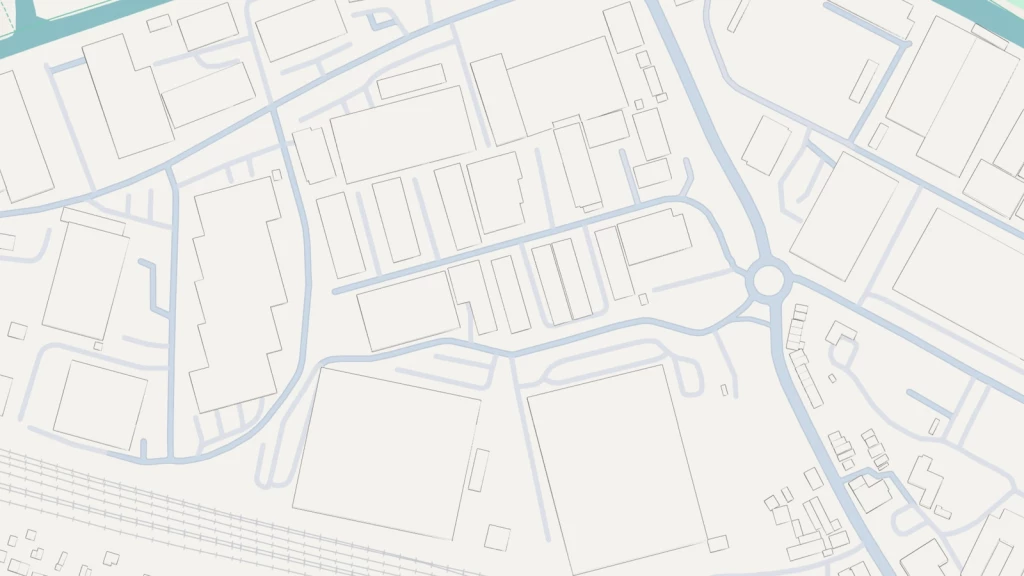
Big box is the London of retail parks, supermarkets, logistics sheds, trading estates, industrial estates, builder’s merchants, surface car parks and large-format commercial buildings.
It is often overlooked in design discussions because it does not feel like “architecture” in the traditional sense. But some of London’s greatest redevelopment opportunities sit within this type.
You find it around arterial roads, industrial locations, edge-of-centre sites, railway land, former employment areas and suburban commercial corridors.
Its key characteristics are:
Large plots
Large floorplate buildings
Surface car parking
Blank frontages
Servicing yards
Vehicle-dominated layouts
Poor pedestrian experience
Buildings set back from the street
Weak relationship with the surrounding neighbourhoods
Operational logic rather than civic logic
This is where the New London Vernacular can be either transformative or absurd.
If a big-box site is being comprehensively redeveloped into streets, blocks, mixed uses, homes, employment space and public realm, then a street-based London housing language may be entirely appropriate.
But if the underlying plan remains car-led, inward-looking and dominated by servicing, applying brick facades to the residential parts will not create good urbanism.
Big-box sites require masterplanning before architecture.
The real questions are:
How does the site reconnect to the surrounding street network?
Where are the new routes?
What happens at ground level?
How are servicing and parking integrated?
What uses belong on the edges?
How does the scheme transition to neighbouring residential areas?
Can employment uses be retained, intensified or reconfigured?
Where does landscape do meaningful work?
Only after those questions are answered should the architectural language be chosen. A brick facade cannot civilise a bad masterplan.
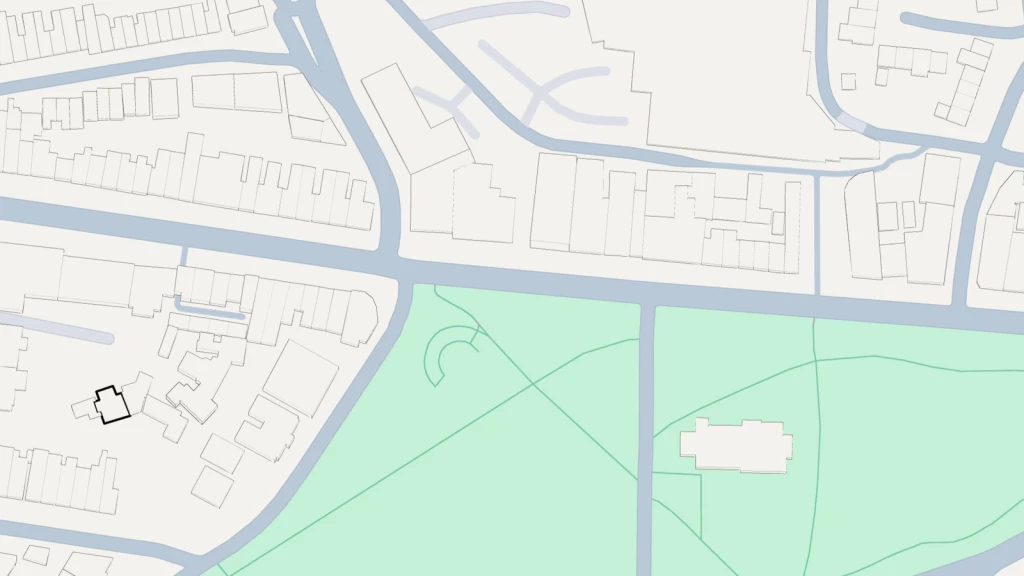
Urban centres are London’s high streets, town centres, district centres, local centres and transport nodes. They are layered, messy, mixed, commercial, civic, residential, historic and contemporary all at once.
You find them everywhere: Croydon, Ealing, Stratford, Kingston, Ilford, Wembley, Wood Green, Brixton, Walthamstow, Hounslow, Lewisham, Peckham, Chiswick, Clapham, Angel, Camden, Hackney Central and hundreds of smaller local centres.
Their key characteristics are:
Mixed uses
Active frontages
Shops, cafes, services and community uses
Higher pedestrian movement
Public transport accessibility
Greater height variation
Finer plot rhythm in older centres
Larger redevelopment sites in newer centres
Civic buildings and landmarks
Heritage assets and conservation areas
Night-time economy pressures
Servicing and refuse challenges
Complex public realm
Urban centres are where the New London Vernacular needs to grow up.
Allan Jacobs’ lesson from studying great streets is especially relevant here. The best streets are not just corridors for movement; they are public places shaped by similar building heights, interesting frontages, trees, windows, crossings, stopping places and enough space to walk without feeling pushed aside.
That is why a town-centre building cannot be judged only by its upper-floor façade. The pavement edge has to invite people to pass, pause, look, enter and return.
A purely residential expression often feels too quiet for a high street. A ground floor of blank doors, bin stores, inactive lobbies or poorly occupied commercial units can kill the pavement.
In urban centres, the test is not just whether the upper floors look London-like. The test is whether the building contributes to the life of the centre.
That means:
Proper shopfront proportions
Flexible commercial floorspace
Legible entrances
Civic presence on important corners
Careful servicing
Good signage strategy
Well-integrated plant
Active frontages
Stronger material quality at ground level
A scale that responds to the street hierarchy
The New London Vernacular may work above commercial ground floors, on town-centre edges, or as part of mixed-use perimeter blocks. But it fails when it domesticates streets that need activity, energy and public life.
Not every building in a town centre should look like a residential block with a shop reluctantly inserted into the ground floor.
Most London sites are not pure examples of one urban type. That is what makes London difficult.
A site may sit between a Victorian terrace and a post-war estate. A suburban high street may back onto interwar semis. A retail park may sit beside a station and a conservation area. A slab estate may be next to a compact grid. A big-box site may be the missing piece between a town centre and a residential neighbourhood.
These are the sites where lazy contextualism fails fastest.
When the context is mixed, the architect and planning consultant need to identify two things:
The dominant existing character
The intended future character
That second point is crucial.
Context does not only mean what is there now. It also means what the place is becoming.
The London Plan’s characterisation approach is not about freezing every place in its existing condition. The Characterisation and Growth Strategy LPG explains that character assessment should inform growth strategies, including how an area will change in the future and where different levels of change may be appropriate.
This is why “it is out of character” is not always a good planning argument.
Sometimes change is the point. But change still needs structure.
This is also relevant to securing planning permission for Green Belt and Grey Belt developments at the edge of London. These sites may not sit within a conventional street-based urban type, but they still need a clear design logic.
The question is not simply whether land can be released or whether a policy route exists. The real test is whether the proposal creates a defensible relationship with the settlement edge, landscape, movement network, Green Belt openness, public transport and future urban structure.
In these locations, contextual design becomes even more important because the transition between city and countryside has to be designed, not assumed.

Used properly, the New London Vernacular is not a style guide. It is a toolkit.
Christopher Alexander’s idea of a pattern language helps explain why. The best urban places are not made from one grand gesture, but from recurring patterns that people instinctively understand: a front door that feels like an arrival, a threshold that protects privacy, a street that feels overlooked, a small garden that softens the edge between home and pavement. The New London Vernacular can be useful when it works like this - as a set of human patterns adapted to the site - rather than as a fixed visual formula.
The danger is treating the toolkit as a facade kit.
The first question should always be: what does the building do to the street?
Does it define it? Repair it? Activate it? Overlook it? Make it safer? Make it more legible? Create a better public/private threshold?
If the answer is no, the choice of brick is irrelevant.
Good London housing begins with the street. It needs front doors, windows, thresholds, defensible space, clear entrances and a public realm that feels inhabited rather than leftover.
The London Plan is clear that good design and good planning are intrinsically linked, and that development should respond to distinctive features of place, including architectural rhythm, building forms, heights, materials, heritage value and the underlying landscape.
That is the starting point.
Brick is one of London’s great materials.
It has weight, depth, colour variation, craft, durability and memory. It can be polite or monumental, domestic or civic, rough or refined.
But brick can also be used badly.
Thin brick slips, flat facades, weak detailing, poor lintels, cheap soldier courses, awkward movement joints and blank expanses of repetitive brickwork can make a new building feel mean rather than robust.
The issue is not whether brick is used. The issue is whether it is doing architectural work.
Good brickwork creates depth, shadow, hierarchy and human scale. It frames openings. It expresses entrances. It turns corners. It gives texture to the street. It weathers with dignity.
Bad brickwork is just cladding with better planning prospects.
Portrait windows are one of the defining features of the New London Vernacular.
They refer back to Georgian and Victorian fenestration, where vertical openings, regular spacing and proportion help create calm street elevations.
But repetition is not automatically good. Repetition creates order when there is hierarchy. It creates boredom when there is none.
A good facade needs rhythm, but also emphasis. Entrances should matter. Corners should be resolved. Ground floors should have weight. Upper floors should have proportion. Balconies should be integrated rather than stuck on.
The lazy version of the New London Vernacular gives every elevation the same punched-window grid, regardless of orientation, use, internal layout or street condition.
That is not contextual design. That is spreadsheet architecture.
Ground-floor maisonettes are one of the strongest elements of the New London Vernacular.
They give family-sized homes a more domestic relationship with the street. They reduce the number of residents relying on communal corridors and lifts. They animate the ground floor. They make larger homes feel less like compromised flats.
The New London Vernacular pamphlet directly links maisonettes and reduced shared access to lower management risk and better mixing of tenures.
This is one of the reasons the model has become so influential in estate regeneration and mixed-tenure housing.
But maisonettes should not be used as decorative devices.
They need proper entrances, privacy, outlook, storage, refuse strategy, cycle parking, usable private amenity and sensible internal layouts. A front door on the street is only successful if the threshold behind it works.
Recessed balconies are another common feature of the New London Vernacular.
They can be elegant. They can protect privacy. They can avoid the clutter of projecting metal balconies. They can give the facade depth and shadow.
But recessed balconies can also create problems if they are too deep, too shaded, poorly orientated, badly related to internal layouts or used as repetitive dark holes in the elevation.
Balconies are not just facade features. They are private outdoor rooms.
They need sunlight, privacy, usability and a good relationship with the home. Otherwise, they become architectural punctuation rather than a meaningful amenity.
One of the strongest arguments for the New London Vernacular is that it can support tenure-blind design.
A terrace, mansion block or maisonette-led perimeter block can mix private sale, affordable rent, shared ownership and family housing without making tenure visually obvious.
This matters.
Housing design should not announce who is richer and who is poorer. The architecture should not tell the street which homes are affordable.
But tenure-blind design is not achieved by using the same brick. It is achieved through equal quality of entrances, amenity, materials, outlook, daylight, refuse arrangements, cycle storage and maintenance access.
If the private homes have the best entrances and the affordable homes have the worst cores, the building is not tenure-blind. It is just visually polite.
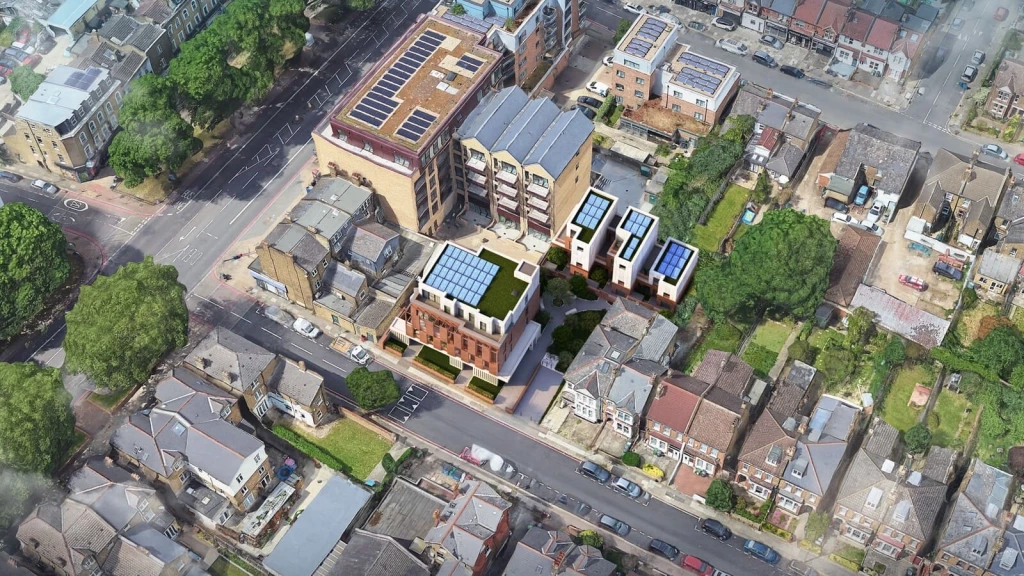
The New London Vernacular works when the architecture, urban form and housing strategy reinforce each other.
It fails when one is used to disguise the weakness of another.
The New London Vernacular usually works best in places where London’s street-based urbanism is being created, repaired or extended.
That includes:
Urban renaissance schemes
Estate regeneration where streets are being reintroduced
Brownfield sites capable of becoming proper urban blocks
Former industrial land near public transport
Town-centre edges
Infill sites within compact grids
Large sites where a new street hierarchy can be created
Mixed-tenure housing schemes where tenure-blind design matters
Medium-density housing where maisonettes, flats and townhouses can be combined
In these settings, the language is doing useful work.
Brick gives robustness. Front doors animate the street. Maisonettes reduce shared circulation. Parapets create calm rooflines. Recessed balconies control visual clutter. Regular windows establish rhythm. Perimeter blocks define public and private space.
This is the New London Vernacular as a contextual design tool.
There are many places where the New London Vernacular may be appropriate, but only with careful adaptation.
These include:
Historic high streets
Mansion block areas
Interwar suburban streets
Low-rise residential streets
Areas with strong roof forms
Sites with important landscape character
Locations where local materials are not predominantly brick
In these contexts, the default New London Vernacular palette may be too blunt.
A site in a garden suburb may need a softer, more landscape-led response. A site beside a listed Georgian terrace may need more discipline, not a simplified imitation. A backland site may need a mews, courtyard or low-rise typology rather than a miniature apartment block. A historic high street may need richer ground-floor articulation and a stronger civic presence.
The point is not that the New London Vernacular should be banned in sensitive settings. The point is that it should stop pretending every London context is the same.
The New London Vernacular usually fails when it becomes a shortcut for thinking.
The warning signs are familiar:
The building is too bulky for the street
The plot rhythm is ignored
The ground floor is inactive
The entrances are weak
The brick is flat and thin
The windows are repetitive without hierarchy
The balconies look like dark slots
The building line is wrong
The servicing strategy damages the frontage
The affordable homes are quietly given poorer access
The public realm looks designed but is not usable
The scheme is car-led but dressed as urban
The Design and Access Statement talks about “London character” without explaining the actual local character
That last point matters.
A good Design and Access Statement should not claim contextual design by describing generic London features. It should explain the site’s actual urban type: block pattern, building line, plot width, height, roofscape, materials, movement, landscape, frontages, heritage and public/private thresholds.
If the statement could be copied and pasted onto a site in another borough, it is not a contextual argument. It is a sales paragraph.
Here is the simplest test.
If you removed the brick, would the scheme still be a good piece of London urbanism?
If the answer is yes, the New London Vernacular may be helping.
If the answer is no, the brick is doing too much work.
A good scheme should still make sense as massing, layout, movement, threshold, tenure, amenity and public realm before the facade treatment is applied.
That is the difference between architecture and camouflage.

Designing new development in London should be a sequence of decisions, not a rush towards a familiar elevation.
This is particularly true for developing small sites in London, where there is rarely enough space to hide weak decisions. A poor bin store, awkward cycle arrangement, overbearing rear projection, inactive frontage or unresolved access route can undermine the whole proposal. The smaller the site, the more disciplined the design process needs to be.
The correct order matters.
Start by reading the place.
Look at:
Street pattern
Block size
Plot grain
Building line
Height
Roofscape
Materials
Front boundaries
Parking
Landscape
Land use
Movement
Heritage
Public/private thresholds
Corners and landmarks
Relationship to public transport
Existing and emerging character
This is not just good design practice. It is how people actually experience the city. Gordon Cullen’s idea of “townscape” and “serial vision” is useful here because it reminds us that places are not read all at once, like a plan on a desk. They are revealed in movement: a turn in the street, a framed view, a moment of enclosure, a sudden opening, a corner that helps you understand where you are.
That is exactly how London should be assessed before new development is designed, not simply as a red line boundary or a street elevation, but as a sequence of lived experiences.
How does the building appear on approach?
What happens at the corner?
Does the street feel enclosed or exposed?
Does the proposal strengthen the local sequence, or interrupt it?
It is also policy logic. The GLA’s Optimising Site Capacity LPG states that the design-led approach should be used to determine the most appropriate form of development on a site by setting site-specific design parameters and codes.
In other words, capacity is not a number you impose on a site. It is an outcome you test through movement, context, townscape, massing, public realm and the way people will actually experience the place.
Every site needs one of three strategies.
Reinforcement applies where the existing character is coherent, valued and still functioning. The task is to strengthen what is already there.
Repair applies where the urban structure has weaknesses: poor edges, leftover space, weak frontages, unclear routes, inactive ground floors or damaged townscape.
Transformation applies where the existing use or layout is fundamentally under-optimised or no longer appropriate, such as a surface car park, low-density retail park, redundant industrial site or failing estate structure.
This distinction is critical.
A compact grid infill site may need reinforcement. A post-war estate edge may need repair. A big-box retail park near a station may need transformation.
The New London Vernacular may be relevant to all three, but in different ways.
Height, scale, form and transition matter more than brick colour.
If the massing is wrong, no material will save it.
A well-designed London scheme should explain:
Why the height is appropriate
How the building steps or mediates between neighbours
How the roofline relates to context
How the block form defines public and private space
How the scheme avoids overbearing effects
How daylight, privacy and outlook are protected
How the development contributes to the street
The London Plan makes clear that optimising site capacity does not mean maximising site capacity. It means finding the most appropriate form of development for the site.
That sentence should be pinned above every design team’s desk.
Most weak schemes fail at ground level.
Jan Gehl would call this the city at eye level. His work repeatedly brings the discussion back to the scale of the human body: what people see, touch, hear and feel when walking at ordinary speed. This is where a building either contributes to public life or turns its back on it. In London, a development may be six, eight or twelve storeys high, but its success is often decided in the first few metres above the pavement.
That is where residents enter, bins are stored, bikes are parked, deliveries arrive, commercial units operate, children play, neighbours walk past, and the public realm either feels safe or uncomfortable.
A New London Vernacular scheme may look elegant from across the road, but if the ground floor is dead, the building has failed the city.
The ground floor needs:
Active uses where appropriate
Well-positioned entrances
Legible lobbies
Good ceiling heights
Proper refuse and cycle storage
Defensible space
Privacy for ground-floor homes
Durable materials
Good lighting
Clear servicing
No blank stretches where life should be
This is where planning drawings often reveal the truth.
CGIs sell facades. Ground-floor plans expose whether the building works.
Only after the urban type, strategy, massing, movement and ground-floor logic are resolved should the architectural language be chosen.
This is where the New London Vernacular may be the right answer.
But it may not be.
A site may call for a mansion-block language. A villa block. A terrace. A mews. A warehouse response. A civic building. A landscape-led courtyard. A contemporary timber expression. A more delicate heritage response. A tougher industrial character.
London is too complex for one default answer.
The New London Vernacular should be selected because it fits the place, not because it feels safest at the planning committee.
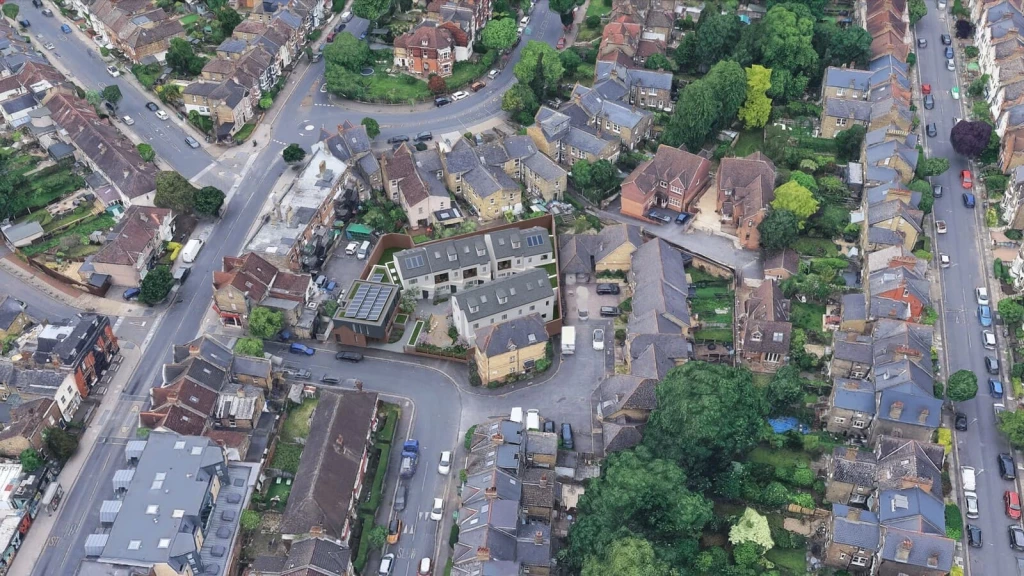
The New London Vernacular works best when it is treated as a design language, not a shortcut.
At its strongest, it helps new development feel rooted in London’s street-based traditions while still responding to contemporary housing needs, density, sustainability and delivery. But when used lazily, it becomes little more than brick cladding, vertical windows and parapet lines applied to schemes that have not been properly understood in their setting.
That is where many planning applications go wrong. The issue is rarely whether brick is used or whether the facade looks “London enough” at first glance. The real question is whether the architecture grows out of a clear reading of the site, its urban type, its street pattern, its scale, its public realm and the way people will actually experience the building from the ground.
Brick is not a planning strategy.
It is a material.
The scheme still needs a coherent street relationship, proper massing, high-quality homes, good amenity, active frontages and a defensible public realm.
London is not one place.
It includes Georgian terraces, Victorian grids, Edwardian villas, interwar suburbs, garden estates, post-war slabs, Radburn layouts, industrial yards, high streets, mansion blocks, railway lands, town centres and tall-building clusters.
A design approach that cannot recognise those differences is not contextual. It is generic.
Repetition can be beautiful. Georgian terraces prove that.
But repetition without hierarchy becomes dull.
Good repetition needs variation, proportion, entrances, corners, material depth and rhythm. Otherwise, the facade becomes a wall of identical windows searching for meaning.
This is the most common failure.
A building may have a convincing upper facade, but if the pavement edge is dead, the architecture fails where people experience it most.
The ground floor is not a technical zone. It is the civic face of the building.
Planning officers see this constantly.
A Design and Access Statement says the proposal “reflects the character of the area” but fails to explain what that character actually is.
Contextual design needs evidence.
It should identify the urban type, street hierarchy, plot grain, height range, material palette, roofscape, frontage condition, heritage context and landscape structure. Then it should explain how the design responds.
Without that, “contextual” is just a word.

I do not think the New London Vernacular is the enemy of good architecture. In many cases, it has improved London housing.
It helped move the city away from placeless regeneration architecture, fragile cladding systems and overly complicated circulation. It brought back streets, front doors, maisonettes, brick, parapets, simple forms and a more disciplined approach to housing design.
That matters.
But any successful language can become lazy once it becomes fashionable. And that is where we are now.
Too many schemes borrow the appearance of London without understanding the structure of London. They use brick without depth, windows without rhythm, balconies without generosity, maisonettes without proper thresholds and public realm without life.
The result is not a new vernacular. It is a planning-safe aesthetic.
The best New London Vernacular schemes are not good because they use brick. They are good because the brick is the visible outcome of a deeper urban idea.
They understand the street. They understand the urban type. They understand the difference between compact grid and loose grid, between estate repair and town-centre intensification, between a high street and a backland site.
That is the standard we should be demanding. Because London does not need more generic brick boxes. It needs more intelligent urbanism.

At Urbanist Architecture, we work across London’s full range of urban types, from compact Victorian terraces and conservation areas to interwar suburbs, estate regeneration sites, town-centre plots, backland opportunities, brownfield land and complex Green Belt and Grey Belt sites.
Our role in residential architecture is not simply to design a building that looks acceptable.
It is to identify the real planning and design strategy for the site, then carry that thinking through the relevant RIBA Stages of Work, from early feasibility and concept design to planning, technical coordination and delivery. The RIBA Plan of Work structures projects from briefing and design through to construction and use, which is why the right strategic decisions need to be made early rather than corrected late.
That means understanding the urban type, testing the site capacity, developing the right massing, preparing a convincing contextual design argument, and aligning the architecture with planning policy from the beginning.
For some sites, the New London Vernacular will be the right language. For others, it will not. The skill is knowing the difference.
And in London, that judgement can be the difference between a scheme that looks like planning camouflage and a piece of architectural design that genuinely earns its place in the city.
We look forward to learning how we can help you. Simply fill in the form below and someone on our team will respond to you at the earliest opportunity.
The latest news, updates and expert views for ambitious, high-achieving and purpose-driven homeowners and property entrepreneurs.

We specialise in crafting creative design and planning strategies to unlock the hidden potential of developments, secure planning permission and deliver imaginative projects on tricky sites
Write us a message