Read next
The latest news, updates and expert views for ambitious, high-achieving and purpose-driven homeowners and property entrepreneurs.


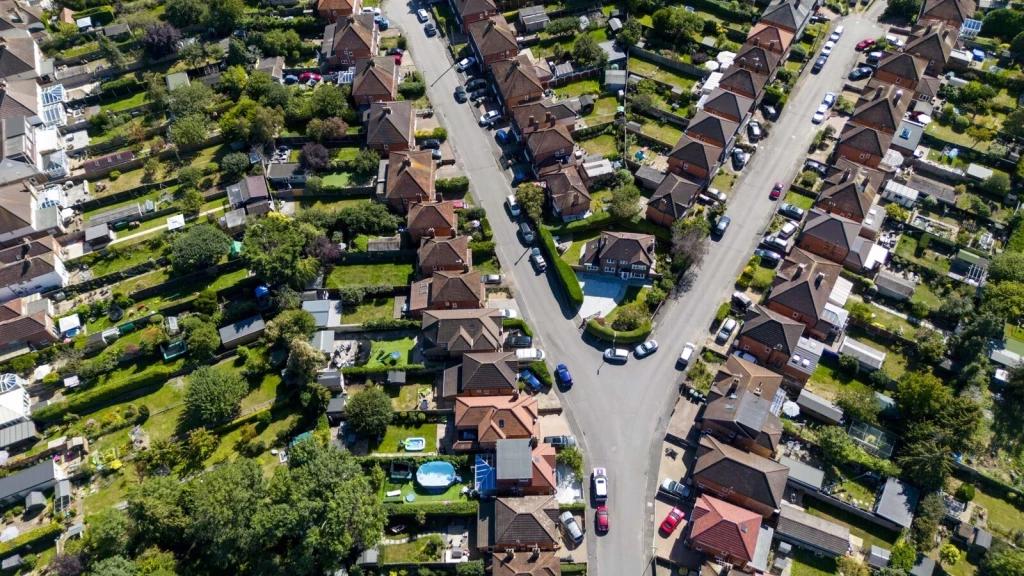
Planning decisions rarely turn on a proposal in isolation. They often turn on the comparison that sits behind it: what could lawfully happen on the site if the application were refused?
That comparison is known as a fallback position. It may be a permitted development extension, a prior approval, an extant planning permission, a lawful use, a certificate of lawful development, or even a partially implemented scheme.
In the right case, it can completely change the planning balance, because the decision-maker is no longer asking whether your proposal is perfect. They are asking whether it is better, or no worse, than the realistic alternative already available to you.
This is why fallback positions matter across so many planning situations. They can strengthen householder extensions, rural replacement dwellings, Class Q barn conversions, upward extensions, enforcement cases, and Green Belt proposals.
But they are also frequently misunderstood. A fallback is not a loose argument, a negotiating tactic, or a convenient line to add at appeal. It only carries weight when it is real, lawful, evidenced and genuinely comparable.
Used properly, a fallback can be the argument that unlocks a difficult planning decision. Used carelessly, it can collapse the moment an officer, inspector or enforcement team asks for proof.
In some cases, it may even make the applicant’s position worse by showing that the proposed scheme is actually more harmful than the lawful alternative.
So the real question is not simply whether a fallback position exists. The question is whether it is strong enough to matter.
In this article, I explain what a fallback position is, the legal test it must satisfy, how officers and inspectors weigh it, and why some fallbacks succeed while others fail.
I then look at real decisions across different types of development, from permitted development rights and Class Q conversions to Green Belt cases and enforcement disputes, to show exactly what evidence turns a theoretical right into a decisive planning advantage.
A fallback position in planning is a development, change of use or physical alteration that is already lawful on a site and that the owner could realistically carry out whether or not a new planning application is approved.
In simple terms, it shows what an applicant may do without needing a fresh planning permission. This may include permitted development rights, an existing planning permission, a lawful use, or another form of development that could lawfully take place.
A fallback position matters because the decision-maker is not comparing the proposed scheme with an empty or untouched site. They must consider what could lawfully happen anyway. That shift in the planning comparison is what gives a fallback position its strategic power.
In practice, a fallback can take any of several forms:
Permitted development rights: extensions, outbuildings or other works that may be carried out under The Town and Country Planning (General Permitted Development) (England) Order 2015 (GPDO) without a full planning application.
Prior approval consents: for example, a Class Q permission to convert an agricultural building into homes, or a Class AA upward extension.
Extant planning permissions: a valid, unexpired permission that could still be built out.
Certificates of lawful development: documents confirming that an existing use or completed works are lawful.
Existing lawful uses: uses that continue without any enforcement action against them.
Partially implemented permissions: a consent where development has genuinely begun in accordance with the approved plans.
Enforcement baselines: what is shown to be lawful on a site, which an enforcement notice cannot override.
Whatever form it takes, a fallback must be something the owner could lawfully do now, or is already lawfully doing, without needing permission for the new proposal. It does not need to be the owner’s preferred option. It only needs to be realistic, lawful and capable of being proved.
Fallback positions matter because planning decisions are often comparative. A proposal may conflict with policy in some respects. But that is not always the end of the matter.
The decision-maker should then ask sharper questions:
Is the proposal actually any worse than what an applicant may lawfully do without a new planning application?
Or is it, in planning terms, a better outcome?
If the fallback is realistic and at least as harmful as the proposal, that comparison may weaken the objection to the scheme.
Take a new house in the countryside. Policy may resist a new dwelling in that location. But if there is already consent to convert a nearby barn into a poorly designed home, the council has to compare the two outcomes.
A well-designed replacement dwelling, delivering the same single home in a more appropriate form, may be the better planning outcome.
This is where the fallback changes the whole frame of the decision. The choice is no longer “new house or nothing”. It becomes “new house or the lawful alternative”.
That shift is often where the application is won.
The same logic applies across many different settings. It may apply to a suburban extension, a Class Q barn conversion, an upward extension, a replacement dwelling, an enforcement case or a Green Belt proposal.
That is why the rest of this article groups the worked examples by the type of development and site involved. A fallback position is built and evidenced differently depending on the context, so it helps to look at each context in turn.
Within each group, the most recent decisions come first, so you can see how this reasoning is being applied now.
Underpinning every one of those examples is a simple legal question: what could happen on the site anyway?
The leading authority is Mansell v Tonbridge and Malling Borough Council [2017] EWCA Civ 1314. The Court of Appeal confirmed that where there is a real prospect of a fallback being carried out, it is a material consideration, and the decision-maker may give it whatever weight is appropriate.
A “real prospect” does not mean probable or certain. It means more than merely theoretical. The fallback must be something the applicant may genuinely and lawfully do, not just an argument invented to make the current proposal look better.
That test comes from Samuel Smith Old Brewery (Tadcaster) v Secretary of State [2009] EWCA Civ 333, where the court explained that a possibility will suffice. Mansell then applied that approach to permitted development fallbacks under The Town and Country Planning (General Permitted Development) (England) Order 2015 (GPDO).
Together, the two cases form the backbone of modern fallback arguments.
In practice, the decision-maker should ask three questions.
First, is there a lawful fallback? In other words, is there something the applicant may lawfully do without a new planning application, such as an existing permission, permitted development right, lawful use or certificate of lawfulness?
Second, is there a real prospect of that fallback happening? It does not need to be certain, but it must be a genuine possibility.
Third, if the fallback is lawful and realistic, how does it compare with the proposed development? If the proposal is no worse than the lawful alternative, or if it produces a better planning outcome, the fallback may carry significant weight.
The following five principles flow from this, and they are worth taking one at a time.
There must be more than a bare legal possibility, but the fallback need not be probable or likely. A genuine possibility is enough, because the point is that the alternative is credible, not that the owner has committed to it.
This is a lower bar than many applicants assume, which is precisely why evidence of any kind, however modest, can make the difference between a fallback that counts and one that does not.
The decision-maker first decides whether the fallback is a relevant material consideration, then decides what weight to give it, and the two stages are distinct. A fallback can clear the first hurdle and still be given little weight at the second if the comparison with the proposal is weak.
Treating the two as one is a common error in appeal statements, and, as we will see in Schneck, it is an error that can get a decision quashed.
It follows that the more specific, current and contextually similar the fallback, the heavier the weight.
A current certificate of lawful development, or building works already under way, is far stronger than a vague reference to rights that may exist on paper or a permission granted years ago that no one has acted on. This is the single factor most within the applicant's control, which is why so much of this article returns to evidence.
A fallback carries weight mainly where it can be compared directly with the proposal, so if the two differ greatly in nature, scale or location, the fallback counts for less. More than that, the fallback has to be at least as harmful as the proposal to be worth anything.
A fallback that would be smaller or less damaging than your scheme helps the council, not you, as the Ashford case below makes painfully clear. The strongest fallbacks therefore deliver a similar use at a similar scale, so that the only real difference is design quality or impact.
Finally, the proposal still has to be acceptable, because a fallback does not switch off the development plan. What it does is change the baseline: the proposal is judged against a realistic alternative rather than an idealised blank site.
That reframing can be decisive. But it works alongside the planning merits, not instead of them. The cases that follow show how the test works in practice, and why evidence and comparison matter more than assertion.
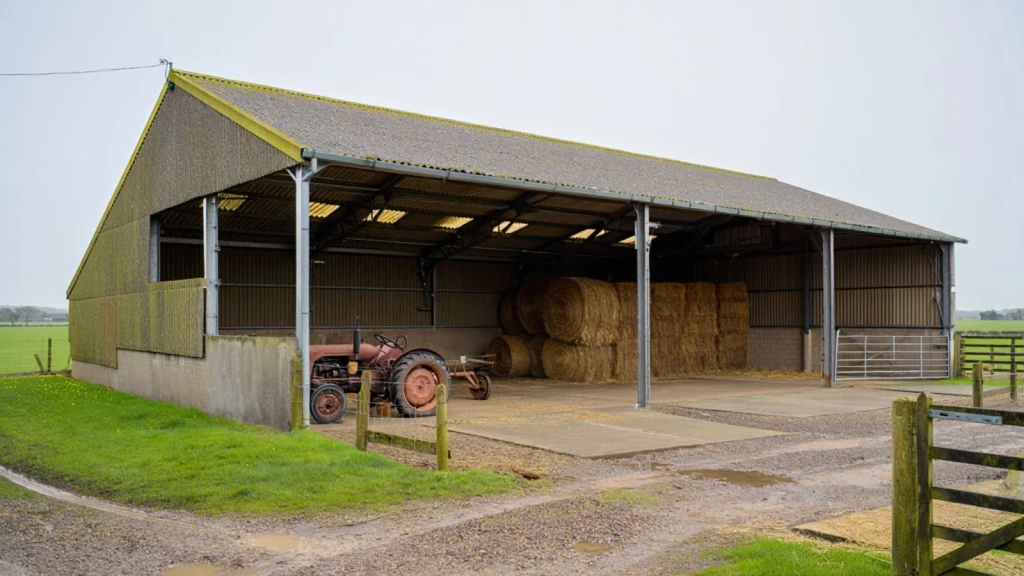
Some of the strongest fallback arguments involve agricultural and countryside buildings that already have a lawful route to become homes, usually through Class Q prior approval.
These fix the number of dwellings that could lawfully appear on a site, which lets the debate move on to whether a replacement or redevelopment would be a better-designed way of delivering the same thing. Mansell, the foundation case, falls into this group, so it makes sense to start here, working from the most recent reasoning back to the leading judgment.
At Rosevean near Penzance, the owner held an extant Class Q approval to convert a steel-clad agricultural building into one dwelling. Rather than converting the barn, the owner applied to demolish the barn and build a traditional house on the site, and the council refused, citing the open countryside location and the policy resistance to new dwellings there.
On appeal, the inspector accepted the Class Q consent as a genuine fallback. The reasoning was straightforward: if the appeal failed, a new dwelling would still come forward through the barn conversion, so the appeal house did not worsen the development strategy.
The inspector found a more than theoretical prospect that the fallback would proceed, noting that the owner had already constructed an access track and intended to live on the site, and gave the fallback substantial weight.
What turned the case, though, was design. The proposed house would have a taller roof in natural slate and granite walls, against the barn conversion's cream steel cladding and low roofline.
Either route produced one dwelling, but the new house was the more attractive and context-appropriate outcome, so with harm modest and a clear improvement in form, very special circumstances were found and permission was granted.
The takeaway is that a Class Q consent can be a powerful fallback in the countryside, because it fixes the number of dwellings and lets the argument move on to design quality.
The same logic applied at Elm Grove Farm in Somerset.
The site was a brownfield farmstead with several disused barns. It already had prior approval to convert five barns into homes.
Instead of carrying out that approval, the owner applied to convert one barn and demolish the others. Four new houses would then be built in their place. Either route would deliver five homes.
The site sat outside the village boundary. That meant the new houses were inappropriate development in principle. However, the inspector accepted the prior approval as a valid fallback while it remained extant, with an expiry date the following year.
This makes Elm Grove a useful example of fallback reasoning on a wider farmstead, rather than a single plot.
Because both options delivered the same number of homes, the decision turned on design.
The approved barn conversions would have created a denser and more continuous block of development. They would also have had a greater impact on the landscape and on openness.
By contrast, the proposed scheme broke up the massing. It arranged the new houses in a more sympathetic courtyard form. It also kept the site feeling more open and retained more of its rural character.
The inspector gave considerable weight to the prior approval as a fallback. However, the better layout of the new scheme justified choosing it over the denser lawful alternative.
Elm Grove is a reminder that a fallback comparison is not just about counting units. Layout, massing and the way a scheme sits in the landscape can all be decisive. A well-designed alternative may be preferable even where it delivers the same number of homes, or fewer.
Evidence, rather than design, was the decisive factor at Cartref in Hampshire, where the proposal was to demolish a dilapidated cottage and garage and build a new house, against a policy protecting small rural homes.
The site benefited from two strong fallback routes: a prior approval to enlarge the existing house, and a certificate of lawful development for an enlargement. The owners had even completed self-build documentation, which spoke to genuine intent.
On that evidence, the inspector found a real prospect that the fallback enlargement would be implemented, which meant the house could lawfully become very much larger regardless of the appeal.
Assessed in that light, the comparison favoured the proposal: the heavily extended cottage would consume its cottage-like character and be more harmful to the area, whereas the new house was set back and sympathetically designed and would be a positive enhancement of local character, as well as exceeding current sustainability standards and removing derelict buildings.
In the balance, despite the conflict with the small-homes policy, the replacement dwelling was acceptable because it was substantially better than the lawful fallback.
The lesson here is squarely about evidence. Strong documentation, a prior approval, a certificate and signs of financial commitment, lifted the fallback from a vague claim to a decisive factor. A fallback you can prove is worth far more than a better one you cannot.
These decisions all rest on Mansell. It is worth understanding because so much later fallback reasoning flows from it.
The case concerned a site with a large agricultural barn and a bungalow. The council granted permission to demolish both buildings and replace them with four detached houses.
The officer’s report treated Class Q as the fallback. Under Class Q of the GPDO, part of the barn could be converted into three dwellings without a full planning application.
A neighbour challenged the permission by judicial review. They argued that the council had been wrong to take that fallback into account.
The Court of Appeal dismissed the challenge and upheld the permission.
It found that the council was entitled to accept that there was a real prospect of the Class Q conversion being implemented. It was also entitled to compare the better-planned redevelopment with the more piecemeal lawful alternative.
Lord Justice Lindblom set out the principle that now sits at the heart of fallback cases. A real prospect does not have to mean probable or likely. A possibility is enough. There is also no fixed rule requiring the fallback to have a site allocation, a separate planning permission or a firm design before it becomes material.
The practical lesson is clear.
Once an awkward permitted conversion has a real prospect of being carried out, it must be taken into account. A better-planned replacement scheme may then carry the day against it.
In our experience, this is where applicants often under-prepare. They assume the merits of their own design will speak for themselves. Often, the stronger argument is the comparison with what the site could lawfully become without the new application.
Mansell tells decision-makers that they are entitled to make that comparison. It is then for the applicant to put the right evidence in front of them.
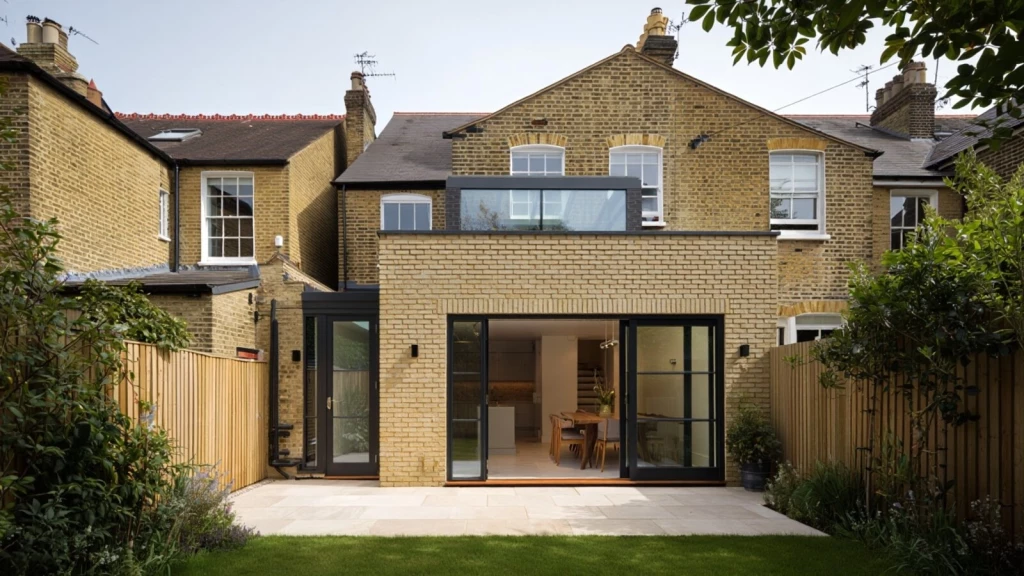
Away from agricultural land, the most common fallback is a permitted development right that the owner could exercise without full planning permission, whether a two-storey house extension, a hip-to-gable loft conversion, a commercial-to-residential conversion or an upward extension.
The argument is always the same: the proposal is no worse than that lawful alternative. The three decisions below, the most recent first, show the test working, and also show how easily it can be lost when the comparison or the evidence is weak. None of them sits in the Green Belt.
Gordon Road is a useful example of a fallback that was real, but still failed.
The case was decided in January 2026 and concerned a semi-detached house in Spelthorne. The owner wanted a part two-storey rear extension, a hip-to-gable loft conversion and a rear dormer. The council refused the proposal on character grounds.
The appellant relied on several fallbacks. These included a certificate of lawful development for the roof works, a prior approval for a 6m rear extension, and a separate planning consent. The argument was that, if the appeal failed, the first-floor element could be removed so the works would align with those existing approvals.
The inspector accepted that there was a real prospect of the fallback being implemented. So the fallback cleared the first stage of the test.
But it failed at the second stage.
For a fallback to carry meaningful weight, it needs to be at least as harmful as the proposal. Here, it was not. Without the first-floor element, the fallback would be smaller, less bulky and more proportionate than the appeal scheme.
In other words, the fallback did not help the appellant. It helped the council.
The inspector gave it only limited weight and dismissed the appeal.
Gordon Road is the case to remember when there is a temptation to rely on any available fallback. A fallback that is less harmful than your proposal does not strengthen your case. It quietly proves the council’s point that your scheme is the more harmful option.
The comparison has to work in your favour. If it does not, the fallback may do more harm than good.
A 2025 Shropshire appeal for a single-storey side and rear extension shows the test working the other way, and without a certificate.
No lawful development certificate had been applied for, yet the inspector accepted, from a reading of the GPDO, that a scheme sharing many of the appeal proposal's characteristics could be built under permitted development without any planning permission, so the availability of those rights was a material consideration.
Citing Mansell and Samuel Smith, the inspector treated implementation of the permitted development scheme as a distinct possibility, if not a likelihood, and therefore a real prospect.
The crucial point was that the fallback could be built without any control over materials or landscaping, whereas the appeal scheme could be conditioned, which made the proposal the better-controlled outcome, and the inspector allowed the appeal.
The case is a useful counterpoint to Gordon Road and to Eskra later in this article: a certificate is the safest evidence, but it is not always essential where the rights are clear on the face of the order. Relying on that, however, is a calculated risk rather than a safe default.
Fallbacks are not limited to houses. Schneck v Secretary of State [2022] EWHC 3306 (Admin) shows that they may also apply to commercial buildings.
The case concerned a commercial building that was proposed for conversion into flats, followed by an upward extension. The appellant relied on two sets of permitted development rights. One of these was Class AA, which allows upward extensions to certain commercial and mixed-use buildings.
The inspector gave the Class AA fallback only limited weight. The reason was that prior approval had not yet been granted. In the inspector’s view, there was therefore no certainty that the right would be available.
The High Court found this to be an error of law.
The correct test, following Mansell and Samuel Smith, is not certainty. It is whether there is a real prospect, or realistic possibility, that the fallback could happen.
The appellant had provided detailed reasons explaining why prior approval was likely. Those reasons were not challenged. The inspector had therefore applied too high a threshold when assessing the fallback.
That error affected the planning judgement on weight, so the relevant part of the decision was quashed.
Schneck is a useful reminder of the difference between a real prospect and certainty. A decision-maker cannot require an applicant to prove that a fallback will definitely happen. The question is whether it realistically could.
For applicants, the message is encouraging. You do not need to prove that the fallback is certain. You need to show that it is realistic, lawful and properly evidenced, and then compare it with the proposal.
The case also shows that permitted development fallbacks are not confined to rural barns or suburban rear extensions. They may also apply to commercial-to-residential conversions and upward extensions.
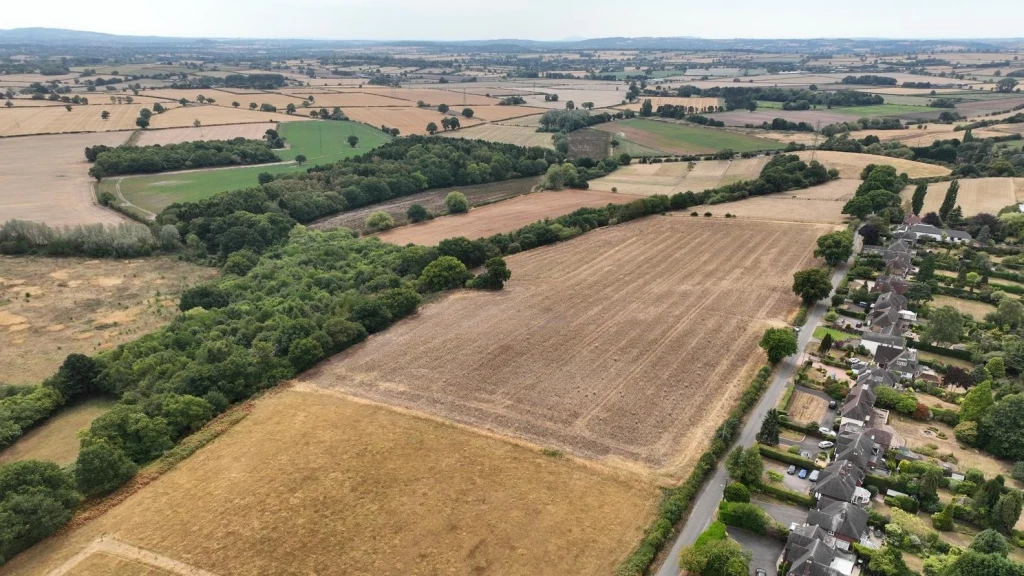
Nowhere do fallbacks carry more weight than in the Green Belt, which is why so many of the leading examples sit there.
Green Belt policy gives substantial weight to any harm. Development is inappropriate, and should not be approved, unless it falls within one of the exceptions in paragraph 154 of the NPPF, or is not inappropriate under the new paragraph 155 Grey Belt route introduced in December 2024, or, failing both, unless very special circumstances apply.
This is where a fallback earns its keep, because it can be one of those other considerations. If your scheme is no more harmful to openness than the lawful alternative, that comparison can be the heart of the case for very special circumstances.
There is a related route too: where the framework's exceptions apply, for example a replacement building that is not materially larger than the one it replaces, an applicant with a fallback can often show their proposal sits within those exceptions more comfortably than the lawful alternative would.
Either way, a credible Green Belt fallback sits alongside, rather than instead of, the very special circumstances case. The decisions below, newest first, show how much weight inspectors have been willing to give it, across both extensions and replacement dwellings.
This Green Belt project concerned a two-storey and single-storey rear extension, where the appellant relied on Green Belt permitted development rights as the fallback, involving separate extensions at each level designed to remain within permitted development.
An earlier inspector had taken a narrow view of the gaps required between such extensions, but in the new appeal the owner showed how the extensions could be designed within permitted development, for example with a narrow single-storey link and a small gap.
The strength of the case lay in its method. The inspector carefully modelled the realistic fallback options: one design had no gap, so fell outside permitted development, but produced a larger two-storey extension that was worse for openness, while another kept a small gap, remained within permitted development, and involved only a minor loss of single-storey area.
The inspector found that the gapped permitted development fallback would have no discernible effect on openness compared with the appeal scheme, and that the other option was only slightly worse.
In effect, then, the fallback was shown to be as harmful or more harmful than the proposal, so the proposal's Green Belt harm was outweighed by other considerations, including the design improvements, and the appeal succeeded.
The value of this case is that the appellant did the inspector's modelling for them, setting out each lawful option and its openness impact, rather than asserting in general terms that a fallback existed.
The same approach, applied to a much larger scheme, won the day in a Dorset appeal for extensions to a house in the South East Dorset Green Belt.
The local plan policy allowed extensions or replacement dwellings only where the impact on openness, particularly through height or bulk, was not materially changed. The council had given no weight to the works the owner could carry out under existing rights, yet the appellant's case was built around precisely that fallback, supported by a certificate of lawful development.
The inspector found that, compared to the appeal scheme, the fallback would have a far greater spatial and visual impact on the Green Belt. The fallback combined three separate extensions with three outbuildings and a new driveway, which together would result in significant encroachment and intrusion, so the harm to openness would be far greater with the fallback than with the appeal scheme.
On that basis the appeal was allowed. The proposal was inappropriate development, and the floor area increase exceeded 50 per cent, but very special circumstances existed because the realistic alternative was demonstrably worse for openness.
The case is a powerful reminder that the headline numbers, here a large percentage increase in floorspace, do not decide a Green Belt case on their own. What matters is the comparison with the lawful alternative.
That comparison was equally decisive in a Woking Green Belt replacement dwelling appeal, where the owner wanted to replace the existing house with a new one larger than policy would normally allow.
To establish the fallback, the team secured a certificate of lawful development for a side and rear extension, front porch and rear dormer, alongside prior approval for an additional storey, so that the existing house could lawfully be enlarged across several fronts.
Crucially, the appellant provided comprehensive plans showing how the separate approvals could combine into one enlarged home. That fallback would have had greater volume, footprint and height than the proposed replacement dwelling.
The council refused the application. But on appeal, the inspector accepted that the fallback was a material consideration with a real prospect of implementation. If built out, it would have produced a disjointed and awkward appearance.
By comparison, the proposed replacement dwelling was more coherent, more carefully designed and visually acceptable in the area. It also offered the environmental benefits of a new build. The inspector gave the fallback significant weight and concluded that very special circumstances existed.
Woking is a textbook replacement-dwelling fallback: assemble the lawful enlargements, prove them with a certificate and prior approval, then show that one well-designed replacement is the lesser harm. It is the disciplined version of the strategy that the failed cases later in this article lacked.
A similar strategy succeeded at Springhill Lane in Lower Penn.
The case involved two existing bungalows in the Green Belt. The proposal was to demolish them and replace them with one larger house. As with many replacement dwelling cases in the Green Belt, the proposal was treated as inappropriate development.
The key point was evidence.
Both bungalows already had certificates of lawful development for substantial extensions. This meant the inspector could accept that there was more than a theoretical possibility that the fallback would be implemented.
Once that was established, the comparison became decisive.
The proposed replacement house would be more attractive and coherent. By contrast, if the owner maximised the permitted development rights, the result would be piecemeal and ad hoc.
Although the new house would be larger in floorspace, it would sit on the original footings and have a more cohesive roof design. The alternative would be two awkwardly extended bungalows with flat roofs, creating a more disjointed appearance and greater harm to openness.
The inspector gave considerable weight to the fallback. On balance, that was enough to amount to the very special circumstances needed to allow the new house.
Springhill Lane shows why certificates matter. They removed the argument about whether the fallback was real. That allowed the inspector to move straight to the comparison of outcomes, which is exactly where an applicant wants the debate to be.
Turning from replacement dwellings to extensions, Chedley on Red Hill in Denham shows the same baseline logic at a smaller scale.
A homeowner's application for a modest single-storey rear extension was refused as inappropriate development in the Green Belt, but the owner held a prior approval for an 8m rear extension that had already been granted, and the inspector treated that as a fallback with a real prospect of implementation, giving it very substantial weight.
Because the two schemes were broadly comparable in volume, the additional impact of the proposed extension, slightly wider than the fallback, would not significantly reduce openness.
The fallback therefore showed the proposal was not materially worse than what could lawfully be built anyway, so the harm was clearly outweighed, very special circumstances were demonstrated, and the appeal was allowed.
Chedley is a clean illustration of how a granted prior approval becomes the baseline against which a slightly different scheme is measured.
Coniston Road in Kings Langley is different in kind, because here the fallback was not a make-weight but the entire justification. The dispute concerned a planning condition removing Class E outbuilding rights from an already-approved outbuilding in the Green Belt, the council having granted permission for the outbuilding but then sought to claw back permitted development rights to protect openness.
The inspector's reasoning was simple: the outbuilding could itself have been built under permitted development, so forcing the owner to give up those rights would not further protect openness. The permitted development fallback, on its own, provided the very special circumstances justifying the outbuilding, so the condition was overturned and the Class E rights remained.
The point worth holding on to is that a fallback can sometimes do all the work in a Green Belt case, not merely tip a finely balanced one.
That idea, of a fallback that is itself the justification, also decided a Broxtowe appeal at Moorgreen, in a slightly different form.
The case concerned a Green Belt dwelling that had not been built in accordance with the approved plans, the main change being the addition of roof lights to create first-floor accommodation. The council refused to regularise it, treating the as-built house as fresh inappropriate development for which very special circumstances had not been shown.
The inspector agreed the dwelling was inappropriate development, but found the changes from the approved plans had not had a substantial effect on openness, so the harm was very limited. Decisively, the original outline permission had itself been granted on the basis that very special circumstances existed, and that reasoning remained as relevant as before.
The extant permission was therefore a significant fallback position, amounting to a very special circumstance in its own right, and on that basis the appeal was allowed.
Moorgreen is a useful companion to Coniston Road. Both show that an existing lawful permission or right can supply the very special circumstances by itself, without the applicant needing to assemble a separate comparison, provided the departure from what was approved does not materially worsen openness.
Taken together, these decisions point in the same direction.
In the Green Belt, a credible lawful fallback can shift substantial weight in your favour. This is especially true where your proposal is no more harmful to openness than what could already be built.
Inspectors have shown that they are willing to give very substantial weight to a well-evidenced fallback. That can be the case even where the proposal may, at first glance, appear difficult to justify because of its scale.
But the strength of the argument is not in simply saying that a fallback exists. It is in proving it.
The work is in the evidence. It is in the comparison. It is in showing, clearly and carefully, that the proposal is as good as, or better than, the lawful alternative.
That is exactly what the failed cases in the next section lacked.

For all that power, fallback arguments fail when they are not properly founded.
Three cases show the most common ways this happens: there is no proof that the lawful baseline actually exists, the fallback depends on a separate approval that may never come, or the alternative simply is not harmful enough to help. The first is worth setting out in full, because it shows just how much can be at stake, and the three appear here with the most recent first.
A 2026 Planning Appeals Commission decision in Northern Ireland shows how quickly a fallback argument can collapse when it is not properly evidenced.
The case concerned a poultry unit on land near Eskra, in the Fermanagh and Omagh District Council area. It is an important reminder of the limits of the Mansi principle, and of the value of securing a certificate of lawfulness before relying on a fallback.
The appellant had planning permission for a free-range poultry unit. However, the building that was actually constructed was materially larger and positioned differently from the approved plans.
The approved building was 120 metres long. The building, as built, was 175 metres long, making it around 55 metres longer. It was also narrower and created roughly a third more floorspace, amounting to around 584 square metres of additional floor area.
The appellant argued that the original permission had been implemented because the approved and constructed buildings overlapped in general position. On that basis, they said the original consent remained a lawful fallback, and that the building could simply be reduced back to the approved length.
To support this, the appellant relied on Mansi v Elstree RDC (1964) 16 P&CR 153. In broad terms, Mansi establishes that an enforcement notice cannot prevent a person from doing something they are already lawfully entitled to do.
The Commission examined the evidence and was not persuaded.
There was no certificate of lawful development confirming that the original permission had been lawfully commenced. There was also uncertainty over whether a pre-commencement condition requiring visibility splays had been discharged.
More importantly, the Commission could not be satisfied that any of the foundations were in their approved location. It therefore found that the building as constructed was a material departure from the approved scheme, not a non-material change.
That finding was decisive.
Because the original permission had not been shown to have been lawfully implemented in accordance with the approved plans, there was no lawful fallback to rely on. The appellant could not simply reduce the building to resemble the approved scheme, because the lawful baseline had not been established.
The Commission therefore found that the requested partial demolition did not offend the Mansi principle. In substance, the enforcement notice requiring removal of the building was upheld, although the Commission allowed a longer compliance period so the existing flock could complete its laying cycle, recognising the significant financial loss involved.
The lesson is stark. A fallback cannot save a building that was never shown to have permission to exist in the first place. The Mansi principle protects what is genuinely lawful, but it does not create a lawful baseline where that baseline has not been proven.
Here, the evidential risk sat with the appellant, and the appellant failed to discharge it.
The practical point is simple. If a future fallback argument may matter, secure a certificate of lawfulness early. It may add cost and time, but Eskra shows how difficult, and expensive, it can be to rely on the Mansi principle without one.
New Street Cottages is a useful warning because the fallback failed in two ways at once.
The case concerned a Green Belt householder appeal. The owner of a semi-detached house wanted a two-storey side extension and porch. The council found this to be a disproportionate addition, and therefore inappropriate development in the Green Belt.
The appellant relied on several permitted development fallbacks. These included a loft conversion and dormer, a side extension, and a 3m, then 6m, rear extension under the larger homes scheme.
The argument was that these fallback options would be more harmful than the appeal proposal.
The inspector was not persuaded.
The submitted plans did not give the dimensions of the alternative works. This meant the inspector could not be certain that they would fall within permitted development. The inspector also noted that this point could only be settled properly through a certificate of lawful development.
Even if the works did qualify as permitted development, they still would not have helped the appellant. The single-storey side and rear extensions would not create the same visual bulk or intrusion as the proposed two-storey extension.
In other words, the fallback was not more harmful than the appeal scheme. It was therefore given only limited weight. The very special circumstances case failed, and the appeal was dismissed.
New Street Cottages brings two evidential traps together.
A fallback that is not properly dimensioned and certified may not be accepted as real. But even a real fallback will not help if it is less harmful than the scheme you are trying to justify.
Both parts of the test have to be satisfied.
Kristaval shows the third failure mode: the conditional fallback.
This was a Green Belt replacement dwelling appeal in Sunbury. The appellant relied on a permitted enlargement of the existing house.
However, that fallback depended on two things.
The first was prior approval, which the appellant already had. The second was a separate flood risk permit from the Environment Agency, because part of the house was close to a river.
The Environment Agency had made its position clear. Without a flood risk assessment showing no adverse impact, no permit would be granted.
There was no evidence that the flood permit, or any exemption, would be obtained.
The inspector applied the Mansell test and found that the fallback had no more than a theoretical prospect of happening. It was therefore given little weight.
Once the fallback was effectively removed from the balance, the Green Belt harm stood alone. The appeal was dismissed.
Kristaval shows that a fallback depending on a future approval is vulnerable. If that approval is far from guaranteed, the fallback may be downgraded or ignored.
The pattern across these three cases is clear.
A fallback will fail if it is not proven to be lawful. It will also fail if it depends on a further approval that is far from certain. And it will fail if the lawful alternative would actually be less harmful than the proposal.
Applicants need to show more than a right on paper.
They must show that the right can realistically be used. They must also show that any conditions or further consents can realistically be satisfied.
Most importantly, they must show that the fallback would be at least as harmful as the scheme they want to build.
If any of those points are missing, the decision-maker may give the fallback little or no weight.
That is why the strongest fallback cases are built deliberately from the start, using the ingredients set out next.

Looking across the successful and failed cases, the pattern is clear. A strong fallback is evidence-led and built around a direct comparison. A weak fallback is usually a vague appeal to rights that have never been tested. In practical terms, a persuasive fallback brings together six things.
There must be an actual lawful right or permission behind the fallback, whether a current planning permission, an extant prior approval, a confirmed lawful use, or specific permitted development rights with any necessary prior approvals already obtained.
Without a lawful route, there is nothing to compare the proposal against in the first place.
Beyond the right itself, the evidence should show the fallback could genuinely happen: site works already carried out, such as foundations, access or utilities, an active building control or planning process, or a clear and credible statement of intent.
If the permission has a time limit, show there is enough time to begin it, and that the trigger for commencement has lawfully been met.
To make the comparison possible, provide drawings and schedules for both the fallback and the proposal, setting out footprint, floorspace, height and volume.
The closer the two schemes overlap in use and scale, and the fewer the differences in design, the stronger the comparison, and a fallback that delivers a similar thing in a worse way is the most persuasive of all.
All of that has to be backed by paperwork: a copy of the consent and its conditions, certificates of lawful development, prior approval notices, building control applications, structural reports, surveys, tender and construction drawings, contracts, and photographs of any work under way.
If the fallback is a lawful use, prove continuity with historical maps, utility bills, aerial photographs or statutory declarations. The Eskra and New Street Cottages decisions are reminders that undimensioned plans and testimony alone are rarely enough.
Then comes the point the failed cases drive home: show that your proposal is at least as good in planning terms, and ideally that the fallback would be worse. If the fallback is bulky, poorly sited or visually intrusive, explain how your scheme avoids those harms.
The South East Dorset and Woking cases turned on exactly this, and Gordon Road failed for the want of it, because a fallback that is smaller or less harmful than your scheme actively undermines your case.
Finally, present a written comparison that lets the decision-maker weigh each aspect easily, under clear headings such as footprint, height, openness and character.
In the Green Belt, compare openness in concrete terms, for example through sightlines or before-and-after sketches, rather than asserting that the impact is similar. The aim is to make the planning judgement easy to reach: this proposal is better, or no worse, than what could lawfully happen anyway.
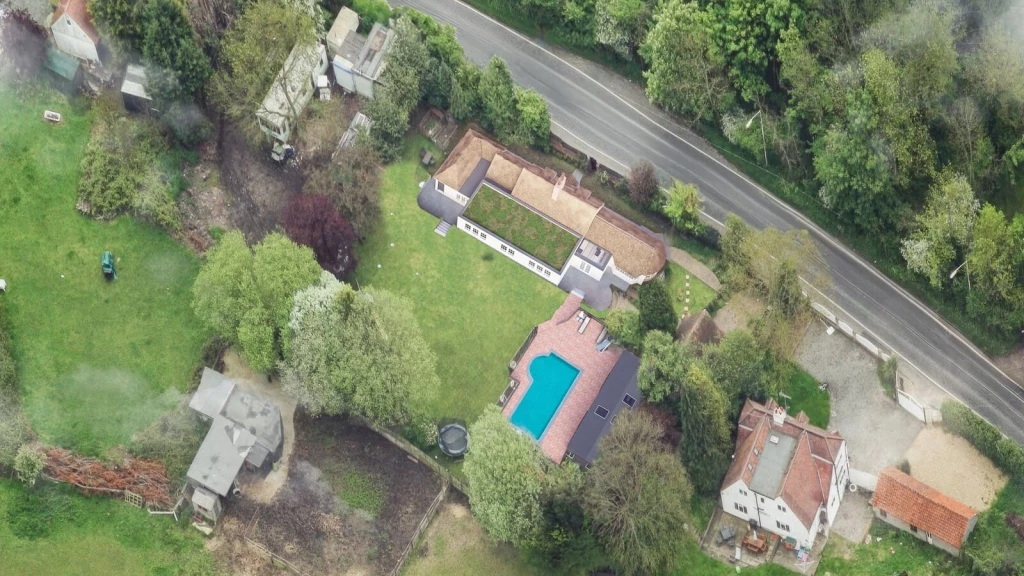
In practical terms, the fallback should be treated as a dossier you assemble before submission, not an argument you save for appeal.
This matters even more under the new planning appeal system. For most applications submitted on or after 1 April 2026, appeals will follow the Part 1 written representations procedure.
That means appellants no longer have the same opportunity to submit a full written appeal statement or introduce fresh evidence later. The appeal form allows only a short explanation of why the LPA’s decision is disputed, and new material may be disregarded.
For fallback arguments, this is critical.
If the certificate, drawings, comparison schedule and supporting evidence were not before the council when it made its decision, it may be too late to rely on them properly at appeal. The safest approach is therefore to build the fallback case into the original application from the outset.
That is why the strongest cases are documented early, with a practical evidence pack that usually includes:
A practical fallback evidence pack will usually include:
Prior approval decision notices and approved plans, particularly for Class Q, Class AA or other permitted development routes.
Certificates of lawful development or certificates of lawful use, together with the approved or certified plans where relevant.
The full planning history for the site, including all relevant decision notices, approved drawings, planning conditions and expiry dates.
Evidence of lawful commencement, where this is relevant, such as site photographs, dated invoices, building control records, commencement notices, contractor records, progress certificates or a certificate of lawfulness.
Existing and proposed drawings for both the fallback scheme and the preferred scheme, including site plans, floor plans, elevations and sections, all with clear dimensions.
A comparative schedule setting out the footprint, floorspace, height, volume, siting and use of both schemes.
In Green Belt cases, a Green Belt Openness Assessment justifying the proposal’s effect on the openness of the Green Belt through the consolidation of built form, reduction of spread, and improvement of visual containment.
A short fallback position statement explaining the planning comparison, including design, scale, massing, layout, landscape impact, openness, neighbour amenity and any environmental effects.
Evidence of intention or ability to implement the fallback, such as a project programme, contractor quote, appointment letter, funding evidence or other credible delivery information.
Relevant technical reports, such as ecology, highways, flood risk, heritage, arboricultural, landscape or drainage reports, especially where the same constraints apply to both the fallback and the preferred scheme.
Evidence that the fallback remains live and capable of implementation, particularly where a permission or prior approval is time-limited, or where conditions, further consents or new constraints may affect whether it can still be relied on.
The underlying principle is to leave nothing to speculation. If you say the owner can carry out the fallback, the evidence should show that the owner already holds the right and could realistically use it. More often than not, the document that does most of that work is a certificate of lawfulness.
A certificate of lawful development can make or break a fallback, because it provides hard, almost incontrovertible proof of what is lawful now, which takes the doubt out of the first stage of the legal test.
In the Springhill Lane and Woking appeals, the owners already held certificates for their extensions, which is precisely why the inspectors could find a greater than theoretical possibility that the fallback would be implemented, and move straight to comparing outcomes.
The failed cases make the same point in reverse.
At Eskra, and at New Street Cottages, the appellants had permissions or rights claimed on paper but no certificate confirming them, and in New Street Cottages no stated dimensions either, so in both the absence of proof was decisive.
The Shropshire householder case shows the other side of the coin, that clear permitted development rights on the face of the order can sometimes carry weight without a certificate, but relying on that is a calculated risk rather than a safe default.
The practical conclusion is that where a site may rely on a fallback in a tight situation, such as an appeal or an enforcement dispute, it is often wise to secure a certificate of lawfulness up front.
Even where it is not strictly required, it converts a fallback from a guess into a fact at the moment it matters most. Yes, it adds cost and delay, but set against the risk of losing the argument, or losing a building, that is usually a price worth paying.

Fallback positions are not tricks or loopholes. They are a reality check.
The planning system should not assess a proposal as though the site is frozen in time. If a homeowner could already extend under permitted development, or if a site already benefits from a lawful alternative, that baseline matters.
The honest question is not whether the council can find a reason to resist the proposal. It is whether the new scheme is at least as good as the lawful alternative.
But fallbacks have to be used responsibly, because the case law cuts both ways.
The strongest cases are built from day one, not bolted on at appeal, which means securing certificates early, setting out the fallback clearly with proper dimensions, and designing the proposal so that it is genuinely better than the alternative.
I have seen a well-drawn fallback comparison tip a difficult decision to approval, as it did at Rosevean, Cartref, Springhill Lane and Woking. I have also seen, as at Eskra, Sunbury, New Street Cottages and Gordon Road, a fallback that was unproven, conditional or simply less harmful than the proposal dismissed in a paragraph, leaving the applicant to fight a refusal, or worse, an enforcement notice, with nothing in reserve.
Prepared properly, a fallback makes planning judgement more honest, not less. If you can lawfully extend by a given amount, an application for a little more can succeed only if you show that the extra is justified, not by pretending the lawful baseline is not there. This is the kind of comparison your planning consultant should be building into your case long before the application is submitted, with the evidence to support it.

A fallback position can unlock a difficult planning decision.
But only when it is real, lawful and evidenced. It must also be at least as harmful as the scheme you actually want.
Where the proposal is clearly a better planning outcome than the lawful alternative, councils and inspectors may give the fallback real weight. In some cases, they may give it very substantial weight.
Where the fallback is weak, conditional, unproven or less harmful than the proposal, it can collapse exactly when it is needed most. That can expose the applicant to refusal, or in more serious cases, enforcement.
Planning outcomes will always remain site-specific. They depend on the planning history, local policy, the evidence and the council’s assessment of the planning balance. The most sensible first step is to identify the fallback early and prove it.
That may mean securing a certificate of lawful development. It may mean documenting the relevant rights, the commencement position and any conditions attached to them. It should also mean preparing fully dimensioned comparison drawings before the design is finalised.
Only then should the scheme be shaped against that baseline, so it comes out ahead on design, openness, amenity or overall planning impact.
At Urbanist Architecture, our team of architects and town planners regularly builds fallback arguments into planning strategies on constrained, countryside and Green Belt sites, from the first appraisal through to appeal.
If you think your site may have a fallback worth relying on, the safest move is to test it properly and evidence it fully before you commit to a full application. Know your fallback, prove it, make the most of it, and turn it into an advantage.
We look forward to learning how we can help you. Simply fill in the form below and someone on our team will respond to you at the earliest opportunity.
The latest news, updates and expert views for ambitious, high-achieving and purpose-driven homeowners and property entrepreneurs.


We specialise in crafting creative design and planning strategies to unlock the hidden potential of developments, secure planning permission and deliver imaginative projects on tricky sites
Write us a message