Read next
The latest news, updates and expert views for ambitious, high-achieving and purpose-driven homeowners and property entrepreneurs.



Speak to enough homeowners, developers and commercial clients, and you hear the same frustration in slightly different words.
A well-prepared scheme, with a competent design team, a sensible strategy and a respectable policy case, can still hit planning delays, a late objection, a committee ambush, or a refusal that looks impossible to reconcile with an apparently similar approval down the road.
That feeling is not irrational. It is also not the whole story.
Nationally, district planning authorities in England still grant the large majority of decisions, around 87% in recent quarters. But that headline hides where planning uncertainty actually lives: in major schemes, on complex sites, in politically sensitive applications, in validation and post-validation delays, and in the small share of cases where discretionary judgement decides everything.
In the same data, only around 19% of major applications were determined within the statutory 13-week period in early 2025, even though most were eventually decided within 13 weeks or an agreed extension of time. The official planning application statistics tell both stories at once: high approval rates, and real unpredictability at the sharp end.
In this article, I will explain why planning permission in England increasingly feels inconsistent, subjective and hard to predict.
I will focus on four structural causes: under-resourced planning departments, a development model that depends on private, developer-led delivery, fragmented consultation with multiple statutory bodies, and the wider mix of committee politics, policy churn and legal risk that sits behind them.
Then I will set out, plainly, how to reduce that risk before you commit money to a scheme.
My argument is not that planning should become a mechanical exercise. It should not.
Planning is a public-interest judgement, not a spreadsheet formula. But there is a difference between necessary professional judgement and avoidable inconsistency.
Too often, applicants face a postcode lottery created by outdated local plans, different schemes of delegation, different committee habits, different officer discretion and the wider culture of the council.
Because the planning system is carrying two different kinds of uncertainty at once.
Some of it is legitimate. Policy has to be applied to real places, and real places are messy.
Some of it is procedural and cultural, and comes from how different councils resource, validate, consult, negotiate and defend their decisions.
The first kind is the price of good planning. The second kind is the part that has become more corrosive than it needs to be, and it is the part you can actually plan around.
The legal starting point is clear. Under the rules on determining a planning application, decisions must be taken in line with the development plan unless material considerations indicate otherwise, and the National Planning Policy Framework is a material consideration that can carry significant weight.
But the weight given to any material consideration is for the decision-maker in each case. The system is policy-led, not algorithmic. Professional judgement is built into it by design.
That is why two sites that look superficially similar can reach different planning balances.
Many clients assume that if a neighbour secured permission for something similar, their own outcome should follow as precedent. It does not work like that.
Planning history can be relevant, but it is not binding precedent in the way people imagine. Each case is considered on its own merits. That is legally orthodox. Commercially, it means the system can feel unstable even when it is applying the rules correctly.

Before politics, design or policy ever enters the room, many applications are already slowed by something more basic: the planning department does not have the people, the time or the up-to-date plan to deal with them quickly.
This is the least glamorous cause of unpredictability, and probably the most widespread. It is also the one applicants are least able to influence, which is precisely why it needs to be understood and budgeted for.
The national capacity evidence is stark. The MHCLG local authority planning capacity and skills survey found that the overwhelming majority of planning departments had difficulty recruiting for at least some roles, most struggled to retain staff, and almost all reported at least some skills gaps.
Those gaps were slowing decisions directly: a large share of departments said skills shortages were reducing the speed of determining applications, and many reported limited in-house access to planning lawyers, which matters the moment a case turns contentious.
More recent RTPI workforce analysis points the same way, with many English authorities reporting multiple vacancies and a meaningful minority carrying severe shortfalls.
The institute's State of the Profession 2025 report sharpens the picture: most responding authorities had vacancies, around half said their team lacked capacity frequently or all of the time, and public sector planners were far more likely than their private sector counterparts to report being stretched.
Crucially, the RTPI warns in plain terms that these capacity issues are likely to hinder the very reforms meant to speed the system up. That is the part most commentary misses. You cannot deregulate your way out of a staffing problem, because someone still has to write the report, run the consultation and defend the decision.
The consequence is cumulative. When a department is short-staffed, every stage takes longer: validation, consultation, negotiation, drafting and sign-off.
A planner juggling a heavy caseload cannot give early, decisive steers, so applicants get silence where they need direction. None of that has anything to do with the merits of your scheme, but all of it lands on your programme and your cash flow.
Resourcing also shapes the policy backdrop. Not all councils are working from equally current foundations.
The National Audit Office reported that, as of early 2025, only a minority of local planning authorities had an up-to-date local plan, far fewer than five years earlier. Independent analysis cited by the RTPI put the share with current plans at under a third, with plans taking around seven years on average to adopt.
This matters in a very practical way. When a local plan is old, partial or under review, the room for interpretation expands, and so does risk. Everyone ends up arguing over the meaning of words like "character", "sustainability", "openness" and "harm", because the plan no longer settles them.
An up-to-date local planning authority plan with a clear design code removes a great deal of that friction. An outdated one quietly hands the decision back to discretion, which is exactly where unpredictability lives.
The underlying problem is not hard to identify. Too many authorities are entering this period with skeleton teams and ageing plans, and the priority now should be delivery and stability, not yet another reinvention of the rules.
The lived reality can be much slower than the statutory clock suggests. Some authorities' own service updates have reported average decision times for major applications running well beyond a year, alongside heavy per-officer caseloads and backlogs of several hundred applications once valid, invalid and newly submitted cases are combined.
I cite that as an illustration rather than a national benchmark, but it shows how an under-resourced department generates delay, validation problems and approval risk before committee politics is even in the picture.
For an applicant, the rational response is not outrage. It is to assume the department is stretched and to remove every excuse for delay before you submit.
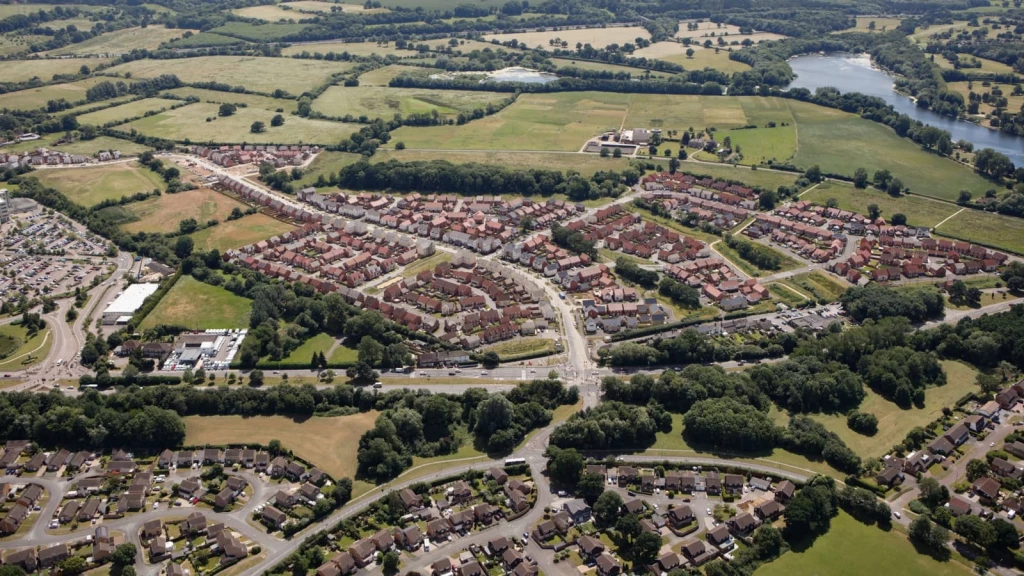
The second structural cause is the shape of the housing market itself. In England, most new homes are delivered by private developers responding to demand, land values and finance, not by the state building directly at scale.
That model has real strengths, but it ties delivery tightly to things that move: planning rules, market cycles, viability, land promotion and political appetite. When any of those shift, delivery wobbles, and the planning system is where the wobble shows up.
A developer-led system is, by definition, partly speculative.
A site is acquired or optioned, promoted through the plan or the application process, and only becomes viable if permission, costs and sales values line up. Each of those variables carries planning risk.
A change in national policy, a shift in the housing land supply position, a movement in build costs or interest rates, or a single difficult committee can turn a viable scheme into a marginal one overnight.
There is also a deeper structural point, which is difficult to ignore and worth addressing directly.
A speculative model is built around margin, not volume. A volume housebuilder will build out at the rate the local market can absorb without depressing its own sale prices, because that is what protects margin.
So even when permission is granted, delivery can be slower than the consent implies. That is not a planning failure as such, but it means planning permission is a necessary condition for delivery, not a sufficient one, and it explains part of the gap between consents granted and homes actually built.
This is why experienced developers treat planning as risk management, not paperwork. The question is rarely just "will it be approved?" It is "how much will this route cost, how long will it take, what is the probability of a clean and defensible permission at the end, and does the scheme still work if the market moves while I am waiting?"
Viability is where this becomes concrete. Once a scheme depends on negotiated affordable housing, Section 106 obligations or contested viability evidence, the determination period can stretch a long way past the statutory target.
The National Audit Office has warned about incomplete data, outdated plans, staffing gaps and the sheer complexity of financial viability assessments, including a skills and experience imbalance between some authorities and large developers.
That imbalance is the quiet problem.
A stretched authority is often negotiating detailed financial points with a far better-resourced applicant team, which breeds both delay and suspicion. The application has not become worse. It has entered a more complex part of the machine.
In my experience, this is one of the most common reasons an otherwise deliverable scheme drifts for months while everyone argues about inputs to a spreadsheet rather than the quality of the place being created.
The planning balance is not the same everywhere, because housing pressure is not the same everywhere.
Where the Housing Delivery Test shows a council falling well below target, consequences follow, including the presumption in favour of sustainable development and, in some cases, a buffer on land supply. A scheme that lands in a borough with a severe shortfall, an out-of-date plan and a weak five-year supply is judged in a very different policy environment from the same scheme in a council with stronger supply and firmer policy cover.
That is not necessarily bad planning. But it is, unmistakably, a source of inconsistency between councils, and applicants feel it directly. The same drawings can be "policy compliant enough" in one authority and "contrary to the plan" in the next, and the difference often comes down to the council's delivery record rather than the design on the page.

The third structural cause is consultation. Most non-trivial applications must be referred to a range of statutory consultees and stakeholders, each looking at the scheme through a single, narrow lens. Individually, each consultee is doing its job.
Collectively, the consultation process can become a coordination problem that delays projects which are, on the planning merits, perfectly deliverable.
Depending on the site, an application may need input from several different bodies and internal teams, each able to raise an objection or request more information. The point is not that any one of them is unreasonable. It is that there are many of them, and they do not act in unison.
Highways and the local highway authority assess access, parking, trip generation and visibility.
Ecology and biodiversity officers look at protected species, habitats and biodiversity net gain.
The lead local flood authority and drainage teams examine surface water, sustainable drainage and flood risk.
Heritage and conservation officers consider listed buildings, conservation areas and archaeology.
Urban design and design review panels test scale, massing, character and appearance.
Environmental health looks at noise, air quality, contamination and amenity.
Infrastructure and utility providers consider water, energy, education and health capacity.
Each of these is a potential point of friction, and in practice we often see the same pattern emerge. The problem is rarely that a single consultee is being difficult. More often, it is that the responses are not synchronised.
A late reply from one body, a holding objection from another, or two teams offering conflicting comments may stall a scheme that would otherwise be ready to determine. Where one consultee will not respond until another has, the dependencies stack up and the clock keeps running.
Government itself has now named these failures with unusual candour. In a March 2025 written ministerial statement on the statutory consultee system, ministers criticised consultees for failing to engage early, taking too long, re-opening issues already settled at plan-making stage, and lodging automatic holding objections that are often withdrawn late.
The same statement warned about advice that seeks "gold-plated" outcomes going beyond what is needed to make development acceptable. A further consultation on reforming statutory consultees followed in late 2025, proposing to narrow remits and cut unnecessary referrals.
The most damaging pattern for applicants is the repeated request for information.
A drainage strategy is submitted, then queried. An ecology survey is provided, then a further seasonal survey is requested, which can cost months because some surveys can only be done at certain times of year. A transport assessment is accepted, then revisited after a late highways comment.
Each round resets the practical timetable and tests the applicant's budget. None of it necessarily reflects a weak scheme. It reflects a process in which several independent reviewers, often under-resourced themselves, comment in sequence rather than in parallel.
The honest reading is that fault runs both ways. Consultees are stretched and sometimes over-cautious. Applicants and councils also make it worse, through blanket referrals and poor-quality information that invites a holding objection.
That is why front-loading evidence matters so much. On predictable friction points, including design, heritage, highways, ecology and drainage, getting the technical work right and complete before submission is almost always cheaper than discovering the gaps during determination.

The fourth cause is the most visible and the most misunderstood.
Even where the policy and the evidence point one way, the final decision often runs through a layer of committee politics, local opposition and risk appetite. This is where applicants most often conclude the system is irrational, and where, in fact, it is usually doing exactly what planning law allows.
Most decisions never reach a committee. The Planning Advisory Service survey of councils found that most responding authorities delegated more than 90% of decisions to officers, and almost half delegated more than 96%. Government now puts the national figure at around 96% of planning decisions already taken by officers. Yet the cases that create programme slippage, reputational pain and appeal risk are disproportionately the ones that do go to committee.
The same survey found wide differences in committee practice, and that only a minority of respondents felt members really understood planning. In other words, the committee handles a small slice of decisions, but a hugely influential one, and it is exactly the slice where outcomes are hardest to predict.
That tells you something important. The local scheme of delegation, and the culture around it, matters enormously.
One council may treat the officer recommendation as the technical starting point and depart from it only for a strong planning reason. Another may operate more like a public political arena, with late lobbying, a lower threshold for overturns and a higher tolerance for refusal.
The LGA's planning committee protocols are candid that lobbying of members is routine, that councils differ on petitions and public speaking, and that good committees depend on trust between officers and members. Local politics is not a side issue. It is part of the decision-making environment, and reading it correctly is half the job.
This is where many non-specialists misread the system. Public opposition is relevant only to the extent that it raises material planning considerations.
Members may take public views into account where they relate to genuine planning matters, and representations for or against are weighed alongside everything else. A controversial scheme can still be approved if the objections are not material, are weakly evidenced, or are outweighed in the planning balance.
We have seen this in our own work, with schemes approved despite numerous objections, including cases with more than 60 objections, because we demonstrated meticulously that our clients’ proposals were policy-compliant, properly evidenced and acceptable in planning terms.
Recent appeal decisions illustrate the point. Inspectors have allowed contested schemes, including Grey Belt appeals delivering high levels of affordable homes, and retirement housing refused by members against officer advice, precisely because the policy case and the planning balance were strong enough.
Controversy and refusal are not the same thing as bad planning. A scheme can be unpopular and still be the correct decision in law. Encouragingly, recent industry sentiment surveys suggest perceptions of community opposition may be softening slightly as reforms bed in, though the picture remains mixed and especially acute in London.
Appeals increasingly expose weak original decisions, and the data is striking. Analysis by the planning consultancy Lichfields of 639 appeals for larger residential schemes between January 2021 and August 2024 found that a third followed a committee refusal made against the officer's recommendation, and that 79% of those appeals were then allowed.
Where a committee refuses against officer advice and cannot show reasonable planning grounds, the Planning Inspectorate's appeals process can also award costs against the council, and there have been clear recent examples of full costs awards after authorities refused officer-recommended schemes and then struggled, or declined, to defend the refusal.
That 79% figure is the government's strongest argument, and it is a fair one. But the honest reading includes the other side of the same number.
Roughly a fifth of those committee refusals were upheld on appeal, which means committees are not always wrong. They are simply riskier and less predictable than ministers now want them to be.
The right conclusion is not "committees bad, officers good". It is that committee discretion has come to be treated as a cost centre unless it is tied to genuine significance or policy conflict, and that shift in attitude is itself part of why the system feels less predictable from the outside.
This is why the December 2023 Written Ministerial Statement matters. It said overturning the recommendation of a professional officer should be rare and infrequent, and that Inspectors should consider awarding costs where a committee cannot show reasonable grounds for doing so.
That direction has since fed into the wider committee reform programme, and it changes the calculus for members who might otherwise refuse to manage local political pressure.
Finally, the national rules themselves keep changing, and changing rules create uncertainty even when each individual reform may appear sensible in isolation.
From years of reviewing planning decisions, advising clients and seeing how policy changes play out in practice, my view is clear: uncertainty is one of the most persistent problems in the English planning system. Repeated reform often erodes confidence faster than it builds it, because applicants, councils and communities are left trying to interpret a moving target.
Under the Planning and Infrastructure Act 2025, the government has taken powers to introduce a national scheme of delegation, to cap committee sizes and to require member training.
The detail is still settling. The government has now published its statutory guidance and its response and draft regulations on planning committee reform, capping committees at 13 members and setting a national scheme of delegation.
The accompanying statutory guidance confirms the shape of it: a tier of decisions that must be taken by officers, a second tier that is delegated by default and reaches committee only through a narrow gateway, and the end of familiar habits such as ward councillor call-ins and referral triggered by a set number of objections.
The draft instrument was laid before Parliament on 1 June 2026, with the final regulations intended to be made in summer 2026 and to come into force on 31 October 2026, and a statutory review due by 31 October 2028. Mandatory member training is to follow once the regulations clear Parliament.
In practical terms, this is the beginning of something closer to planning permission without planning committees for a significant category of applications. But that should not be misunderstood as planning permission without judgement, politics or risk.
The government’s economic case is more concrete than the usual promise of speed. Its impact assessment estimates a positive net social value of around £509 million, with about a thousand fewer applications going to committee each year, around 89 fewer appeals, and savings from shorter determination times and lower holding costs.
Whether those figures are achieved is another matter, particularly given the capacity warnings above, but the direction of travel is clear: this reform is being presented as an efficiency measure, not just an administrative tidy-up.
The more important point is that the reform does not remove discretion from the system. It relocates it. As routine committee access narrows, the decisive moments move upstream into local plans, site allocations, design codes and officer reports, and sideways into a new procedural question: was the application decided by the correct decision-maker?
The guidance is clear that a committee decision made where delegation was required may be judicially reviewed and quashed. So while one source of unpredictability, the dramatic committee evening, is being reduced, another is being created around the lawfulness of the decision route itself. For applicants, the irony is obvious: the framework you submit under this year may not be the framework you face next year.

It helps to separate the unpredictability that is part of good planning from the unpredictability that is simply friction. The first you must work with. The second you can often design around.
Getting this distinction right is what stops applicants from either despairing at the whole system or, worse, assuming a refusal must be wrong.
This is the uncertainty that comes from planning doing its actual job: applying policy to a specific place and weighing competing interests in the public interest. You cannot eliminate it, and you would not want to, because removing it would mean removing judgement from the system altogether.
Weighing heritage, design, amenity and Green Belt harm against the benefits of a scheme in the planning balance.
Applying genuine local circumstances, so that two superficially similar sites reach different balances for sound reasons.
Democratic decisions taken lawfully by elected members on material considerations, even where they are finely balanced.
Site-specific assessment of openness, character and impact, which cannot be reduced to a land-use category alone.
This is the uncertainty that has nothing to do with the merits of a scheme. It comes from how the system is resourced and run, and it is where almost all of the wasted time and money sits. It is also where good preparation pays for itself many times over.
Validation delays caused by differing and sometimes excessive local information lists.
Backlogs and slow responses from under-resourced planning and consultee teams.
Committee overturns made on weak planning reasoning, carrying a high risk of an appeal and a costs award.
Interpretive drift caused by outdated local plans that no longer settle the meaning of key policy terms.
The second list is where most of the avoidable risk lives. Almost everything in it can be anticipated, and much of it can be neutralised before you ever press submit.

A common misconception is that permitted development is the safe, predictable route and full planning permission is the risky one. It is more complicated than that.
Under the rules on when permission is required, where a permitted development right exists, there is usually no need to apply for planning permission. But some forms of permitted development still need prior approval, and an Article 4 direction can remove the right altogether.
Prior approval is genuinely a grey area. It is a lighter-touch process, because the principle of development has already been granted by the General Permitted Development Order, and the authority cannot consider matters outside the specified topics.
Yet authorities ask for information in different ways, and applicants often misunderstand what has and has not been established in principle. There is also enforcement risk: a route sitting under permitted development is not immune from planning control if conditions or time limits are missed.
If it is not clear whether works are covered, the safest step is a lawful development certificate, which gives a legally binding decision. For homeowners and small developers, this is exactly where permitted development rights, prior approval, Article 4 and enforcement blur together, and where poor early advice becomes expensive later.
The same is true of the planning application process itself: once a scheme is submitted, the real timetable is shaped not only by the statutory deadline, but by validation, consultation responses, officer workload, negotiation, committee routing and extensions of time.

After two decades of taking schemes through this system, I keep returning to one conclusion. The English planning system has not simply become more difficult. It has become more revealing. It now exposes, faster and more expensively than ever, who came prepared and who did not.
That is the honest reframing I would offer anyone who feels the system has turned against them. The volatility applicants experience is not always random hostility. More often, it is the system surfacing weaknesses that a more stable framework used to absorb quietly.
A thin evidence base, a vague design rationale or a misread of local politics were always risks. What has changed is that under-resourcing, ageing plans and constant reform have stripped out the slack that used to hide them.
So I hold two views at once.
First, much of the uncertainty is avoidable, and the blame is too often pointed in the wrong direction. It is easy to blame NIMBYs and committees. But the bigger drivers, in my experience, are more ordinary: stretched departments, outdated local plans and a consultation process where nobody is responsible for the whole. Most refusals I see were predictable months earlier. Most delays were designed in, not imposed.
Second, I would defend judgement even as I challenge inconsistency. The instinct to replace discretion with national rules is understandable, and parts of it are right. But certainty without judgement risks producing worse places, built to a formula because nobody was allowed to think. The answer is not to abolish judgement. It is to improve the conditions in which it is exercised.
That is also where the reform debate often misreads the national scheme of delegation. It does not remove discretion. It moves it. As committee access narrows, the decisions that matter shift upstream into local plans, site allocations, design codes and officer reports.
Democratic power is not being abolished. It is being redistributed to an earlier, and potentially more useful, stage. The danger is that if plan-making remains slow and under-resourced, that local voice has nowhere effective to go.
If I could change one thing, it would not be to resist reform for the sake of it. The draft NPPF 2025, particularly when the NPPF 2024 is compared with the draft NPPF 2025, contains welcome attempts to bring more clarity and direction to the system. But even good reform needs time to settle.
Every fresh reset, however well-intentioned, buys another period of ambiguity while everyone relearns the rules. What English planning needs most now is stability, resourcing and the space for the reforms already in train to work on the ground.
The more the system relies on local judgement, the more the quality of local governance matters, and the more it costs everyone when that governance is starved of money, plans and time.
If a scheme is even moderately sensitive, it needs a genuine planning strategy, not just drawings and hope. In practice, I would work through these steps in order.
Diagnose the real issue. Is it principle, design quality, Green Belt or Grey Belt status, heritage, neighbour amenity, highways, viability, or politics? Name it before you design around it.
Map the decision route. Establish whether the application is likely to stay delegated or go to committee, and check the council's current housing position and local plan status.
Test the policy footing. Work out how robust the likely officer recommendation is, and what the appeal risk would be if the council refused.
Front-load the evidence. Get design, heritage, highways, ecology and drainage right and complete before submission, where these are predictable friction points.
Use the right tools. Use pre-application engagement and planning performance agreements where they genuinely help, and agree information requirements early to head off validation disputes.
Test alternative routes. If permitted development, prior approval or lawful development might apply, confirm it properly before committing build cost.
And one point that is emotional but important: do not confuse an officer recommendation, a committee deferral, a wave of objections or even a refusal with the final answer.
A refusal may reflect real and defensible harm. It may also reflect weak local reasoning, political pressure, or a council unwilling to carry the approval risk. That is exactly why a well-judged planning appeal remains such an important corrective.

Because applicants face both genuine planning judgement and avoidable process inconsistency. England still has a high overall approval rate, but major schemes often exceed statutory timescales, many councils work with outdated local plans, and official surveys show widespread recruitment, retention and skills problems in planning departments.
To a degree, yes. The law requires decisions to follow the development plan unless material considerations indicate otherwise, and the weight given to those considerations is for the decision-maker in each case. Planning is policy-led, but not purely mechanical.
Because each application is assessed on its own merits, not as binding precedent, and because the planning balance shifts with local plan status, housing supply, site context, design quality and committee culture.
No. Objections matter only where they raise material planning considerations. Numbers alone do not decide an application, and a well-evidenced scheme can be approved despite significant local opposition.
Yes, but it must do so on sound planning grounds. Government has said overturning a professional officer recommendation should be rare and infrequent, and Inspectors may award costs where a committee cannot show reasonable grounds.
Because the statutory period is not the same as the real-world period. Written extensions of time are allowed, the planning guarantee is longer, and councils with backlogs, Section 106 complexity, legal bottlenecks or staff shortages often take far longer in practice.
Not necessarily. Refusals can be appealed, and in many recent cases Inspectors have allowed appeals or awarded costs where councils could not justify refusals made contrary to officer advice.
Not easier, but for many cases more predictable. As more decisions are delegated to officers and routine committee access narrows, well-prepared, policy-compliant applications should face less political risk. The trade-off is that a weak application has less chance of being rescued by a committee debate, so the quality of the submission and the officer's report matters more than ever.

The English planning system is not random. But it is more variable, more complex, and more exposed to local differences than most applicants expect.
The biggest risk is usually not outright refusal. It is the slow, expensive drift caused by under-resourced departments, fragmented consultation and a developer-led model operating under rules that keep moving.
The biggest opportunity is preparation. The applicants who do best treat planning as a strategic problem from the start: they diagnose the real issue, map the likely decision route, front-load the evidence and keep an appeal in reserve.
Planning outcomes remain site-specific and depend on local policy, evidence, design quality and the council's assessment, so professional advice should be taken before committing to a sensitive scheme.
At Urbanist Architecture, our value is not just in designing a scheme that looks good on paper. It is in reading the planning terrain properly: the local plan, the NPPF, the committee culture, the officer mindset, the relevant appeal history, and the difference between material considerations and noise.
That matters most for projects with grey areas: sensitive sites, complex planning histories, Green Belt or Grey Belt constraints, heritage issues, change of use, permitted development risk, or design quality concerns. If you are weighing up a project and want to understand the risk before you spend on it, that is exactly the conversation our multidisciplinary team is built for.
Predictability is what the system has lacked. Until the reforms bed in, the most reliable way to find it is to build it into your own strategy.
We look forward to learning how we can help you. Simply fill in the form below and someone on our team will respond to you at the earliest opportunity.
The latest news, updates and expert views for ambitious, high-achieving and purpose-driven homeowners and property entrepreneurs.









We specialise in crafting creative design and planning strategies to unlock the hidden potential of developments, secure planning permission and deliver imaginative projects on tricky sites
Write us a message