Read next
The latest news, updates and expert views for ambitious, high-achieving and purpose-driven homeowners and property entrepreneurs.



England does not simply have a housing shortage. It has a delivery problem.
For years, local planning authorities have been expected to support new homes in principle while too often struggling to identify enough realistic, deliverable sites in practice. That gap between ambition and delivery is exactly where five-year housing land supply, often shortened to 5YHLS, becomes so important.
Councils are no longer judged only on whether they support housebuilding in theory. They must be able to show, with evidence, where the homes their areas need will actually be built.
For many authorities, that is uncomfortable territory. It means revisiting delayed local plans, questioning whether enough brownfield and urban land is genuinely available and, where need cannot be met within existing settlements, facing the difficult question of Green Belt boundaries.
On 17 August 2026, the government published the NPPF 2026. It removed the old tilted balance and replaced it with a new set of decision-making policies. That changed what a five-year supply shortfall does in a planning decision. It did not change what a shortfall is.
On the same day, the government published the Housing Delivery Test measurements for 2024 and 2025 together, with the 2025 results taking effect for decisions immediately. Those results did not change the rules. They supplied fresh evidence, to which a separate set of consequences applies.
It is worth being fair to councils from the start. A supply shortfall does not always mean a council has failed to build. It can follow from a higher housing need figure, a plan passing its fifth anniversary, a larger buffer or a dispute about whether particular sites are deliverable.
In this article, I list the authorities and plan areas currently reported with less than a five-year supply, ranked by the size of the shortfall and shown alongside each council's official delivery result. I then explain why the two measures are not the same thing, and what the NPPF 2026 means for landowners and developers, including on Green Belt and Grey Belt land.
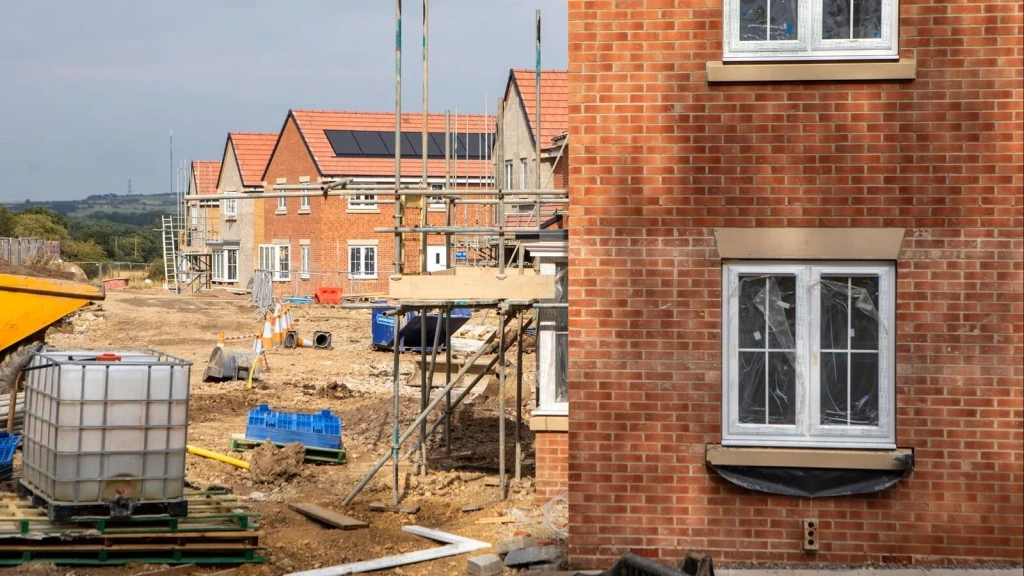
A five-year housing land supply is a supply of specific, deliverable housing sites that a council can realistically expect to provide homes on over the next five years.
It is measured against the housing requirement in the council's adopted plan, or against local housing need where that requirement is more than five years old, with the relevant buffer added on top. The council produces the calculation itself and should update it annually. But because it is a forecast of future delivery rather than a simple count of available land, the figures are often disputed.
Crucially, simply identifying land on paper is not enough. To count towards the five-year supply, a site must be available now, in a suitable location for development now, and achievable, with a realistic prospect that housing will be delivered within five years.
The NPPF 2026 treats smaller sites with planning permission, and sites with detailed permission, as deliverable unless there is clear evidence to the contrary. By contrast, major sites with only outline permission, plan allocations and brownfield register sites require clear evidence that housing completions will begin within the five-year period.
This is where many 5YHLS disputes arise. A council may maintain that it has enough deliverable land, while a developer may argue that important sites in the trajectory are delayed, constrained or unrealistic, or depend on infrastructure, land ownership, viability or developer commitment that has not yet been secured.
In practice, therefore, the central question is not simply whether enough land exists. It is whether the council can demonstrate, with credible evidence, that enough homes are genuinely likely to come forward within the next five years.
They measure different things, and one is not evidence of the other. The Housing Delivery Test looks backwards at the homes actually completed over three years. Five-year housing land supply looks forwards at the sites expected to deliver over the next five. A council can satisfy either one and fail the other, and many do.
The Housing Delivery Test is published by the government, not by the council.
It divides the net homes delivered over three financial years by the homes required over the same period. The 2025 measurement covers 2022/23, 2023/24 and 2024/25. It is the result to use in planning decisions today, and it supersedes the 2024 measurement published alongside it.
There is an important limitation. The technical note confirms that the homes required are still calculated using the previous standard method, taking the lower of that figure or the plan requirement.
So a result of 95% or more tells you a council kept pace with yesterday's target. It tells you very little about whether it can meet today's.
Five-year supply is measured against the current requirement or current local housing need, which for many councils rose sharply under the revised standard method.
That is why a council can score well above 100% on delivery and still be reported with two or three years of supply. Its past performance was measured against a lower number than its future pipeline.
The list below covers 153 councils through 156 authority and plan-area entries. In the 2025 Housing Delivery Test, 63 of those entries scored 95% or more and carried no delivery consequence, while 61 fell below 75%.
Neither measure follows from the other. One looks back at completions and the other looks forward at deliverable land, and each is calculated independently.
The presumption in favour of sustainable development is the decision rule applied once unmet need has been shown. Confusing these can lead applicants to assume that a council has no five-year supply when they have established only that it under-delivered in the past.
The two measures touch at three points only:
Below 85% in the test, the council must add a 20% buffer to its supply calculation.
Below 75% in the test, unmet housing need is treated as evidenced, whatever the supply figure says.
A supply shortfall evidences unmet housing need, whatever the test result says.
The NPPF 2026's Policy S5(1)(j) joins those last two with the word "or". Either one is enough.
York shows how this works in practice.
The council scored 87% in the 2025 test, so the delivery test no longer triggers the larger buffer. But its adopted requirement of 822 homes a year is only 67% of its current local housing need of 1,223, so the 20% buffer applies anyway through a separate route.
Even with that buffer, the council's July 2026 statement reports a 6.24-year supply from 1 April 2026. York appeared in earlier versions of this list at 4.17 years. It has now been removed.
That is one council's own position and it may be tested at appeal. But it shows why a single percentage never tells the whole story.
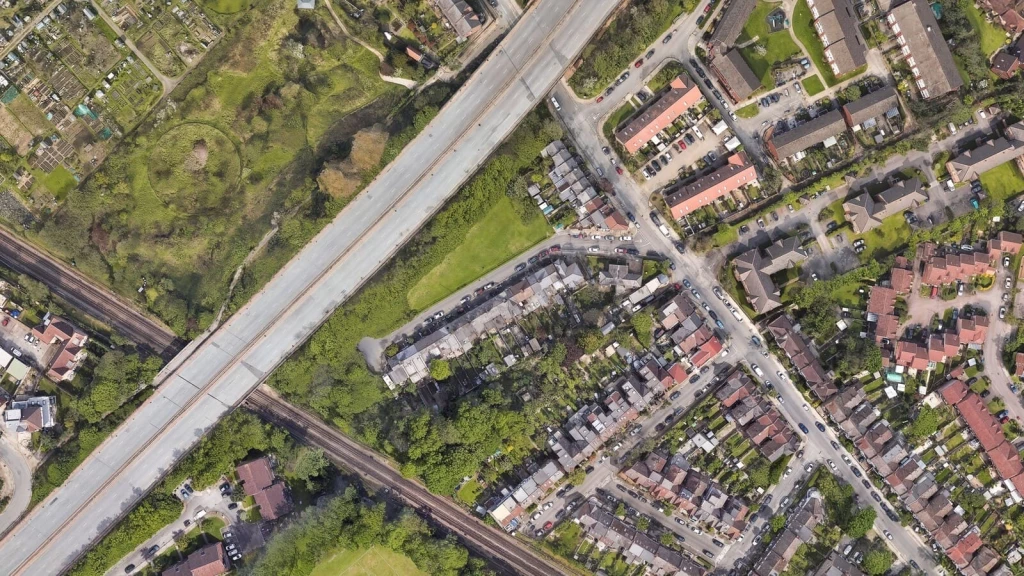
The list below groups authorities and plan areas with a reported housing land supply below five years, beginning with the most acute shortfalls. Each supply figure is accompanied by the authority’s result in the government’s 2025 Housing Delivery Test.
The delivery result carries one of four official consequences:
At least 95%: no consequence.
Below 95%: the council must prepare an action plan.
Below 85%: an action plan and a 20% buffer.
Below 75%: both of those, plus evidenced unmet housing need.
The last band matters most commercially. Below 75%, unmet need is evidenced by the delivery result alone, so the opportunity does not disappear if the council later finds its five years.
These 29 entries are the most acute reported shortfalls. A gap of this size is unlikely to be closed by a routine annual update alone, although a newly adopted plan or a change of baseline can alter the position quickly. Where the delivery result is also below 75%, unmet housing need is evidenced twice over.
Castle Point: 0.55 years (delivery test 11%)
Buckinghamshire (Chiltern): 0.75 years (delivery test 94%)
Buckinghamshire (South Bucks): 0.89 years (delivery test 94%)
South Staffordshire: 0.89 years (delivery test 171%)
Elmbridge: 0.91 years (delivery test 59%)
Thurrock: 0.91 years (delivery test 29%)
Hertsmere: 0.98 years (delivery test 26%)
Walsall: 1.01 years (delivery test 56%)
Dacorum: 1.03 years (delivery test 52%)
Wychavon: 1.10 years (delivery test 103%)
St Albans: 1.12 years (delivery test 46%)
Waverley: 1.28 years (delivery test 117%)
Derbyshire Dales: 1.36 years (delivery test 90%)
Brighton and Hove: 1.40 years (delivery test 50%)
Kingston upon Thames: 1.48 years (delivery test 66%)
Epsom and Ewell: 1.49 years (delivery test 33%)
Horsham: 1.70 years (delivery test 44%)
Three Rivers: 1.70 years (delivery test 47%)
Torbay: 1.72 years (delivery test 40%)
Stockport: 1.77 years (delivery test 43%)
Cotswold: 1.80 years (delivery test 68%)
Hart: 1.80 years (delivery test 137%)
Gosport: 1.87 years (delivery test 25%)
Basildon: 1.88 years (delivery test 23%)
Cheshire West and Chester: 1.89 years (delivery test 244%)
Forest of Dean: 1.90 years (delivery test 128%)
Tandridge: 1.92 years (delivery test 38%)
Warwick: 1.96 years (delivery test 128%)
Buckinghamshire (Wycombe): 1.98 years (delivery test 94%)
These 41 entries have a substantial reported shortfall. Shortfalls of this size can have several causes, including a plan that has passed its fifth anniversary, strategic sites slipping, or a housing need figure well above the adopted requirement. Establish which applies before drawing conclusions about a site.
Lancaster: 2.00 years (delivery test 48%)
Bournemouth, Christchurch and Poole: 2.10 years (delivery test 35%)
South Somerset: 2.11 years (delivery test 86%)
Solihull: 2.13 years (delivery test 53%)
North Warwickshire: 2.20 years (delivery test 164%)
Stratford-on-Avon: 2.21 years (delivery test 202%)
Bromsgrove: 2.24 years (delivery test 58%)
Welwyn Hatfield: 2.30 years (delivery test 46%)
Plymouth, South Hams and West Devon: 2.33 years (delivery test 87%)
Lewes: 2.35 years (delivery test 60%)
New Forest: 2.39 years (delivery test 48%)
Bromley: 2.40 years (delivery test 62%)
Portsmouth: 2.40 years (delivery test 11%)
Mid Sussex: 2.41 years (delivery test 104%)
Wiltshire: 2.42 years (delivery test 93%)
Buckinghamshire (Aylesbury Vale): 2.44 years (delivery test 94%)
Blaby: 2.45 years (delivery test 86%)
Greenwich: 2.46 years (delivery test 42%)
West Lancashire: 2.49 years (delivery test 279%)
Bath and North East Somerset: 2.50 years (delivery test 92%)
Hillingdon: 2.50 years (delivery test 67%)
Slough: 2.50 years (delivery test 54%)
Wokingham: 2.50 years (delivery test 100%)
Cheltenham: 2.52 years (delivery test 56%)
Dorset: 2.53 years (delivery test 88%)
North Hertfordshire: 2.60 years (delivery test 75%)
Selby (former district, now North Yorkshire): 2.60 years (delivery test 218%)
Rother: 2.63 years (delivery test 35%)
East Hampshire: 2.70 years (delivery test 79%)
Maldon: 2.70 years (delivery test 143%)
Derby: 2.73 years (delivery test 71%)
Test Valley: 2.76 years (delivery test 64%)
North Somerset: 2.79 years (delivery test 64%)
Camden: 2.80 years (delivery test 63%)
Redditch: 2.80 years (delivery test 129%)
North Tyneside: 2.82 years (delivery test 65%)
Mendip: 2.84 years (delivery test 57%)
Colchester: 2.85 years (delivery test 109%)
High Peak: 2.85 years (delivery test 121%)
Barnsley: 2.90 years (delivery test 75%)
Sevenoaks: 2.96 years (delivery test 25%)
These 50 entries have a significant but more contestable shortfall. Expect the council to defend its trajectory site by site at appeal, and check which buffer it has applied.
Gravesham: 3.00 years (delivery test 61%)
Surrey Heath: 3.00 years (delivery test 98%)
East Suffolk: 3.07 years, with the Waveney Local Plan area separately reported at 2.88 years (delivery test 91%)
Sheffield: 3.07 years (delivery test 58%)
East Lindsey: 3.08 years (delivery test 129%)
Newcastle-under-Lyme: 3.08 years (delivery test 94%)
Folkestone and Hythe: 3.10 years (delivery test 57%)
Gloucester: 3.10 years (delivery test 63%)
Harborough: 3.10 years (delivery test 139%)
Isle of Wight: 3.10 years (delivery test 37%)
Medway: 3.10 years (delivery test 60%)
Somerset West and Taunton: 3.10 years (delivery test 100%)
Tewkesbury: 3.14 years (delivery test 219%)
Adur: 3.20 years (delivery test 48%)
Basingstoke and Deane: 3.20 years (delivery test 94%)
Herefordshire: 3.20 years (delivery test 96%)
South Tyneside: 3.20 years (delivery test 53%)
Arun: 3.23 years (delivery test 84%)
Stroud: 3.24 years (delivery test 85%)
Breckland: 3.25 years (delivery test 144%)
Ashford: 3.27 years (delivery test 75%)
Cheshire East: 3.30 years (delivery test 213%)
Bedford: 3.35 years (delivery test 94%)
Stafford: 3.37 years (delivery test 149%)
Havering: 3.40 years (delivery test 40%)
Rugby: 3.40 years (delivery test 187%)
Wealden: 3.44 years (delivery test 89%)
Ribble Valley: 3.45 years (delivery test 425%)
Ipswich: 3.46 years (delivery test 63%)
Uttlesford: 3.46 years (delivery test 108%)
East Devon: 3.50 years (delivery test 84%)
Lichfield: 3.50 years (delivery test 232%)
Sefton: 3.50 years (delivery test 135%)
Reading: 3.55 years (delivery test 136%)
Staffordshire Moorlands: 3.58 years (delivery test 160%)
North East Lincolnshire: 3.60 years (delivery test 244%)
South Oxfordshire: 3.64 years (delivery test 171%)
Thanet: 3.78 years (delivery test 70%)
Fareham: 3.80 years (delivery test 60%)
Newark and Sherwood: 3.84 years (delivery test 139%)
Hackney: 3.89 years (delivery test 52%)
Hinckley and Bosworth: 3.89 years (delivery test 134%)
Cornwall: 3.90 years (delivery test 94%)
Ealing: 3.90 years (delivery test 60%)
Runnymede: 3.92 years (delivery test 94%)
Central Bedfordshire: 3.93 years (delivery test 105%)
South Gloucestershire: 3.93 years (delivery test 138%)
Huntingdonshire: 3.94 years (delivery test 136%)
Swale: 3.97 years (delivery test 70%)
Broadland: 3.99 years (delivery test 111%)
These 36 entries are close to the line and the most likely to change. A new statement, one appeal decision or a change of buffer can move a council either side of five years, so check the date of the figure before relying on it.
Stockton-on-Tees: 4.00 years (delivery test 152%)
Windsor and Maidenhead: 4.04 years (delivery test 74%)
South Kesteven: 4.07 years (delivery test 97%)
Bristol: 4.14 years (delivery test 41%)
Bolton: 4.15 years (delivery test 87%)
Canterbury: 4.16 years (delivery test 79%)
East Hertfordshire: 4.20 years (delivery test 102%)
Eastleigh: 4.20 years (delivery test 94%)
Bury: 4.30 years (delivery test 114%)
Cherwell: 4.30 years (delivery test 134%)
West Oxfordshire: 4.30 years (delivery test 104%)
Luton: 4.32 years (delivery test 54%)
Fylde: 4.35 years (delivery test 175%)
Tonbridge and Malling: 4.36 years (delivery test 63%)
Norwich: 4.37 years (delivery test 111%)
Ashfield: 4.39 years (delivery test 93%)
Rotherham: 4.41 years (delivery test 139%)
Haringey: 4.48 years (delivery test 71%)
Bracknell Forest: 4.49 years (delivery test 104%)
Maidstone: 4.50 years (delivery test 93%)
Rochford: 4.53 years (delivery test 111%)
Boston: 4.60 years (delivery test 127%)
North Devon: 4.60 years (delivery test 122%)
North Northamptonshire: 4.60 years (delivery test 108%)
Shropshire: 4.61 years (delivery test 124%)
Torridge: 4.61 years (delivery test 122%)
Rutland: 4.64 years (delivery test 89%)
Rossendale: 4.70 years (delivery test 96%)
Trafford: 4.70 years (delivery test 83%)
Rushmoor: 4.74 years (delivery test 176%)
Chelmsford: 4.79 years (delivery test 110%)
Mid Devon: 4.79 years (delivery test 103%)
Peterborough: 4.88 years (delivery test 100%)
Richmond upon Thames: 4.93 years (delivery test 63%)
Amber Valley: 4.95 years (delivery test 173%)
Lambeth: 4.99 years (delivery test 39%)
Several entries need a note, because the official dataset does not measure every authority in the same way.
The government’s 2025 Housing Delivery Test placed 93 authorities and plan areas below the 75% threshold. Of these, 61 already appear in the five-year housing land supply list above because they also have a reported supply shortfall.
The remaining 32 are listed separately. Their unmet housing need is evidenced by the Housing Delivery Test result itself, rather than by a reported figure showing less than five years of housing land supply.
For each of these 32 areas, the published Housing Delivery Test result independently evidences unmet housing need under Policy S5(1)(j). It may also satisfy the unmet-need element of the Grey Belt route under Policy GB7(1)(g). It does not, however, establish that the authority lacks a five-year supply or determine whether a particular site is acceptable. Settlement relationship, infrastructure capacity, sustainability and site-specific constraints must still be assessed.
That is why proper due diligence is essential. Before drawing conclusions about any site, review the relevant authority’s latest position statement, housing trajectory, Housing Delivery Test result, recent appeal decisions and the status of its local plan.
The research was conducted in two stages.
First, we reviewed councils’ published five-year housing land supply statements, authority monitoring reports and named planning appeal decisions. For each authority, we recorded the relevant geographical area, evidence base date, applicable buffer and resulting years of supply. The list includes authorities whose latest identified position fell below five years. Where competing figures were examined at appeal, we used the inspector’s conclusion for that decision; where later evidence had superseded an earlier finding, we used the more recent position.
Second, we compared the list with the government’s 2025 Housing Delivery Test measurement, checking the published delivery percentage for each authority. This review was completed on 20 September 2026. The five-year supply research was undertaken in June 2026 and updated on 20 September 2026 for York, Stratford-on-Avon, Central Bedfordshire, Rutland, Cheshire East and East Suffolk.
The results provide a dated snapshot of a fast-moving evidence base. New monitoring data, appeal decisions and adopted plans can change an authority’s position, while some of the source material predates the NPPF 2026 and may not yet reflect the final Annex D rules.

The NPPF 2026 keeps the five-year supply test but changes what happens when a council fails it.
The old tilted balance has gone. A shortfall now counts as evidence of unmet housing need, which opens a defined route for homes outside settlements and satisfies one part of the Grey Belt test. It strengthens the principle of development without deciding the application.
It helps to be exact about what has been lost. Under the previous framework, a shortfall meant the policies most important for deciding the application were treated as out of date for the purposes of the paragraph 11(d) balance. It never switched a council's policies off, and that mechanism no longer exists at all.
If you are relying on advice written before August 2026, check it. The NPPF 2026 now uses policy codes rather than paragraph numbers, and its annexes are national policy in their own right.
Every local planning authority should identify, and update each year, a supply of specific deliverable sites covering at least five years. The rules sit in Annex D of the framework.
For a new local plan, the NPPF 2026's Policy HO3 asks for five years of deliverable sites from the intended date of adoption, with the appropriate buffer, plus developable sites or broad locations for years six to ten.
So the duty runs in both directions. A council must show a five-year supply to get a plan adopted, and must keep showing it every year afterwards when deciding applications.
The calculation has four parts.
The baseline rule is a quiet but significant change. A council can no longer hold on to an old, lower requirement simply because it reviewed its plan and concluded that no update was needed.
Policy HO3 also asks for compelling evidence before a council relies on windfall sites. In my experience of reading council trajectories, windfall allowances and the start dates on large allocations are the two places where a claimed supply most often weakens under scrutiny.
The buffers are alternatives. A council applies one, never two.
5%: the normal minimum, to give choice and competition in the land market.
20%: where the latest Housing Delivery Test result is below 85%.
20%, for decisions only: where the adopted requirement was examined against national policy published before 12 December 2024 and is 80% or less of current local housing need. This has applied since 1 July 2026 and now sits in paragraph 9(c) of Annex D.
Footnote 75 to Annex D extends that third route to certain housing requirements that are more than five years old, where the policies were reviewed and found not to need updating.
The consequences of under-delivery then build on each other:
Below 95%: the council must prepare an action plan.
Below 85%: the 20% buffer is added.
Below 75%: unmet housing need is treated as evidenced, in addition to the action plan and the buffer.
In the 2025 measurement, 93 authorities and plan areas fell below 75%, a further 19 fell below 85% and 35 more fell below 95%. The government intends this evidence to be kept more current. In a written ministerial statement to Parliament on 1 September 2026, Housing and Planning Minister Matthew Pennycook said the combined publication of the 2024 and 2025 results was intended to restore a regular timetable and ensure that scores reflect the latest information on housing delivery.
Every trigger uses the word "below", and the boundaries matter.
Exactly 95%: no consequence.
Exactly 85%: no buffer from the delivery test, although paragraph 9(c) of Annex D may still impose 20%.
Exactly 75%: the action plan and 20% buffer apply, but unmet need is not deemed.
There is a further catch at 75%. The Annex A protection for recently adopted plans, described below, requires delivery of more than 75%. A council published at exactly 75% gets neither the deemed unmet need nor that protection.
The NPPF 2026’s Policy S3 retains the presumption in favour of sustainable development, but now applies it through two distinct policy routes.
Inside a settlement, Policy S4 says proposals should be approved unless their benefits would be substantially outweighed by adverse effects, assessed against the national decision-making policies. Importantly, that support applies regardless of the council’s five-year housing land supply position. A shortfall may add further weight to the benefits of housing delivery, but it is not the trigger for the policy.
Even so, this remains a supportive planning balance rather than an automatic route to permission. The development plan is still the statutory starting point, national policies that direct refusal continue to apply, and local policies on design, heritage, transport and amenity remain material to the decision.
Outside a settlement, the position is more restrictive. Policy S5 permits only specified categories of development. One of these, Policy S5(1)(j), is development that would address an evidenced unmet need. For housing, the policy gives two examples: where a council cannot demonstrate a five-year supply of deliverable housing sites, and where it has scored below 75% in the most recent Housing Delivery Test.
That route is still subject to two important conditions. The site must be physically well related to an existing settlement, and the scale of development must be capable of being supported by existing or proposed infrastructure.
Policy HO7 then adds a further layer of support by requiring substantial weight to be given to the benefits of providing homes that meet the evidenced needs of the community. That weight attaches to the housing benefit itself. It does not erase or override site-specific harm.
There is also an important change in the wording of the planning balance. The previous test asked whether harm would significantly and demonstrably outweigh the benefits. The new wording asks whether the benefits would be substantially outweighed. The policy also identifies circumstances in which that is likely to occur, including where a proposal conflicts with a national policy that says permission should be refused.
The practical effect is clear. A supply shortfall may open the door to development, particularly outside a settlement, but it does not carry the proposal through it. The application must still demonstrate that the site relates properly to the settlement, that access, drainage and infrastructure can be made to work, and that the design responds convincingly to landscape, character and neighbouring amenity. In other words, a shortfall changes the planning position, but it does not remove the need to build a strong case.
The decision-making policies took effect on publication, 17 August 2026. They apply to applications and appeals still undecided on that date.
Annex A contains three provisions worth knowing:
Older local policies: a development plan policy that is materially inconsistent with the national decision-making policies should be given very limited weight, unless it was examined against the NPPF 2026. This operates independently of the supply position. A restrictive settlement policy may lose weight for this reason even where the council has its five years.
Recently adopted plans: where a plan is within its first five years, the council can show its supply with the correct buffer, and its delivery result is more than 75%, a higher current housing need figure does not by itself establish unmet need.
Recent neighbourhood plans: under Policy S6, conflict with a neighbourhood plan that is five years old or less, and that allocates land to meet its housing requirement, is likely to outweigh the benefits of a housing scheme.
One practical warning. The government's housing supply and delivery guidance still carries its December 2024 date and some wording from the previous framework. Where the two differ, Annex D is the newer statement of policy.
The framework now separates plan-making policies from national decision-making policies, and says plainly that plan-making policies should not be used when deciding applications.
In plan-making, five-year supply is a test of soundness. The council must allocate enough deliverable land, and Policy PM2 expects a plan to be prepared and adopted within 30 months of its first gateway.
In decision-making, five-year supply is a test of the present. It asks whether the council can show its supply today, not whether an emerging plan will fix the problem in two years.
I see the two confused constantly. "The council is about to adopt a new plan" is not an answer to a current shortfall.
Equally, "the council ought to allocate my land" is not an argument for granting an application.
The practical lesson is clear. A reported shortfall does not mean your site is now acceptable. It means the principle of housing outside a settlement may now be supported by national policy, provided your site is the right kind of site.
For applicants, this makes it important to test the settlement relationship and the infrastructure position before commissioning a scheme, not after.
Three opportunities follow:
Edge-of-settlement sites that were previously refused on the settlement boundary alone now have a named policy route.
Sites in councils below 75% have an unmet need case that does not depend on disputing the trajectory.
Sites in councils claiming just over five years are worth a closer look, because the buffer, the baseline and the largest allocations can each change the answer.
And one misconception to drop: a shortfall is not what engages national support for a site inside a town. Policy S4 applies there whatever the supply position, although it supports the principle and does not guarantee the outcome.

A housing shortfall matters in the Green Belt, but it never decides the outcome alone.
The NPPF 2026 takes Green Belt land out of Policy S5 altogether and sends it to its own policies, GB6 to GB8. Within those policies, unmet housing need is one test among several, and every one of them has to be passed. The shortfall creates the opportunity. The site has to do the rest.
Policy S5(5) is explicit. Policy S5 does not apply to proposals in the Green Belt, which should be decided under Policies GB6, GB7 and GB8 instead.
So the edge-of-settlement argument cannot simply be moved onto a Green Belt field. The absence of a five-year supply does not make Green Belt housing acceptable in principle.
What Policy S5(5) does say is that where development would not be inappropriate under Policy GB7, it should be approved unless the benefits would be substantially outweighed by adverse effects. The supportive balance arrives only after the Green Belt tests are passed.
Policy GB7 lists several forms of development that are not inappropriate in the Green Belt. Only one of them turns on housing need.
The station-led development route deserves particular attention. It may represent one of the most important Green Belt opportunities in well-connected authorities that can demonstrate a five-year housing land supply and score above 75%, particularly where the site is close to a qualifying station. This should be tested using the national Connectivity Tool, alongside evidence of the actual walking route and the range of services available at the station.
Where no route fits, the proposal is inappropriate development and needs very special circumstances. A housing shortfall can be weighed in that balance. Whether it is enough depends on the full extent of the harm and the benefits.
So failing the Grey Belt tests defeats Policy GB7(1)(g). It does not close the other routes, and it does not rule out a very special circumstances case. The strongest applications still commit to one clear primary route.
The Grey Belt route is Policy GB7(1)(g). It works as a sequence, and failing any step ends it.
The housing shortfall answers step three. It says nothing about the other five.
For major housing development in the Green Belt, Policy GB8 requires three contributions: affordable housing, necessary infrastructure, and accessible green space. The rules apply to major housing on Green Belt application sites generally, including the station route, not only to Grey Belt schemes.
The affordable housing rate is the one set in the development plan for Green Belt sites. Until a council has such a policy, it is 15 percentage points above the highest existing local requirement, capped at 50%. Where there is no relevant policy at all, the default is 50%.
Three qualifications matter when you are valuing land. Footnote 43 contains transitional exemptions, including for land released through plans adopted before 12 December 2024. Footnote 44 sets out exceptions to the 50% cap. And a viability assessment to justify falling short of the rules is permitted only in the three circumstances identified in Policy GB8(3).
This is a commercial test as much as a planning one. A site can pass every other step and still fail to stack up once the Golden Rules are priced in. Test viability before you agree a land price, not after.
If every step is passed, the proposal is not inappropriate development, and the decision-maker applies the supportive balance in Policy S5(5). Benefits, including the substantial weight Policy HO7 gives to housing, are set against any adverse effects.
If any step fails, the proposal is inappropriate. The harm to the Green Belt, and any other harm, must then be clearly outweighed.
One decision under the previous framework shows how the tests can operate. At Fobbing in Thurrock, the council had only a 0.91-year supply and the land was agreed to be Grey Belt. The appeal for up to four homes was still dismissed in August 2025, because four buses a day and a 20-minute walk to limited services did not amount to a sustainable location.
A single appeal cannot establish a pattern under the NPPF 2026, and appeal decisions are never binding precedent. But our review of Grey Belt appeals under the previous framework includes both approvals and dismissals in authorities with acute shortfalls. Need was weighed alongside location and design, not instead of them.
Through a local plan, a council that cannot meet its housing need may have to review its Green Belt boundaries. Spatial development strategies identify the broad locations where changes may be needed, and Policy HO5 expects at least 50% affordable housing on released land, subject to viability.
But Policy S1 also allows Green Belt policy to provide a strong reason for restricting the overall scale of development in a plan. A shortfall does not guarantee release.
None of this helps an individual application. At application stage, the only question is whether your proposal passes Policies GB6 to GB8 today.
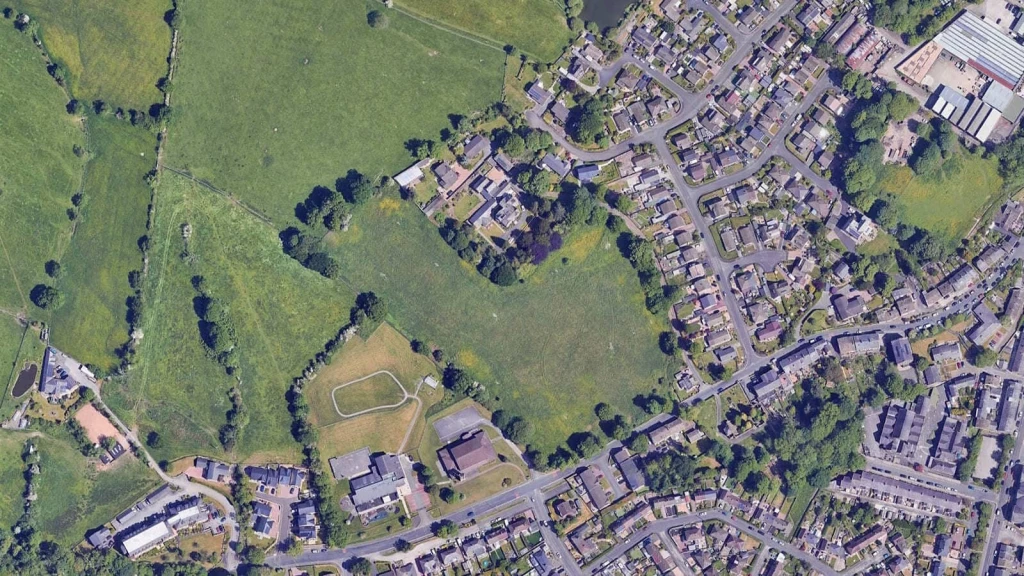
A shortfall can support an application on a sustainable unallocated site, an appeal against a refusal or the promotion of an omitted site through the local plan.
In each case, the underlying argument is the same. The council cannot demonstrate enough deliverable land, so national policy supports the delivery of more homes in suitable locations. What separates the cases that succeed is how convincingly they demonstrate that the particular site is a suitable place for development.
Treat a council's headline figure as a claim to be tested, not a fact to be relied on.
Before you rely on a council's number, in either direction, check:
the base date of the statement, and whether a newer one has been published
whether the statement was prepared before the NPPF 2026, and so may use a superseded baseline or buffer
the area the figure covers, where a council reports by former district or plan area
whether the baseline is the plan requirement or local housing need, and whether the requirement has passed its fifth anniversary
which buffer has been applied, and whether the 80% route has been considered
the latest Housing Delivery Test result and any recalculation
the five largest sites in the trajectory, their planning status and their assumed start dates
the windfall allowance and the evidence behind it
recent appeal decisions in the same authority, and whether an inspector accepted the council's figure
whether the plan or a neighbourhood plan is within its first five years
A council's claimed 5.3 years can become 4.8 once two strategic sites slip by a year. Equally, a reported 3 years can be overtaken by a new statement within weeks, as York shows.
Years of supply do not show the scale of the deficit.
As simple arithmetic, a 2.5-year supply against a requirement of 2,000 homes a year is a gap of around 5,000 homes. A 1.5-year supply against 300 a year is a gap of around 1,050. The second looks worse in the list. The first is the larger problem, and usually the larger opportunity.
For any authority you are serious about, record the deliverable homes claimed, the five-year requirement including the buffer, the annual figure used and the numerical deficit.
A strong case should start with evidence, not enthusiasm. The following is often critical:
the latest five-year supply statement and Authority Monitoring Report
the Housing Delivery Test result and the council's action plan
the adopted housing requirement, its age, and the current local housing need figure
the housing trajectory, with evidence on delayed or stalled sites
local plan examination letters or inspector correspondence
how the development plan defines the settlement, and how the site relates to it
Green Belt review evidence and a site-specific Grey Belt assessment
access to services and public transport
landscape and visual impact, highways and access
ecology and biodiversity net gain, drainage and flood risk
affordable housing and infrastructure contributions, with viability where the Golden Rules apply
deliverability evidence from the landowner or developer
This is where many speculative cases fail. They rely on the headline shortfall but do not do enough work on site-specific harm.
Not every shortfall has the same value. A modest shortfall in a highly constrained authority carries different weight from a severe one where the council's trajectory depends on delayed strategic sites and uncertain infrastructure.
A site that once looked too difficult may become more interesting where the council cannot demonstrate a five-year housing land supply, or where delivery has fallen below 75%, provided the site is also well related to an existing settlement.
Even so, caution is needed with the old shorthand that an out-of-date plan automatically engages the presumption in favour of development. Under the NPPF 2026, plan age alone triggers nothing. An older plan may still matter because its housing requirement gives way to local housing need, or because particular policies are materially inconsistent with the new national framework, but each of those points must be established separately.
There may also be a wider local plan opportunity. Where inspectors have questioned a council's reliance on windfalls, urban capacity or other uncertain sources of supply, landowners may have a stronger case for promoting suitable land through a call for sites, or for arguing that previously omitted sites should be reconsidered as the local plan progresses.
The commercial point, however, is just as important. A housing land supply shortfall is not a planning permission in waiting. If land is being acquired partly on the strength of that position, the purchase should be structured accordingly, whether through conditionality, option arrangements or an appropriate adjustment to price. Supply positions can move considerably faster than conveyancing.

For councils that cannot demonstrate a five-year housing land supply, the message is clear: delay is no longer a strategy.
A shortfall is not just a technical weakness in a monitoring report. It is a sign that the local housing strategy is not producing enough deliverable homes.
That matters because housing need does not disappear when difficult decisions are postponed. It reappears elsewhere: through speculative applications, planning appeals, omitted sites and inspector-led pressure for more land.
The delivery results sharpen the point. The authorities below 75% are not all reluctant councils. Bristol, Birmingham and Sheffield are there alongside Sevenoaks, Tandridge and Hertsmere. The causes are plainly not the same. Large cities face viability, build-out and brownfield delivery problems. Others have little land outside the Green Belt and have not planned for what that means.
So I would resist the lazy reading that every failing council is a NIMBY council. Build-out rates, viability, infrastructure and market absorption all play a part. The NPPF 2026 recognises this through Policy HO13, which expects major housing schemes to be capable of coming forward within a reasonable period.
But I would equally resist the comfortable reading.
When every housing site is treated as the wrong site, every local plan becomes politically difficult and every infrastructure concern becomes a reason to say no, the result is not better planning. It is planned under-delivery.
The same principle applies to infrastructure.
Councils and objectors often argue that new homes will put pressure on roads, schools and GP surgeries. Those concerns can be legitimate. Our own research found that many boroughs are holding large balances of unspent developer contributions (CIL & S106). Where that is the case, the infrastructure objection becomes much less persuasive.
Developer contributions are part of the social contract of planning. New homes are approved, contributions are secured, and infrastructure is delivered to support growth. When that money is not spent quickly and visibly, public trust breaks down, and the next scheme meets the same objection.
A council in that position cannot argue indefinitely that an area cannot absorb more housing because of infrastructure pressure while failing to spend the infrastructure money it has already collected.
The planning system is becoming less forgiving. The revised standard method, the additional buffer, the new unmet need route and Grey Belt policy all point in the same direction. Councils need to plan positively for more homes, and where they cannot meet need in full, they need persuasive evidence rather than broad assertions about constraint.
For landowners and developers, the opportunity is not simply owning land in an authority with a weak supply. It lies in showing why a particular site is one of the more logical, lower-harm and deliverable ways of closing the local housing gap, and translating that case into a robust strategy for securing planning permission.

At Urbanist Architecture, we work with landowners, developers and prospective purchasers on sites affected by Green Belt, Grey Belt, countryside and edge-of-settlement policies. In these cases, the first question is not simply whether the council has a housing land supply shortfall, but whether that shortfall materially changes the planning prospects of the particular site.
That requires the policy position and the site itself to be tested together. A headline supply figure may create an opportunity, but it does not resolve questions of settlement relationship, sustainability, landscape impact, infrastructure or, where relevant, the Golden Rules.
For that reason, an early feasibility assessment can be useful before a land price is agreed or a design is fixed. It should consider housing need, five-year supply, the Housing Delivery Test result, Green Belt and Grey Belt policy, site constraints, local plan status and realistic development capacity.
For larger sites, viability may also need to be considered at an early stage, particularly where affordable housing, infrastructure contributions or the Golden Rules could affect deliverability.
In some cases, the conclusion may be that the site is not yet suitable for a planning application and that promotion through the local plan is the more appropriate route. Reaching that conclusion early can be just as important as identifying a viable application strategy.
We look forward to learning how we can help you. Simply fill in the form below and someone on our team will respond to you at the earliest opportunity.
The latest news, updates and expert views for ambitious, high-achieving and purpose-driven homeowners and property entrepreneurs.









We specialise in crafting creative design and planning strategies to unlock the hidden potential of developments, secure planning permission and deliver imaginative projects on tricky sites
Write us a message