Read next
The latest news, updates and expert views for ambitious, high-achieving and purpose-driven homeowners and property entrepreneurs.


Planning decisions are supposed to follow the local plan. But what happens when the plan itself has failed?
That is the question the presumption in favour of sustainable development exists to answer, and in 2026 it needs answering more often than ever.
The reason is in the numbers. Across England, 157 local planning authorities and plan areas currently cannot demonstrate a five-year housing land supply, and more than 60 are caught by the latest published Housing Delivery Test results. In all of those places, housing applications are judged through what inspectors and the courts call the tilted balance.
The refusal bar has risen too. Since the December 2024 NPPF, a council needs a strong reason to refuse under the protective national policies, not merely a clear one.
So here is the short answer most readers are looking for. The tilted balance tips the decision towards approval, but it does not guarantee it. Permission should be granted unless the adverse impacts would significantly and demonstrably outweigh the benefits, or a protective national policy gives a strong reason to refuse.
In other words, it is not a loophole. It is a structured planning judgement, and the schemes that succeed are the ones that make their benefits clear, credible and evidence-led from the start.
In this article, I explain what the presumption and the tilted balance are, how they differ, what triggers them, how Grey Belt and the Golden Rules fit in, when the tilted balance will not help you, and how to build a case that holds up, including where the opportunities are concentrated right now and what changes when the new NPPF arrives.
The presumption in favour of sustainable development is the core operating principle of the National Planning Policy Framework (NPPF), set out in paragraph 11. It tells councils to plan positively for the homes, jobs and infrastructure their areas need. And it tells decision-makers to approve development that accords with an up-to-date local plan without delay.
So far, so uncontroversial. The interesting part is what paragraph 11(d) says about sites where the development plan cannot be relied on.
Where there are no relevant development plan policies, or the policies most important for determining the application are out of date, planning permission should be granted unless one of two exceptions applies. Those two exceptions are where the tilted balance comes in, and we get to them next.
One thing to be clear about first. The presumption operates within the statutory system, not above it. Decisions are still made under section 38(6) of the Planning and Compulsory Purchase Act 2004, which requires them to be taken in accordance with the development plan unless material considerations indicate otherwise.
When a plan is failing, the presumption becomes a material consideration of great weight pulling towards approval. Think of it as planning's built-in corrective: when plan-making or housing delivery falls behind, the system leans towards well-designed schemes that meet the need.

The tilted balance is the practical decision-making exercise that follows when paragraph 11(d) of the NPPF is engaged.
Here is something that surprises a lot of people: the phrase does not appear anywhere in the NPPF itself. It is shorthand, used universally by planning inspectors, planning lawyers and the courts, to describe the effect of paragraph 11(d) on how benefits and harms are weighed.
When paragraph 11(d) applies, permission should be granted unless either:
the application of NPPF policies that protect areas or assets of particular importance provides a strong reason for refusing the development. These are the footnote 7 policies, covering habitats sites, Sites of Special Scientific Interest, the Green Belt, Local Green Space, National Landscapes, National Parks, designated heritage assets, irreplaceable habitats and areas at risk of flooding or coastal change; or
any adverse impacts of granting permission would significantly and demonstrably outweigh the benefits, when assessed against the policies in the NPPF taken as a whole.
The second limb is the tilt. In an ordinary planning balance, often called the flat balance, harm that outweighs benefit can justify refusal. Under the tilted balance, the scales start weighted towards approval.
Refusal requires the harms not merely to outweigh the benefits, but to do so significantly and demonstrably. The decision-maker has to point to evidenced harm of real substance, not just policy conflict or local objection.
One wording change from the December 2024 NPPF is worth knowing. The first limb previously required a clear reason for refusal under the protective policies. It now requires a strong reason. That single word raised the bar for switching the presumption off, and it signalled the government's intent that the tilted balance should bite more often.

The two phrases are often used interchangeably, including by professionals. They are closely related, but they are not the same thing. And understanding the difference tells you what you actually need to prove.
Why does the distinction matter in real applications?
Because each stage has to be established separately, with evidence. First you must show the trigger: that the most important policies are out of date, or that supply or delivery has failed. Only then does the tilted balance apply. And only then does the question become whether the harms significantly and demonstrably outweigh the benefits.
Applicants who conflate the two often assume that a supply shortfall alone wins the case. It does not. It changes the test.
The case still has to be won under that test. Poorly designed schemes with thin evidence are refused under the tilted balance every month, and those refusals are routinely upheld at appeal. The tilted balance rewards quality and preparation. It does not excuse the lack of them.
The presumption operates on two fronts. It shapes how plans are made, and it shapes how individual applications are decided. For developers, the second is what usually matters, but the two are linked: failures in the first are exactly what trigger the opportunities in the second.
In plan-making, the presumption pushes councils to allocate enough well-located land for homes, jobs and infrastructure, and to meet assessed needs unless there are genuinely exceptional reasons not to. That means identifying enough deliverable sites with realistic timescales, planning the supporting infrastructure, setting design standards that will survive scrutiny, and producing a plan that passes examination in public.
Labour's planning reforms also reintroduce a strategic tier of planning through spatial development strategies and mandatory housing targets, restoring the ability to plan housing, transport and infrastructure at the scale of real housing markets rather than borough by borough.
For decisions, the position is simpler than it looks. The presumption guides planning officers and inspectors where local policy carries limited weight. Under paragraph 11c, a scheme that accords with an up-to-date development plan should be approved without delay.
Under paragraph 11d, where the most important policies are out of date, permission should be granted unless a footnote 7 policy provides a strong reason to refuse, or the adverse impacts would significantly and demonstrably outweigh the benefits when assessed against the framework as a whole. That second route is the tilted balance in action.

Paragraph 11(d) is engaged where there are no relevant development plan policies, or where the policies most important for determining the application are out of date. In practice, three routes account for almost every tilted balance case, and two of them are defined by hard numbers.
This is the most common trigger by a distance. Footnote 8 of the NPPF deems the policies most important for determining housing applications to be out of date where the council cannot demonstrate a five-year supply of deliverable housing sites.
The December 2024 NPPF reinstated this as a mandatory, annually demonstrated requirement, removing the previous protections for councils with recently adopted plans.
The scale of the problem is striking. As at June 2026, 157 local planning authorities and plan areas across England are reported as unable to demonstrate a five-year housing land supply, based on the latest published position statements and appeal findings.
That figure reflects the higher housing requirements produced by the revised standard method introduced in December 2024, which increased assessed need in many areas overnight.
The pressure tightens further from 1 July 2026.
From that date, councils whose adopted housing requirement is 80% or less of their latest standard method figure must add a 20% buffer to their five-year supply calculation for decision-taking. A council that scraped over the line at 5.1 years may find itself well short once the buffer applies. For landowners and developers, that makes the second half of 2026 a period worth watching closely in marginal authorities.
Two practical points follow.
First, a council's claimed supply figure is evidence, not fact, and it can be challenged. The Planning Practice Guidance sets demanding deliverability tests covering availability, suitability, achievability and viability, and council trajectories frequently rely on strategic sites with unresolved infrastructure dependencies or optimistic build-out rates.
Second, the supply position moves, so it should be verified at the point of application, not assumed from last year's monitoring report.
The Housing Delivery Test (HDT) measures the homes actually delivered in an authority's area over the previous three years against the homes required. Unlike five-year supply, which looks forward and can be argued over, the HDT looks backward and is published as a national dataset. That makes it a clean, objective trigger.
Paragraph 79 of the NPPF sets out an escalating ladder. Delivery below 95% means the council must prepare an action plan. Below 85%, a 20% buffer is added to its five-year supply calculation. Below 75%, the presumption in favour of sustainable development applies, engaging the tilted balance from the day after the results are published.
A note of caution on numbers you may read elsewhere: the threshold for the presumption is 75%, not 70%, and it has not been lowered.
The most recent published results are the 2023 measurement, released in December 2024, under which more than 60 authorities fell below 75% and became subject to the presumption. The 2024 results had still not been published as at June 2026, and under paragraph 80 the previously published results continue to apply until new ones are released.
Independent analysis of the completions data suggests the number below the threshold is likely to rise when the next results land, because the December 2024 standard method pushed requirements up.
The two housing triggers get the attention, but they are not the only way into the tilted balance, and this third route is the one most applicants overlook.
A policy can be out of date for reasons that have nothing to do with housing numbers. It can simply be old, it can be inconsistent with the current NPPF, or it can have been overtaken by events, such as a settlement boundary drawn around a town that has since grown well beyond it.
The question is not whether supply or delivery has failed, but whether the policy still does the job the NPPF now expects of it.
Here the case law earns its keep. In Wavendon Properties v Secretary of State (2019), the court confirmed that policies are not judged one by one. The decision-maker must identify the basket of policies most important for determining the application and ask whether that basket, taken as a whole, is out of date. One fresh policy does not save it, and one stale policy does not sink it.
The practical point is that this is a matter of judgement, not arithmetic, so it can be argued. We often see councils lean on a single recently adopted policy as if it settles the question, when the wider basket that actually governs the application was written years earlier. A carefully built basket case can engage the tilted balance even where the council insists its land supply is healthy.

These five words set the evidential bar, and they are where tilted balance cases are won and lost. The test must be met through proof, not assertion, on both sides of the scales.
Start with the council's side. Refusal under the tilted balance requires demonstrated harm of real weight.
A handful of harms clear that bar regularly in appeal decisions. The clearest examples are unsafe access or severe highway impacts, flood risk where the sequential test has not been passed, serious harm to a designated heritage asset that the public benefits do not outweigh, poor living conditions for future or neighbouring occupiers, and ecological harm that cannot be mitigated. What rarely clears it, on its own, is a generic landscape concern, conflict with a settlement boundary in an out-of-date plan, or local opposition.
Now the applicant's side, which has to be just as rigorous.
Housing delivery in an area of shortfall carries substantial weight, and affordable housing typically carries very substantial weight, but only where delivery is credible and secured. An affordable housing offer without a viability appraisal behind it, or a claimed early delivery programme with no evidence of lead-in times, will be discounted by an inspector just as readily as an unevidenced harm.
The December 2024 NPPF added a further steer. In applying the tilted balance, decision-makers must have particular regard to four things: directing development to sustainable locations, making effective use of land, securing well-designed places, and providing affordable homes. These are not a checklist for approval, but they tell you exactly where to concentrate your evidence.
Sustainable locations: accessibility analysis, public transport frequency and proximity to services, with a genuine case for reduced car dependency.
Effective use of land: density justified through character and infrastructure capacity analysis, not simply maximised unit numbers.
Well-designed places: design quality, demonstrated through character analysis and a design and access statement, that would survive scrutiny at committee and appeal.
Affordable housing: quantum, tenure mix and delivery mechanism, supported by transparent viability evidence and secured through a robust section 106 agreement.
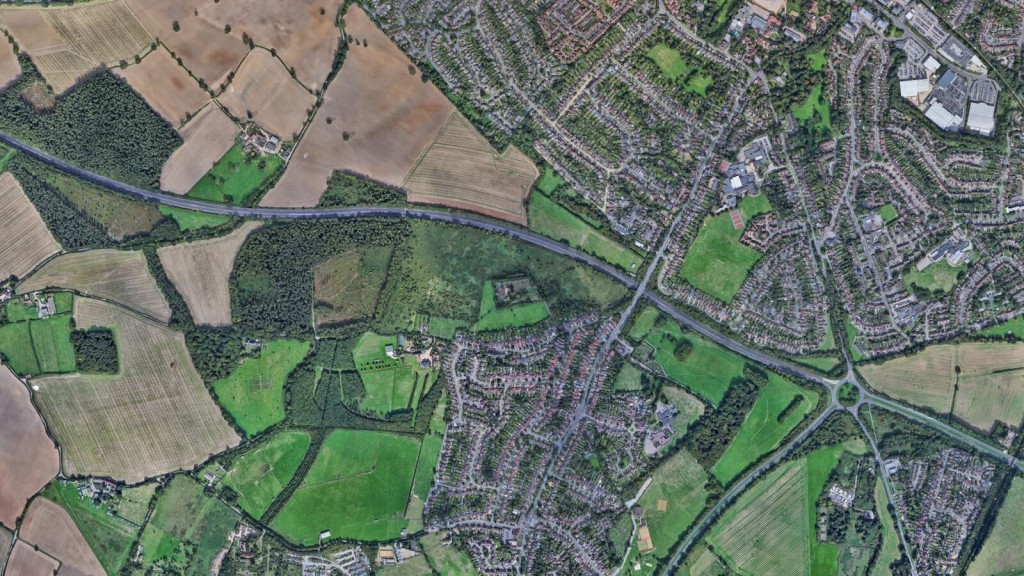
Grey Belt policy, introduced in December 2024, interacts with the tilted balance in a way that is frequently misunderstood, so it is worth setting out precisely.
Grey Belt is defined as land in the Green Belt comprising previously developed land, and/or any other land that does not strongly contribute to checking unrestricted sprawl, preventing neighbouring towns from merging, or preserving the setting and special character of historic towns (purposes (a), (b) and (d) in paragraph 143 of the NPPF). Land is excluded from the definition where the footnote 7 policies, other than Green Belt policy itself, would provide a strong reason for restricting development.
Recent Grey Belt decisions have stressed that this is an assessment of the land, not of the particular scheme proposed. In a notable appeal at Bishop's Wood in November 2025, the inspector concluded that a site was not Grey Belt because heritage policies provided a strong reason for restricting development in principle, even though the specific proposal would have caused only limited heritage harm.
The High Court considered similar territory in Wrotham Parish Council v Secretary of State [2026] EWHC 165 (Admin). The boundary of the definition remains a live battleground, and a Grey Belt assessment prepared by someone who follows the case law is increasingly the price of entry.
Where major housing development comes forward on Green Belt land, the Golden Rules in paragraphs 156 and 157 of the NPPF apply. They require three contributions:
Affordable housing in line with up-to-date local plan policies or, until those are in place, a default of 15 percentage points above the highest existing affordable housing requirement that would otherwise apply, capped at 50%. Where there is no existing requirement, 50% applies by default. The widely repeated claim that all Grey Belt schemes must provide at least 50% affordable housing is not accurate.
Necessary improvements to local or national infrastructure, proportionate to the development.
New or improved publicly accessible green space, with new residents able to reach good quality green space within a short walk of home.
Paragraph 158 then provides the reward: development that complies with the Golden Rules should be given significant weight in favour of permission. In tilted balance terms, here is the point. Grey Belt status does not itself trigger paragraph 11(d); the trigger is still the supply, delivery or policy position.
What Grey Belt status and Golden Rules compliance change is the content of the scales. If Green Belt policy does not provide a strong reason for refusal under limb one, a compliant Grey Belt proposal enters limb two carrying very significant positive weight.
Honest advice on the tilted balance includes being clear about its limits. There are two distinct ways a tilted balance case fails, and they are regularly confused.
The first is where the tilted balance is switched off before it starts. Under limb one of paragraph 11(d), if a footnote 7 policy provides a strong reason for refusal, the presumption is disapplied and the application falls to be decided on the conventional policy tests.
The Court of Appeal confirmed in Monkhill v Secretary of State (2021) that this limb operates as a gateway: once a protective policy provides the reason to refuse, that is the end of the presumption. In the Green Belt, that means a scheme that is not Grey Belt and is inappropriate development must still demonstrate very special circumstances, with or without a housing shortfall in the background.
The second is where the tilted balance applies but the case loses anyway. The tilt is a thumb on the scales, not a trump card. Even with the presumption engaged, refusal remains the likely outcome where:
the design is poor. Design quality is one of the four considerations given particular regard under the December 2024 NPPF, and inspectors increasingly treat weak design as a substantial harm in its own right;
there is severe harm to highway safety or the road network, which the NPPF treats as a freestanding reason for refusal;
the flood risk sequential test has not been passed. Where it applies, it should be addressed decisively before any reliance is placed on the tilted balance;
development would cause serious harm to heritage significance that the public benefits do not outweigh;
future occupiers would suffer poor living conditions, or neighbours unacceptable amenity harm such as noise, overbearing impact or loss of light that cannot be designed out;
ecological harm cannot be avoided, mitigated or compensated, including failure to secure the statutory minimum 10% biodiversity net gain that applies to most development.
One further subtlety comes from the leading case, Suffolk Coastal v Hopkins Homes in the Supreme Court (2017). An out-of-date policy is not disapplied. It remains part of the development plan, and how much weight it carries is for the decision-maker. So a council can still attach meaningful weight to a settlement boundary or countryside protection policy even where the tilted balance is engaged. The question is always how the whole balance resolves.
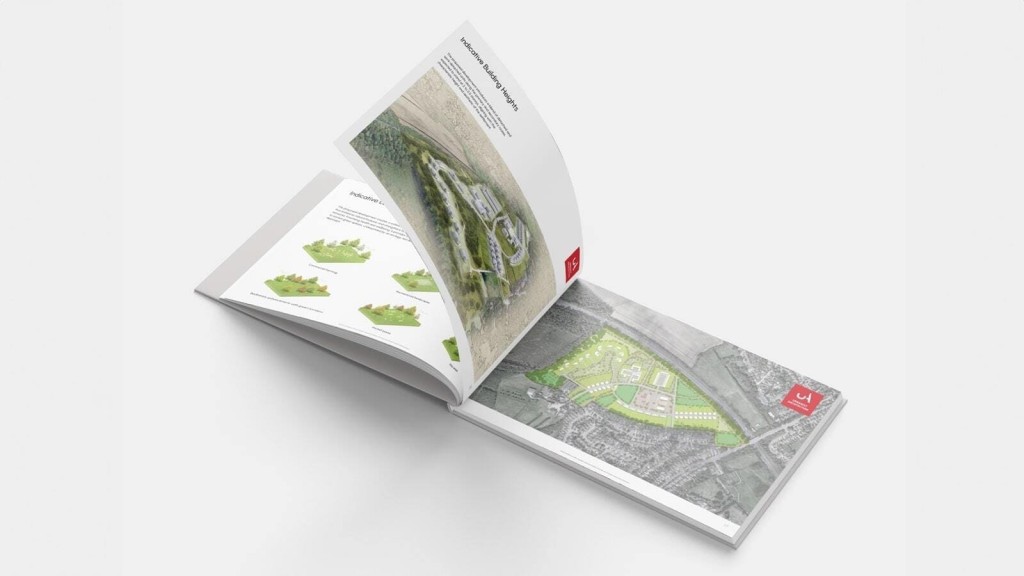
In our experience, the tilted balance cases that succeed are built the same way. The trigger is proved with current evidence. The benefits are designed into the scheme rather than asserted around it. And the harms are confronted rather than minimised. A strong case will usually assemble the following.

The opportunities the tilted balance creates are not spread evenly across England, and the right strategy differs by market. Broadly, three settings reward three different approaches.
Supply failures in counties such as Surrey, Hertfordshire and Buckinghamshire create openings for schemes with enhanced affordable housing provision, in places where land values can actually support it. The presumption may carry well-evidenced schemes that would otherwise face resistance on density or design grounds, but only where the sustainability credentials are genuine and the design would survive committee and appeal scrutiny.
These are also the markets where Grey Belt opportunities are most concentrated, and where councils defend their supply figures hardest, so the deliverability critique needs to be forensic.
Cities such as Birmingham, Manchester and Leeds present opportunities for schemes that combine housing delivery with economic regeneration, where the presumption supports proposals exceeding minimum policy requirements.
A note of realism, though: many large urban authorities perform comparatively well on supply and delivery, so the trigger should be verified authority by authority rather than assumed. Where it is engaged, brownfield reuse and regeneration benefits carry particular weight in the balance.
Supply failures in smaller settlements create opportunities for well-designed extensions that respect local character while meeting housing need.
Here the decisive evidence is usually sustainable location: walking access to services, realistic public transport provision and a transport case proportionate to the scale of the scheme. Design that demonstrably grows out of the settlement's character is what separates the approvals from the refusals.

The following scenarios are illustrative composites drawn from the patterns we see in current applications and appeal decisions, rather than accounts of specific cases. They show how the same test produces different outcomes depending on the evidence.
A developer promotes 40 flats on an underused commercial site at the edge of a district centre, in an outer London borough that can demonstrate around three years of supply against a sharply increased standard method requirement. The local plan predates the current NPPF and its housing policies are out of date, so the tilted balance applies. The scheme is two storeys taller than its neighbours, and objectors argue overdevelopment.
The case succeeds because the benefits are evidenced and the harms are contained. The accessibility analysis shows the site within a short walk of two rail services. The design steps the massing down towards neighbouring houses. Daylight and overshadowing are professionally modelled and pass. And 35% affordable housing is secured with viability evidence in support. The harm is real but limited, and falls well short of significantly and demonstrably outweighing 40 homes in an area of acute shortfall. The takeaway: contained, quantified harm loses to evidenced benefit.
A landowner promotes 120 homes on a former plant nursery on the edge of a Home Counties market town, in an authority below the 75% Housing Delivery Test threshold. A Grey Belt assessment demonstrates that the site, partly previously developed and enclosed by existing development on three sides, does not strongly contribute to sprawl, merging or the setting of a historic town, and no other footnote 7 policy provides a strong reason for restricting development.
Because the land qualifies as Grey Belt and the scheme is in a sustainable location, Green Belt policy does not switch off the presumption under limb one. The scheme commits to the Golden Rules: affordable housing at 15 percentage points above the local requirement, junction improvements and primary school contributions, and a new public park along the open edge. Golden Rules compliance attracts significant positive weight under paragraph 158, and the tilted balance resolves decisively in favour of permission. The takeaway: get the Grey Belt assessment right first, because everything else flows from it.
A promoter applies for 60 homes on a greenfield site beyond the edge of a village, in an authority with a 4.2-year supply, and the tilted balance is engaged. So far, so promising. But the only vehicular access requires visibility splays that cannot be achieved within land in the applicant's control, part of the site lies in flood zone 2 and the sequential test is addressed in two paragraphs, and the affordable housing offer of 20% sits below policy with no viability evidence.
The council refuses, and an inspector upholds the refusal. The housing benefits carry substantial weight, but unresolved highway safety harm is severe, the flood risk case is unproven, and the under-policy affordable offer reduces the benefit side of the scales. The adverse impacts significantly and demonstrably outweigh the benefits. The lesson is not that the tilted balance failed. It is that the tilted balance was never a substitute for an answerable scheme.
Everything above describes the framework in force as at June 2026: the December 2024 NPPF and its new planning rules, with minor amendments in February 2025. A much larger change is now on the horizon.
On 16 December 2025, the government published the draft NPPF 2025, a consultation draft of an entirely restructured framework. It replaces the familiar numbered paragraphs with local plan-style policies and introduces a suite of national decision-making policies.
In that draft, paragraph 11 as we know it disappears, and the direction of travel is unmistakably pro-delivery. The restructure is the government's most ambitious attempt yet to tackle England's housing crisis through the planning system.
The presumption is recast so that development within settlements should be approved unless the adverse effects would substantially outweigh the benefits, with a separate policy governing development outside settlements. The Housing Delivery Test is retained, with sub-75% delivery feeding into the new tests as evidence of unmet need.
The consultation closed on 10 March 2026, and the government has indicated the final framework is expected in summer 2026, alongside the new plan-making system that came into force in March 2026. Until the final version is published, the December 2024 framework and the paragraph 11(d) tilted balance continue to apply, and the transitional arrangements in the final document will determine how live applications and appeals are treated.
Anyone weighing the timing of an application in 2026 should carry out careful due diligence on their development projects, because the strategic answer may differ depending on which framework a scheme is determined under.

The tilted balance is the most powerful tool in the current planning system, and the most consistently misused.
Promoters read that 157 councils are short on supply and assume the hard work is done. It is not. The tilted balance changes the question. You still have to win the answer, and you win it with quality.
The schemes I see succeed are the ones where the architecture is doing planning work. Density justified by genuine character analysis, not asserted. Affordable housing that is viable, secured and deliverable. Every predictable harm designed out before submission, rather than explained away afterwards.
And the context has changed around us. With the appeal rules now locking your evidence at application stage, and a new NPPF arriving within months, my advice is simple. Treat every application as if it will be decided by an inspector on the papers. Increasingly, it will be.
The tilted balance can unlock planning permission on sites that would have stood little chance five years ago. But only when the trigger is proved, the benefits are evidenced and the harms are answered.
With 157 councils short of a five-year housing land supply, more than 60 caught by the Housing Delivery Test, a further buffer arriving in July and a new framework expected within months, the opportunity for well-prepared schemes is genuine. So is the penalty for unprepared ones, now that appeals are decided on the application file.
The sensible first step is not to submit quickly. It is to establish the position properly: verify the council's current five-year supply and Housing Delivery Test status, test whether the most important policies are out of date, check whether any footnote 7 designation switches the presumption off, and shape the scheme so the four benefits given particular regard are designed in from the outset. A planning appraisal that answers those questions before drawings are finalised will tell you whether the tilted balance is your route to permission, and what it will take to win under it.
At Urbanist Architecture, we build tilted balance cases into planning strategies from the first appraisal through to appeal, including on Grey Belt and edge-of-settlement sites. Because the two disciplines work as one team, the planning strategy and the design quality that the tilted balance rewards are developed together rather than in sequence.
If you are considering a site in an authority with a housing supply or delivery shortfall, the safest first step is to test the case properly, and evidence it fully, before committing to a full application.
We look forward to learning how we can help you. Simply fill in the form below and someone on our team will respond to you at the earliest opportunity.
The latest news, updates and expert views for ambitious, high-achieving and purpose-driven homeowners and property entrepreneurs.





We specialise in crafting creative design and planning strategies to unlock the hidden potential of developments, secure planning permission and deliver imaginative projects on tricky sites
Write us a message