Read next
The latest news, updates and expert views for ambitious, high-achieving and purpose-driven homeowners and property entrepreneurs.



The government says artificial intelligence could halve the time it takes to decide a householder planning application, from eight weeks to four.
For anyone who has waited months to hear back about a loft conversion, that sounds like very good news.
But speed and quality are not the same thing.
A faster planning system is not automatically a more generous one. It can refuse a weak application just as quickly as it approves a strong one.
So the question worth asking is not only whether AI will make planning faster. It is whether AI will make planning better, and what that means for the proposal sitting on your desk.
In June 2026, the government unveiled two AI tools built to attack exactly this problem. One helps officers collect information, review policies, undertake a provisional assessment and draft the foundations of a report for routine applications. The other drags decades of paper planning records into usable digital data.
This is a genuinely exciting development. It is also not a magic fix. Both things are true at once, and holding them together is the whole point.
In this article, I explain what has actually been announced, where AI is likely to help, where it will not, and how to prepare your application for a planning system that is becoming faster, more digital and, in some ways, less forgiving.

The government has announced two AI tools, each aimed at a different part of the planning problem. One targets the decision. The other targets the data.
What makes this exciting is not the technology for its own sake. It is that AI is being pointed at a real operational problem. Local planning authorities are under serious resource pressure. Officers carry heavy caseloads. And much of the system still runs on slow, manual document checking, the kind of work that swallows professional time without using professional skill.
The first tool is Augmented Planning Decisions, a prototype designed to support householder applications: the extensions, loft conversions, roof alterations and outbuildings that homeowners apply for.
The prototype, being developed by the government with Google DeepMind, Google Cloud and Faculty, does more than simple triage.
It is being tested with Barnet, Camden and Dorset councils, and is designed to help planning officers pull together relevant information, flag data gaps, identify national and local policies, undertake a provisional assessment and draft the foundations of a report, including the rationale and proposed conditions.
But it does not decide the application. The planning officer remains the final decision-maker, reviewing every line the tool generates, editing the reasoning and retaining the authority to approve or reject the application.
That distinction is at the heart of the announcement. AI may help prepare the assessment, but the officer remains responsible for applying professional judgement and standing behind the decision.
Alpha trials began in May 2026. Subject to successful results, the government expects to expand the trials to further councils later in 2026, with national rollout planned from 2027. MHCLG is funding the work through an £8.2 million contract with Google Cloud, Google DeepMind and Faculty.
The numbers explain the interest. Householder applications make up nearly 70 per cent of the roughly 350,000 planning applications submitted in England each year. Free up officer time on routine cases, the logic goes, and there is more of it for the complex ones. That should mean more attention for the major developments that need it most, and, crucially, fewer families left waiting for months to improve their own homes.
The second tool, Extract, may prove the more important reform.
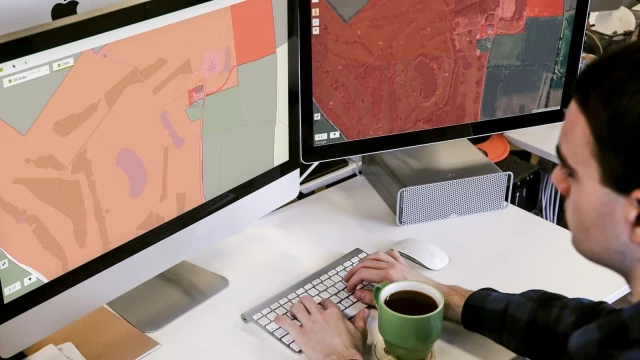
Extract converts old planning documents, maps and handwritten records into structured digital data. It is now available to every local planning authority in England, after trials across twenty councils including Exeter and Hillingdon.
The time it saves is not trivial. Extract is expected to save the average council around 255 hours of manual work converting documents into digital form, down from more than 500. That is professional time handed back to the work that actually needs a planner.
If it works at scale, it could make planning information far more visible, searchable and reliable. That would benefit almost everyone in the process.
Strip away the announcement language and the shape of all this is clear. The government is not trying to replace planners or let a machine grant permission. It is using AI to help officers gather the right information, understand the policy position, carry out a provisional assessment, draft the early shape of the report and work through routine cases more efficiently.
That is a serious and promising response to real pressure on the planning system. It is not a magic fix, because it leaves the hardest part of planning untouched. AI may make the system faster, more structured and more data-led. It will not remove the need for planning judgement, accountability and professional responsibility.
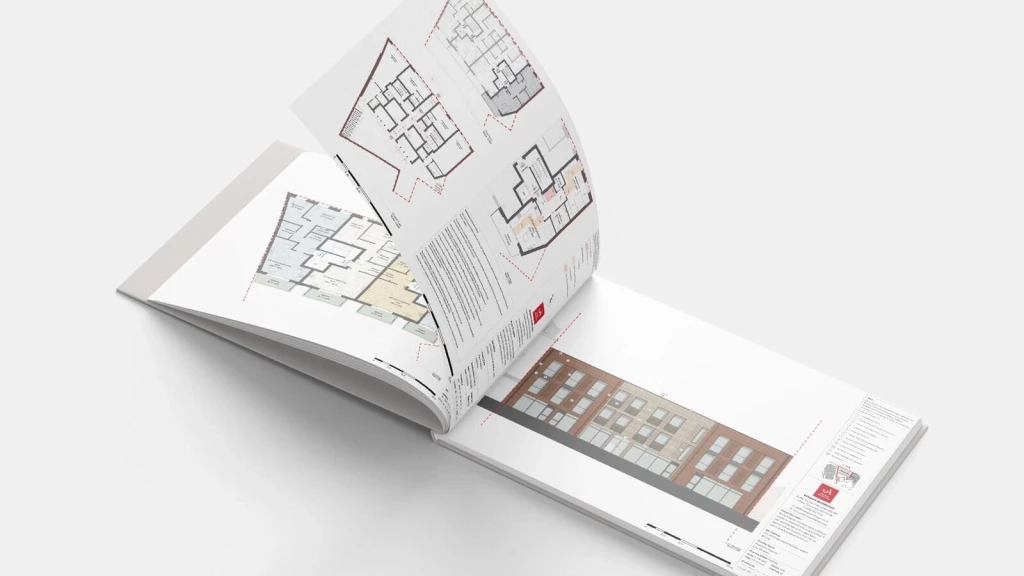
Before deciding whether AI can fix planning delay, it helps to be honest about what causes it. Delay is rarely one problem. It is many.
Many planning departments are under-resourced, carrying heavy caseloads, local objections, political pressure and ageing digital systems.
But the applicant's side matters too. A large share of planning application delays begin with the submission itself: unclear drawings, inconsistent documents, weak planning statements or missing technical information. Some applications are invalid on day one.
Then there is the procedural drag. Internal consultations take time. External consultees respond late. Highways, ecology, drainage and heritage all need clarification. Committee cycles add weeks. Legal agreements add months.
Extensions of time, once a rare formality, have become an ordinary feature of the system.
This is where AI may help. If it cuts the time officers spend gathering information, checking policies, reviewing consultation responses and drafting the early parts of reports, it frees up more time for the parts of planning that need judgement.
But it will not solve every cause of delay. It will not chase a late consultee. It will not negotiate a legal agreement. It will not soften local political pressure. It will not persuade a committee. And it will not turn a weak proposal into a strong one.
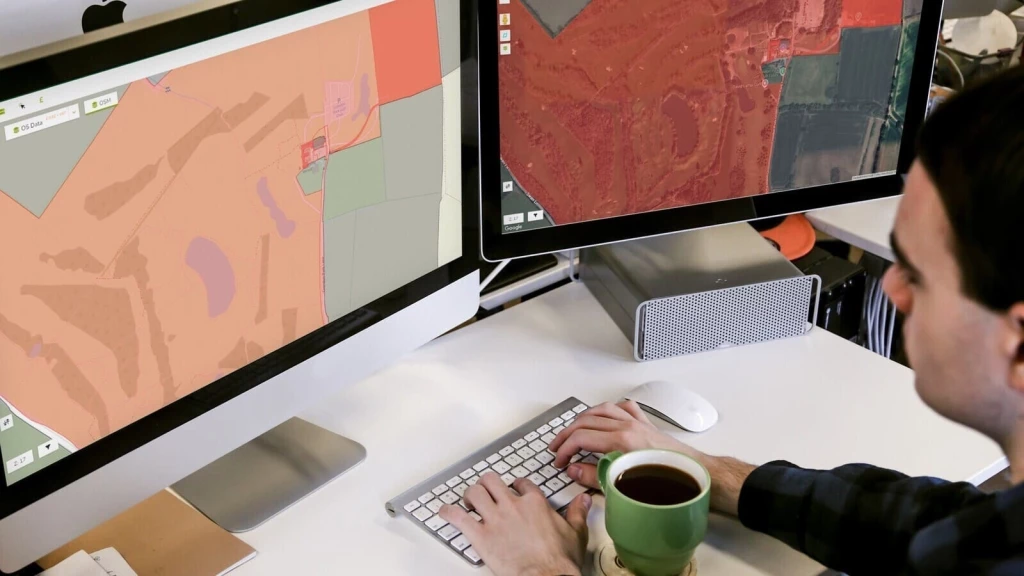
The headline is about faster planning decisions. The deeper story is about data. The planning system does not only need speed. It needs better information.
Much of planning still runs on documents rather than data. Documents are slow to search, hard to compare and inconsistent between authorities.
For a single site, an officer may need to know whether it sits within a Conservation Area, whether an Article 4 Direction has removed permitted development rights, whether Tree Preservation Orders apply, and whether historic conditions still bite.
That information usually exists. It is just not always structured, accessible or reliable.
As part of Extract's rollout, three national datasets, covering Article 4 Directions, Conservation Areas and Tree Preservation Orders, are due to be published on the Planning Data Platform.
The risk this removes is real.
A homeowner may assume permitted development rights apply, then discover an Article 4 Direction has quietly removed them.
A developer may buy a site without fully grasping its constraints.
A planning consultant may spend hours piecing together fragmented records before any strategy can begin.
Better data reduces that friction. But better data is not better judgement.
Data can tell you a site is in a Conservation Area. It cannot tell you whether your extension preserves or enhances its character.
Data can tell you a tree is protected. It cannot tell you whether a careful design might still be acceptable.
That is why Extract may be powerful, and still need to sit inside a system led by people.

For routine checks, AI may become genuinely useful. For planning judgement, the answer is different. That distinction runs through this whole debate.
AI can help with document checking, constraint identification, policy summaries, validation, consultation responses and provisional assessment. It can flag missing information, identify relevant policies and help draft the foundations of an officer report.
That is useful. But planning decisions are rarely just measurement.
A decision may turn on whether an extension looks too dominant in the street scene. Whether a rear addition creates an unacceptable sense of enclosure. Whether harm to a heritage asset is outweighed by public benefit. Whether a Green Belt scheme preserves openness.
These are material planning considerations, and weighing them is a matter of judgement, not arithmetic.
A planning decision must be explainable. It must be open to challenge. It must be made by someone who carries professional and legal responsibility for it. AI does not carry that responsibility.
The government's own position recognises this. People remain the final decision makers, and every AI-assisted assessment is reviewed and approved by a qualified officer before any decision is made.
The Planning Inspectorate has taken the same line, describing human control and oversight as a golden rule for AI use in casework, with public and professional responsibility resting on the people involved rather than the model.
That is the right position. The interesting question is not whether AI can produce an answer. It is whether it can be answerable for one.

Yes. And applicants need to sit with that, because it is the part of this story most likely to catch people out. A faster system is not a softer one.
If AI helps councils spot policy conflicts, missing information and amenity problems sooner, weak applications will not suddenly succeed. They will simply fail faster.
For a well-prepared application, that is good news. A clear, complete, policy-led submission should move through more smoothly. Constraints get identified early. The logic is easy to follow.
For a poorly prepared one, the opposite happens.
If the drawings are unclear, the heritage case is thin, or the neighbour impact has not been assessed, an AI-supported system may expose those weaknesses earlier rather than later.
So the quality of the application matters more, not less.
Under AI-assisted application processing, do not assume technology will compensate for a weak case. Many of the reasons for planning refusal are precisely the ones AI is best at spotting.
For homeowners, this announcement lands closest to home, because the prototype is aimed squarely at householder applications.
If your proposal is straightforward, policy-compliant and supported by clear planning drawings, AI may genuinely cut the wait. That would be a welcome change.
But not every householder application is simple.
A modest extension can still raise hard issues if the property is listed, sits in a Conservation Area, is affected by an Article 4 Direction, stands near protected trees, falls in the Green Belt, or sits unusually close to neighbouring windows.
In those cases, the planning risk does not disappear. AI may identify the constraint. It will not tell you how to overcome it.
The message is simple. If your proposal is genuinely simple, complete and compliant, AI may help it move faster. If it is sensitive or borderline, expert judgement still matters.
For developers, the short-term effect is more indirect. The prototype is built for householder applications, not major schemes.
So do not expect AI to unblock a complex residential or mixed-use application any time soon.
The benefit is second-order. If councils spend less time on routine householder cases, officers may have more time for major and complex development. In stretched authorities, that could matter.
But major development is a different order of complexity.
AI will not negotiate affordable housing. It will not resolve a viability dispute. It will not agree highway mitigation or draft a Section 106 agreement. It will not persuade members at committee.
For developers, the real value is in better data, earlier constraint identification and a cleaner administrative process. The strategic case still has to be made, properly, before the application is submitted.

There is another side to this that often gets missed. As councils adopt AI, so will applicants. And that creates its own risk.
More homeowners and self-builders are already turning to AI to generate layouts, design ideas, planning statements and slick visuals. Search interest in AI-generated plans for a planning application has climbed for a reason. The promise is seductive: a convincing house design in minutes, without the fees.
Used carefully, that can help at the earliest stage. AI can help you explore ideas, summarise policy, organise your thinking or prepare questions for your architect. The danger starts when exploration turns into confidence.
A design can look impressive on screen and still fail every real test. Planning applications are not judged on how persuasive an image looks. They are judged against policy, context, neighbour impact, technical constraints, heritage, design quality, buildability and evidence.
Anyone with experience in development projects knows that a proposal is only as strong as the weaknesses it has already addressed. The strength of a planning application submission is measured by how little the other side can dismiss, not by how forceful it reads.
That is where AI-generated material needs the most caution: it can produce confident wording before the planning case has been properly tested.
A chatbot may praise a flat-roofed contemporary extension because it looks clean and elegant. A planning officer may see an addition that jars with the street, overlooks a neighbour or appears overbearing.
And if it goes wrong, the liability does not move with the software. It stays with whoever submitted the application.
AI-generated material can be a useful starting point. It should not be mistaken for a planning strategy.

For professionals, this is not a threat. It is a signal. The planning system is becoming more digital, more data-led and more structured, and that changes how applications need to be prepared.
A strong application is no longer just a bundle of documents. It needs to be clear, coordinated and easy to assess. AI rewards that clarity.
That is especially important as councils move towards AI-assisted application processing, where clear structure, consistent information and well-evidenced arguments are more likely to be understood correctly from the outset. A well-structured case is easier for both an officer and a digital tool to understand. A vague or inconsistent one invites misunderstanding.
But there is a subtler point here.
AI supercharges existing tendencies. It may help rigorous professionals become sharper and quicker, but it may also make weak work look more polished without making it more accurate. A confident planning statement is not the same as a correct one. That is true whether a person or a model wrote it, and it is why AI in architectural design raises the value of judgement rather than lowering it.
At Urbanist Architecture, this is already how we believe applications should be prepared. A successful application is not a paperwork exercise. It is a carefully constructed case that explains what is proposed, why it is acceptable, how it responds to the site and how it deals with harm.
In an AI-supported system, that discipline matters even more. The role of the planning consultant and chartered architect is shifting away from form-filling and drawing production, and towards strategy, judgement and the preparation of a persuasive planning case.
That is also how we use AI within our own practice. It supports our internal research, review and workflow processes, particularly where it helps us organise documents, review planning history, summarise source material and identify issues more efficiently.
But it does not set the creative direction of a project, decide the planning strategy, or replace professional judgement. Any AI-supported output is only an internal working input, used to inform and sharpen our own analysis. The final advice, drawings, reports, submissions and planning arguments remain the work of our multidisciplinary team of architects and planning consultants.
Potentially, but only if the data and the way officers use it are reliable. Consistency is one of the biggest frustrations applicants raise, so it is worth taking seriously.
Similar proposals can receive different outcomes in different boroughs, or even within the same authority. Different policies, different officers, different levels of objection.
This is why planning permission can feel unpredictable even when the system is technically working as designed. Some uncertainty is unavoidable, because planning is site-specific and depends on professional judgement. But some uncertainty comes from the way different councils resource, validate, consult, negotiate and defend decisions, and AI will not remove that overnight.
But it may still help with one important part of the problem. AI could narrow some of that gap by giving officers better access to planning history and comparable cases. It may become easier to see whether similar extensions were approved nearby, or whether a Conservation Area boundary has been read correctly.
But there is a limit.
Planning is site-specific. Two proposals that look identical on paper can have very different effects in reality. A rear extension may be acceptable on one plot because of its orientation and boundaries, and unacceptable next door because of light and outlook.
AI should improve access to information. It should not create false uniformity by treating different sites as if they were the same.
None of this is a reason to reject AI. It is a reason to implement it carefully. The main risks are reasonably clear, and worth naming.
That last risk is the one I would watch most closely. Fluency is not the same as judgement.
There is also a question of accountability that the technology does not resolve. The negligent use of AI, through a lack of understanding, inadequate checking or simple misapplication, could in principle expose a council to legal, procedural or reputational risk.
That is not a settled legal position, and it should not be overstated. But it is a risk to be managed rather than assumed away.
This is precisely why human oversight, proper officer review, professional training, clear audit trails and transparent reasoning are not optional extras. They are what keeps an AI-assisted decision defensible if it is ever challenged.
This announcement does not stand alone. It sits inside a much larger government agenda to speed up planning and support the delivery of 1.5 million homes this Parliament.
AI arrives alongside other changes. Regulations were laid in Parliament in June 2026 to overhaul planning committees through a new National Scheme of Delegation, shifting more small applications, including larger home extensions and loft conversions, towards officer decisions rather than committee.
Seen together, these planning reforms point in one direction: faster, more delegated, more digital.
But AI is not a substitute for deeper reform.
The system still needs properly resourced authorities, up-to-date local plans, clear policies, better pre-application engagement and faster consultees. Technology can ease friction. It cannot repair every structural weakness.
The best version of this future is simple to describe. AI handles the heavy lifting of information gathering, policy cross-checking, consultation summaries and early report drafting. Structured data improves transparency. And planners spend more time on the skilled judgement that actually decides outcomes.
You do not need to wait for AI to arrive before improving your submissions. The direction of travel is already clear, and the habits that help are the same ones that have always made for strong applications.
Before you submit, make sure the proposal has been tested properly:
Check the constraints early: Conservation Areas, Article 4 Directions, Tree Preservation Orders, flood risk, heritage assets, Green Belt and local design policies should be identified before the design hardens.
Coordinate the drawings: Existing and proposed plans should be accurate and consistent with each other.
Make the statements site-specific: Address the real issues rather than reciting generic policy, and write a Design and Access Statement for this site rather than a template.
Show the route to permission: Explain why the proposal is acceptable, not just what it is.
Pre-empt objections: Where the case is sensitive, deal with likely concerns before they are raised.
AI-assisted application processing may make the system faster. It may also make it less forgiving of vagueness.
If you are weighing up an application now, the sensible first step has not changed. Carry out a proper feasibility study and due diligence before you commit.
Test the site, the planning history, the local policy position, the technical constraints and the likely council concerns before the proposal hardens. At Urbanist Architecture, that groundwork is where we start every project, whatever the technology around it.

My view is that this is a positive and overdue development.
The planning system is too slow, too fragmented and too dependent on paper. Officers are under real pressure. Using AI to strip out repetitive work and improve access to information is exactly the right instinct.
The most exciting part is not the headline about faster decisions. It is the move towards richer, standardised data. If decades of planning records become usable, the whole system becomes more transparent and more navigable.
But AI should assist planners, not replace planning judgement. And here it helps to be honest about what we are really arguing about.
Anyone who seriously attempts to answer whether AI could ever become conscious soon finds themselves pulled into the hard problem of consciousness, and is likely to finish the journey knowing less with certainty than they thought they knew at the start.
Planning does not need to win that argument.
We do not need to settle whether a machine can think before deciding whether it should decide a planning application. The more immediate question is whether AI can carry planning judgement, professional accountability, democratic legitimacy and responsibility for the consequences of a decision.
At present, it cannot.
AI may process information, identify patterns, summarise objections, extract data, highlight risks, support provisional assessment and help draft the foundations of a report.
What it cannot do is meaningfully understand place, lived experience, neighbour impact, heritage significance, openness, design quality, public benefit or the planning balance in the way a professional decision-maker must.
It does not stand in a neighbour's garden and feel the wall looming over it. It does not carry the burden of saying yes or no to people who will live with the answer for decades.
Planning is not just about producing an answer. It is about standing behind it.
So the future should not be framed as AI against planners. It should be AI-supported planning, where better data, clearer submissions and stronger professional judgement work together.
A faster planning system is welcome. A better-informed one is more valuable still. But a planning system without human judgement would not be more advanced. It would only be less accountable.
AI may make parts of the planning system faster, more organised and more data-led, but it will not make planning permission easier by itself. In fact, a faster system may be less forgiving of weak drawings, vague statements, missing evidence or poorly tested design decisions.
Strong, complete and policy-led applications are likely to benefit most, because they give officers working within AI-assisted application processing a clearer route to follow. Weak or speculative proposals, by contrast, may simply reach refusal more quickly.
For homeowners and developers, especially in residential architecture, AI can be useful at the early stage for exploring ideas, understanding constraints and organising information, but it should not be mistaken for a planning strategy.
A convincing image or fluent statement is not the same as a scheme that works in policy, design, buildability, budget and neighbour amenity terms. The real advantage will still belong to applicants who test the site properly, understand the planning risks before they submit, and use professional judgement to turn a proposal into a persuasive planning case.
We look forward to learning how we can help you. Simply fill in the form below and someone on our team will respond to you at the earliest opportunity.
The latest news, updates and expert views for ambitious, high-achieving and purpose-driven homeowners and property entrepreneurs.






We specialise in crafting creative design and planning strategies to unlock the hidden potential of developments, secure planning permission and deliver imaginative projects on tricky sites
Write us a message