Read next
The latest news, updates and expert views for ambitious, high-achieving and purpose-driven homeowners and property entrepreneurs.



Imagine a small developer assessing a 0.9-hectare former builders’ yard in outer London. The sketch shows 22 homes, with six to keep for rent. The figures almost work, but ecology costs, technical requirements and uncertain sales leave little room for error.
Chancellor John Healey’s Budget 2026, announced on 28 October, gives that developer reasons to revisit the appraisal. Some measures could ease delivery or support sales; others make personally retaining the finished homes more demanding.
The Autumn Budget 2026 includes six key announcements for landlords and property developers planning new build housing, building conversions and HMO development:
I’ll examine how these measures affect acquisition, design and exit decisions across different project types. The aim is to identify which assumptions you can revisit now and which depend on further rules.
We begin with what the Building Regulations pledge means for specifying and tendering your next scheme.

The Budget’s Box 4.A on building more homes promises no major Building Regulations changes for the remainder of Parliament, except continued safety improvements, while allowing proportionate amendments. Existing requirements and already legislated changes remain in place.
For a smaller developer, the benefit is greater confidence that a compliant design will survive tendering and construction without another major regulatory redesign during this Parliament. That could make repeatable details and supplier commitments easier to price, although construction costs and approval times remain uncertain.
The Future Homes and Buildings Standards still need particular attention. Under SI 2026/335, the new requirements generally begin on 24 March 2027 outside the higher-risk building regime.
To use the relevant transitional route, a building notice, initial notice or full-plans building control application with a complete set of Building Regulations drawings must be given before that date, and work on the relevant building must meet the legal commencement test before 24 March 2028.
Specified changes for higher-risk building work and work to existing higher-risk buildings begin on 24 September 2027, with separate transitional tests. The government’s circular explains these distinctions. A planned completion date alone does not determine which standard applies.
Building Safety Regulator procedures, fire safety duties, accessibility requirements, licensing for houses in multiple occupation (HMOs) and planning policies also remain relevant. The pledge does not withdraw them.
The Building Safety Levy is another cost to retain in the appraisal. It began in England on 1 October 2026, subject to application dates, charging conditions and exemptions. For ordinary housing, its own major development threshold starts at 10 new dwellings, alongside new-residential-floorspace and other tests. Qualifying earlier applications have transitional protection.
The 22-home brownfield scheme could therefore gain BNG relief while still owing the levy. Its previously developed land discount has separate definitions, so assess both independently, alongside planning obligations, Community Infrastructure Levy and infrastructure costs.
Before fixing a tender package for construction, confirm which standards apply and whether the relevant transition tests are achievable. Coordinating building control with planning early may offer more immediate value than the regulatory pledge itself.

The clearest potential beneficiaries are qualifying residential brownfield sites larger than 0.2 hectares and up to 1.5 hectares. A separate exemption already in force covers sites no larger than 0.2 hectares where no onsite priority habitat is impacted, for qualifying applications made on or after 6 August 2026. For an already exempt infill plot, the Budget may add no BNG saving.
The application history matters. A section 73 variation cannot claim that area exemption where the original application was made, or the original permission granted, before 6 August 2026. Changing a condition on an older permission does not automatically reset its BNG position.
Business size and site classification are separate. The NPPF 2026 defines medium housing development as 10 to 49 homes on up to 2.5 hectares, as a subset of major development. An SME business can deliver a major scheme, and the medium-development definition does not expand the Budget’s 1.5-hectare limit.
For example, a hypothetical 30-home scheme on 1.4 hectares falls within the announced area envelope, subject to the final qualifying rules. The same number on 1.8 hectares falls outside that headline limit. Density and dwelling count cannot substitute for measuring the relevant site area.
Brownfield sites above 1.5 hectares and greenfield sites above 0.2 hectares gain no relief from these area-based announcements alone. They still need checking against the existing exemptions and transitional arrangements; some schemes may already be outside mandatory BNG requirements for another reason.
The Budget announcement sets the 1.5-hectare headline, but the consultation response, impact assessment and implementation timetable remain outstanding. The earlier consultation explored definitions of qualifying brownfield land and residential development. Those proposals are not final eligibility rules.
A backland or infill label does not establish eligibility. The NPPF’s definition of previously developed land excludes residential gardens in built-up areas and certain other land. Final treatment of partly brownfield sites, mixed-use schemes, HMOs, extensions to existing developments and existing permissions still needs confirmation. A housing-specific exemption should not be assumed to cover a wholly commercial conversion.
Nor does removing BNG remove ecology. Protected species surveys, designated-site effects, urban greening and drainage policies can still apply.
What may fall away is work required solely for mandatory BNG: the metric, gain plan, necessary off-site unit purchases and associated land or management obligations. Separate those from ecological assessment and landscape work the scheme still needs.
Defra’s earlier consultation response recognises that compliance costs can weigh disproportionately for developing small sites. A fixed assessment or administrative task spread across six homes has a different per-home effect from the same task across 60. The saving still depends on the actual baseline, rather than a standard allowance per dwelling.
Not until two uncertainties are resolved: whether the site meets the final definition, and whether your scheme falls within the transitional rules, which are unpublished. The 0.2-hectare exemption turned on the application date. If both look likely, model the saving as an upside. If either is doubtful, keep BNG in the base appraisal.
The order matters because a known saving tends to migrate into the land price. A vendor who reads the Budget will expect a share of it. Pay for it only once the regulations exist and your brownfield site has been tested against them.
Before delaying an application to wait for the exemption, compare your ecologist's actual BNG cost with the finance and programme cost of waiting.
It may be, if your homes sit within the local price cap and suit first-time buyers purchasing their main home. Under the government’s initial guidance, eligible buyers will need a deposit of at least 2.5%, a repayment mortgage from a participating lender and a government equity loan of 20% of the price, interest free for five years. The Budget sets a maximum deposit of 15%.
Household income caps are £110,000 outside London and £140,000 within London. Price caps will be set by local authority area, with £650,000 in inner London and £500,000 in outer London, as defined in the London Plan 2021.
The timetable is expected, not certain: customer pre-registration and the first developer registrations by the end of December 2026, applications from February 2027 and first sales from April 2027. Homes England will administer it initially. The planned later transfer to the National Housing Bank is subject to the necessary legal and regulatory changes.
The equity loan is the buyer’s borrowing, normally repaid as 20% of the home’s value when the loan is repaid, so the amount can rise or fall. Published interest rates are 1.5% in year six and 3% from year seven. Interest does not repay the loan. This supports the buyer’s purchase rather than funding the developer’s construction.
Under the developer participation rules, developers pay a fee on the final sale price of each home sold through the scheme: 1% on the first 100 homes each year, 3% on homes 101 to 250 and 4% above 250.
For a developer selling up to 100 homes a year through the scheme, that means 1%. On a £500,000 flat in outer London, the fee is £5,000, leaving £495,000 before other selling costs. Group-counting rules still need confirmation, so splitting sales between connected companies should not be assumed to preserve the first band.
The fee earns its place where the resulting sale and timing justify it. It does not establish that the buyer is additional, that the home would otherwise remain unsold or that profit rises by a particular amount. Developers must meet scheme requirements and enter a participation agreement; final participation and allocation terms remain important.
The Budget expects the scheme to help around 70,000 households and support delivery of an estimated 20,000 new homes. Those figures alone do not establish how many supported purchases would otherwise have happened.
In its original October outlook, the Office for Budget Responsibility (OBR) expects only a marginal housing-supply effect and says the scheme could marginally raise prices. Buyer assistance therefore deserves a sales scenario, not an assumed uplift in land value.
For an SME, that turns the scheme into three tests:
Price: does each home remain below the local cap after specification upgrades?
Product: will a first-time buyer on a 2.5% deposit want the layout, and will a lender value it?
Timing: will completions match the scheme’s confirmed operation and allocations? Funding is £700 million in 2027–28, then £1 billion annually for the following four years.
Annual caps create allocation risk. Register when the process opens and confirm availability before relying on supported sales. Participating-lender information and detailed eligibility rules are still awaited. Stronger sales evidence may help a development lender assess the exit, but it does not guarantee construction finance or replace the developer’s equity.
On conversions, the guidance refers to new build homes and says full eligibility rules will follow. Until it confirms that homes created by conversion qualify, do not price a conversion's exit on the scheme.

Personally retaining newly developed homes becomes more demanding under the proposed tax changes. HMRC’s overview of tax legislation and rates announces rates of 24%, 44% and 49% from 6 April 2027, subject to Finance Bill legislation. This adds two percentage points to the increases announced in Budget 2025 for the same date.
HMRC specifies England, Wales and Northern Ireland, but devolved powers and individual taxpayer status require separate consideration. The property’s location alone does not determine the owner’s tax position.
The rates apply to taxable rental profit after allowable expenses or applicable allowances, rather than gross rent. Individual residential landlords generally receive restricted finance-cost relief through a tax reduction.
Finance Act 2026 links this to the property basic rate from 2027–28, so the proposed rate would give a 24% reducer, subject to statutory limits. Capital acquisition, construction and conversion costs cannot simply be deducted as annual letting expenses.
Your accountant should assess these rules against the ownership and exit options below:
Selling completed homes: a developer's profit on sale is normally trading profit, not property income.
Holding personally: rental profit from homes you keep as an individual falls under the new rates.
Holding in a company: rental profit bears corporation tax instead, but extraction brings dividend tax, distribution reforms are planned from April 2028, and moving existing property in can trigger capital gains tax, stamp duty land tax and refinancing costs.
Incorporation is therefore a question for your accountant, not a reflex.
For HMO investments, the rise sharpens a familiar point: Higher gross rent becomes a return only after management, voids, utilities, licensing, maintenance, finance and tax under the chosen ownership structure. An HMO should rest on local demand and a net appraisal, not serve as a tax workaround.
The OBR judges that the two rises, both effective from April 2027, together materially reduce private landlords' returns, after a decade of other measures. It says fewer potential landlords entering the market risks a steady long-term rise in rents if demand outstrips supply, which it thinks more likely than not. It also expects landlords to pass on more of the cost over time.
That is a qualitative long-term risk assessment, not a quantified rent forecast. Local demand, affordability, competition and applicable rent rules constrain what tenants can pay. A landlord sale can change tenure without removing a dwelling from the total housing stock; an exit from renting and a loss of housing supply are different outcomes.
The tension is plain. Higher personal taxation may discourage new rental investment while demand for good accommodation persists.
For developers able to deliver well-managed rental homes that work after tax at realistic local rents, that continuing need is a reason to investigate opportunities carefully. Future rent rises should not be relied on to repair a weak appraisal.

Less than the headlines suggest, because some schemes already avoid mandatory BNG and Your First Home may not reach them. Development permitted through development orders, including qualifying permitted development rights, is exempt.
The existing low-impact exemption can also matter to conversions. External works requiring separate permission need their own assessment.
By project type:
Small-site new build of 0.2 hectares or less: check the application date, priority habitat and any section 73 history before treating the area exemption as available. Buyer eligibility and the technical programme may matter more than new BNG relief.
Brownfield new build larger than 0.2 hectares and up to 1.5 hectares: the clearest potential incremental BNG benefit, subject to the final definition and commencement. Keep existing obligations and levy liability in the appraisal.
Office-to-residential conversion: outside BNG where delivered through Class MA prior approval.
Mixed-use schemes: final treatment under the brownfield exemption remains unresolved. Assess the residential and commercial elements, permission route and proposed exit separately.
HMOs: higher property-income tax affects the retention appraisal where rental profits are taxed personally. Article 4 directions, licensing and fire safety requirements remain relevant.
Conversion to non-residential uses: housing-specific benefits should not enter the appraisal. Test the proposed use against occupier demand, achievable rents or sale values, fit-out costs and the relevant consent route.
For office-to-residential schemes, the planning route still shapes value more than the Budget does. We have undertaken many projects pairing a baseline Class MA prior approval with a full application for an upward extension or rear infill.
In our experience, that combination can unlock more value and reduce appeal risk compared with relying on permitted development alone. The Budget leaves that logic intact; the exit route for the resulting flats is now the variable to test.
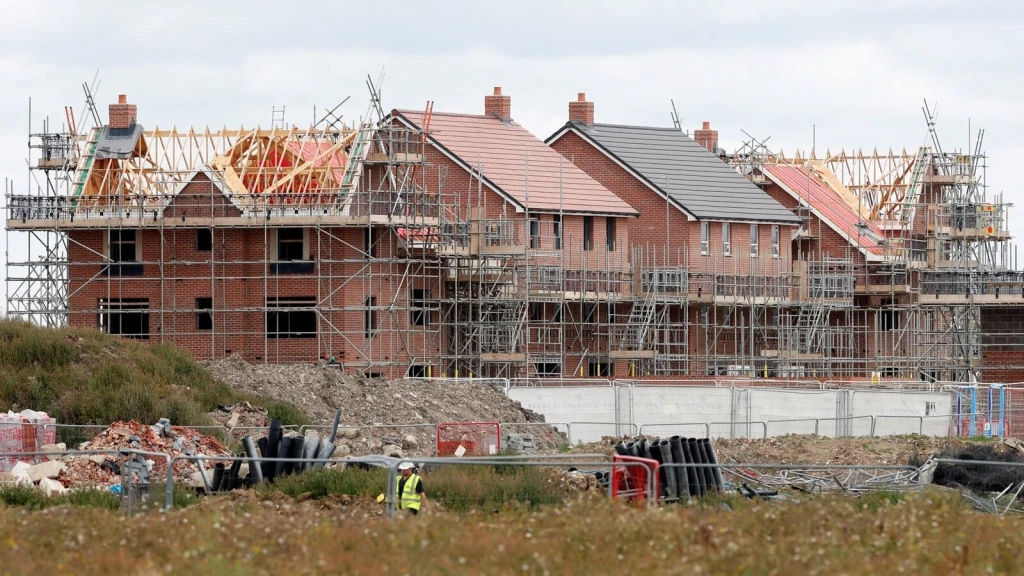
Council and social housing are an essential part of the answer. So is private housebuilding. Creating the conditions for independent developers to acquire sites, secure finance and deliver homes at a reasonable return deserves the same policy attention as funding public provision.
The further £1.5 billion for the Social and Affordable Homes Programme is expected to deliver around 10,000 homes in England, prioritising Social Rent and especially council homes. Funding covers 2027–28 to 2030–31, alongside a one-year extension to preferential Public Works Loan Board borrowing for councils.
That investment is welcome and may create partnership and contracting opportunities for SMEs. Homes England’s existing programme includes housebuilders and developers, subject to bidding and investment-partner requirements. London funding runs through the Greater London Authority.
For developers considering a land disposal, the planned VAT zero rate for land sold to relevant housing associations may also affect the exit appraisal. It is intended from 1 April 2027 through secondary legislation, so confirm the final conditions with a VAT adviser before relying on it.
The wider delivery outlook shows why private supply needs sustained support. The OBR now expects around 190,000 fewer homes to be added to the housing stock over its forecast period than it did in March. It points to fewer planning permissions, higher interest rates and weak buyer demand, while construction costs are rising faster than house prices.
Regulatory and tax changes have added to those pressures, particularly since 2019. The OBR highlights the Building Safety Levy and regulator regime, biodiversity net gain, nutrient mitigation, the Residential Property Developer Tax and higher corporation tax. The Budget itself acknowledges record building costs. For an independent developer, these pressures meet in one appraisal and can determine whether a scheme proceeds.
Public funding therefore needs to work alongside the Government’s planning reform and practical support for private delivery: predictable decisions, proportionate requirements and workable development finance. Planning permissions alone will not solve the housing crisis while finance, infrastructure or delivery costs remain unresolved. More council homes and a diverse, commercially viable private housebuilding sector should be ambitions pursued together.

I welcome the Budget’s promised restraint and proposed brownfield relief. For smaller developers, greater certainty can prevent late redesigns, revised tenders and additional borrowing before a single home is completed.
Private housebuilding also needs more explicit support. Council and social housing investment is welcome, but independent developers must also be able to acquire sites, secure finance and deliver homes at a reasonable return. Profit is a legitimate reward for committing capital and carrying risk, and housing policy should recognise the conditions private investment requires.
That means addressing the costs of delivering new homes alongside helping people buy them. Your First Home may strengthen sales, but buyer assistance cannot repair an unaffordable construction budget. The scheme works best where realistic local values already support development.
Reducing uncertainty in the planning process matters just as much. Delays consume money while market conditions change. Properly resourced planning departments, proportionate evidence requirements and timely decisions would give smaller developers a firmer basis for committing capital.
My immediate priority would be clear brownfield definitions, commencement dates and transitional rules, with qualifying relief extended to undetermined applications submitted before commencement. Early confirmation of whether converted homes can qualify for Your First Home would also help developers assess their exit.
I would pursue simpler Building Regulations procedures for minor schemes and small conversions, while retaining safety, accessibility and environmental standards. Documentation and coordination should reflect the work proposed and its risks.
The Budget should be judged by whether more well-chosen projects can proceed on realistic terms. Additional public homes and a diverse, commercially viable private housebuilding sector should be ambitions pursued together.
Through an architectural feasibility assessment, we help our clients test whether a site meets the conditions these measures depend on before the price or design is fixed: previously developed land coverage, priority habitat risk, values against Your First Home caps, the Future Homes Standard programme and the planning route for conversions.
On every project, small or large, we prepare the planning submission as an appeal-ready file, with the evidence an inspector would need from the outset. On complex proposals, we prepare and lead pre-application advice requests on our clients' behalf.
Planning outcomes remain site-specific, and the tax structure belongs with your accountant.
The sensible next step is to reopen the appraisal line by line: the Building Regulations specification, the BNG allowance, the sales plan and the decision to hold or sell. Only then decide whether the Budget changes what you should pay for the land.
We look forward to learning how we can help you. Simply fill in the form below and someone on our team will respond to you at the earliest opportunity.
The latest news, updates and expert views for ambitious, high-achieving and purpose-driven homeowners and property entrepreneurs.









We specialise in crafting creative design and planning strategies to unlock the hidden potential of developments, secure planning permission and deliver imaginative projects on tricky sites
Write us a message