Read next
The latest news, updates and expert views for ambitious, high-achieving and purpose-driven homeowners and property entrepreneurs.


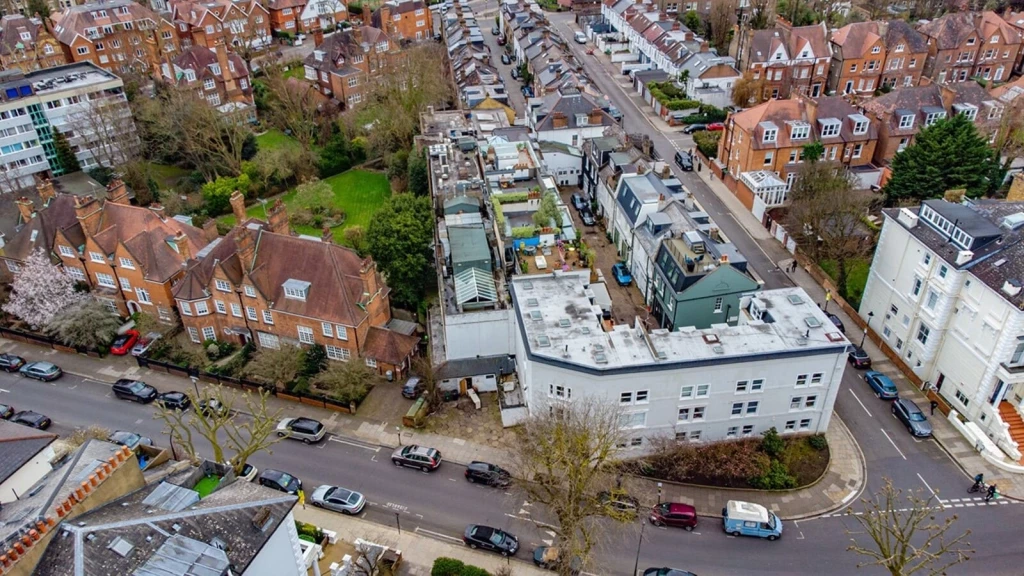
This article is the on-site edition of Urbanist Architecture’s monthly newsletter.
March felt less like a month of commentary and more like a month of intervention. The conversation this month moved beyond what planning reform might mean in theory and towards where the Government is now prepared to act directly to get housing moving.
The draft NPPF consultation closed on 10 March, and with the Government's response and updated framework expected in summer 2026, the industry has shifted from debating the direction of travel to watching whether the final version holds its nerve.
The data landing alongside that shift was sobering. The OBR's Spring Statement outlook projected net additions to the UK housing stock falling to 220,000 homes in 2026/27, before a recovery later in the decade if reform is applied consistently and at pace. That last condition matters most. Reform on paper is one thing. Reform in day-to-day decision-making, at committee level, across hundreds of local authorities, is another entirely.
March also showed that ministers are becoming more willing to intervene rather than wait. Proposals for seven new towns, consultations on planning committee reform and fees, and on 25 March, an emergency package from Housing Secretary Steve Reed and Mayor Sadiq Khan to unblock stalled schemes in London, including a fast-track route for sites with at least 20% affordable housing and temporary CIL relief, all point to a Government no longer willing to let the system move at its own pace.
Measures like London’s housing emergency package may unlock individual sites, but they are no substitute for a planning environment that investors and developers can rely on from the outset. The real question is whether this kind of intervention becomes a bridge to systemic reform, rather than a repeated response to a system that still cannot deliver reliably on its own.
This is the context in which our Creative Director and Senior Architect Robin Callister spoke at the Next Steps for Housebuilding in London conference run by Policy Forum for London and Westminster Social Policy Forum. He argued that the planning system has become too preference-led, inconsistent, and slow. Reform must change that at a structural level.
He was equally clear that this is not about lowering standards. Design accountability, spatial clarity, and climate resilience must shape proposals from the start, not be negotiated later. On Green Belt, Robin made the case that Grey Belt and station-led policy now gives authorities a more honest and evidenced basis for directing growth, rather than relying on designation as a default reason to refuse.
The cautious optimism we felt in February still stands. March simply reminded us how much depends on what comes next: whether the final NPPF holds its clarity, whether local authorities apply it consistently, and whether the system begins to move at a pace that preserves viability rather than eroding it.
We look forward to learning how we can help you. Simply fill in the form below and someone on our team will respond to you at the earliest opportunity.
The latest news, updates and expert views for ambitious, high-achieving and purpose-driven homeowners and property entrepreneurs.










We specialise in crafting creative design and planning strategies to unlock the hidden potential of developments, secure planning permission and deliver imaginative projects on tricky sites
Write us a message