Read next
The latest news, updates and expert views for ambitious, high-achieving and purpose-driven homeowners and property entrepreneurs.


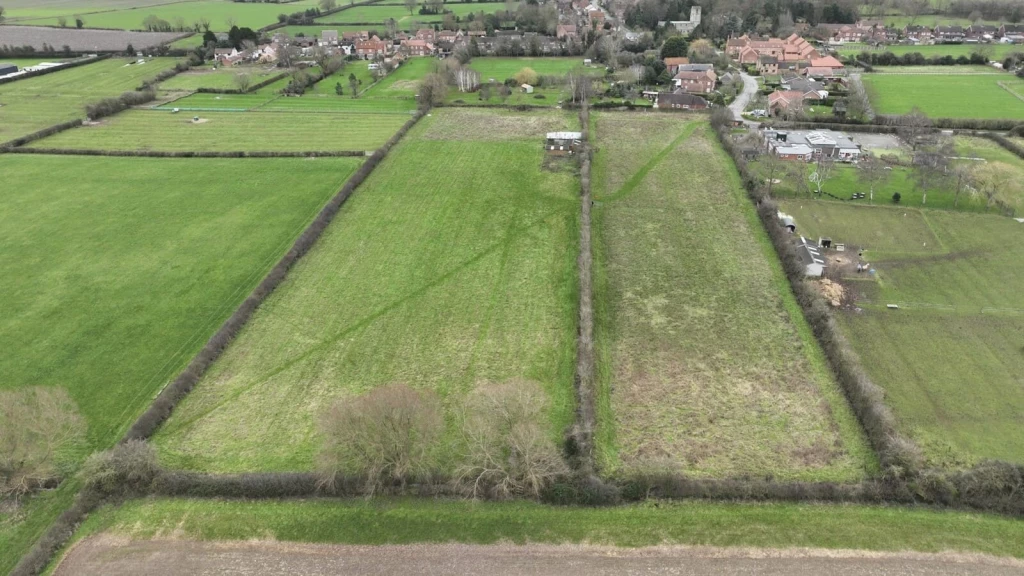
You're scrolling online and a "rare opportunity" appears: a freehold land plot near a growing town, priced "below market value", with huge upside once development arrives.
The brochure looks slick. The agent sounds confident. The map shows houses nearby. It feels like getting in early.
That's exactly why land banking schemes work.
Because the pitch isn't about land. It's about planning gain - the life-changing uplift that comes from securing planning permission.
That’s why so many listings for cheap plots of land for sale across the UK seem like a bargain at first, but don’t stand up to planning scrutiny.
That single fact explains the entire industry: the legitimate side of strategic land investment and the darker side where "investment plots" become expensive paper with no real-world function.
Having worked on planning applications across London and the UK for over two decades, including complex Green Belt and Grey Belt cases, I've seen every variation of these schemes.
I've also heard from the people left holding them. They contact us hoping we can salvage something. Submit an application, find a route through. Some already suspect the land was never viable but want a professional opinion. Others have no idea what they've actually been sold.
That frustration is why I wrote this guide: to explain how land banking scams happen in the UK, why plots become worthless, and the hard-to-spot details buried beneath the sales pitch. The legal traps, the planning myths, and the access problems nobody mentions until it's too late.
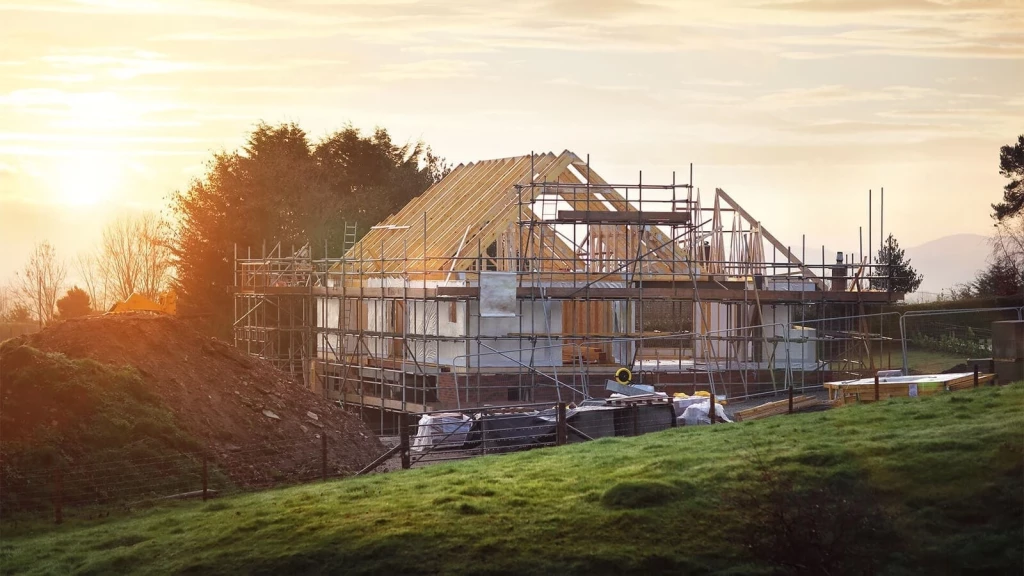
People aren't buying plots out of greed. Many are buying out of frustration.
With new-build prices soaring and build quality falling short, many buyers are choosing to find land and self-build instead.
That mindset is understandable. Owning land feels like control. A plot feels like security, a hedge against chaos.
When you've seen new-build developments with paper-thin walls, flooding issues, and snagging lists that never get resolved, the idea of controlling your own build becomes genuinely attractive.
But land is only valuable when it's usable, and usability is governed by two brutal realities:
What the local planning authority will actually support
Whether the land is capable of being developed in practice
Land banking scams thrive in the gap between what people imagine land to be and what land legally is.
The tragedy is that self-build is a legitimate and often excellent route to homeownership. Building on your own land can deliver better quality, better value, and a home that actually fits your needs.
The problem arises when that aspiration is exploited by sellers who understand planning constraints far better than their buyers do and who profit from that asymmetry.
Legitimate land banking is strategic land investment.
Landowners and promoters assemble sites, commission evidence, develop a planning strategy, and seek allocation through a Local Plan or consent through the application process. That is a normal part of UK development.
It's also exactly what we do for clients at Urbanist Architecture. As architects and chartered town planners, we help landowners navigate this process properly because that process is where value is created, not the moment of purchase.
Major housebuilders understand this too. They routinely hold land banks worth billions of pounds and employ chartered architects, planning consultants, environmental specialists, and legal teams to work the system over years.
Whether it's a housebuilder with a billion-pound portfolio or an individual landowner with a single site, the principle is the same: owning land means nothing without a pathway to planning permission.
The dark side emerges when a seller takes agricultural or other land without planning permission and markets it as the next housing estate.
The pattern looks like this:
A company buys a large field at agricultural value - say, £10,000–£25,000 per acre. Nothing remarkable there. It's farmland, priced as farmland.
Then comes the transformation. That single field gets carved into dozens of separate titles, each one ranging from 0.1 to 0.4 acres. Suddenly, what was one asset becomes fifty micro-plots. The company markets these as carefully curated "options" designed to suit different budgets and aspirations, as though the variation in size reflects genuine choice rather than a calculated subdivision strategy.
On paper, it looks professional. In practice, the company has simply turned one field into dozens of mini-plots, each one wrapped in the same promise: "future development potential".
But here's what hasn't changed: the land itself. It's still the same field. But the pricing is driven entirely by exaggerating the hope value of the land.
That "hope value" is the weapon. Buyers aren't paying for what the land is. They're paying for what it's promised to become.
And the promise is usually fiction.
Let me illustrate with numbers.
A 10-acre agricultural field in the Home Counties might sell legitimately for £200,000-£250,000. That same field, divided into 200 plots of approximately 200 square metres each and sold at £15,000-£25,000 per plot, generates £3-5 million.
The seller has multiplied their investment by 12-20 times. The buyers collectively own land worth a fraction of what they paid.
This isn't speculation. This is the documented economics of land banking fraud.
Land banking mis-selling doesn't always look like an obvious scam. It often looks like a modern investment brand.
The tactics are familiar: glossy marketing, planning jargon, "insider opportunities", urgency and scarcity, "only a few plots left", and classic hard-sell tactics. Here are some of them:
This means nothing without policy support. Every piece of land has theoretical "potential" in the sense that physics doesn't prevent building on it. But planning policy might.
Without a feasibility assessment, led by a planning permission expert, investors risk overpaying for land that may not have viable development potential.
Proximity to existing housing is not a planning argument. Some of the most protected Green Belt land sits immediately adjacent to built-up areas - that's often precisely why it's designated.
Being close to a settlement boundary may be beneficial in certain circumstances, but it does not guarantee anything.
Here's what most people miss: relying on sales claims instead of a planning consultant’s due diligence turns the decision into guesswork, and that guesswork is rarely correct.
Sellers often say a site has been "submitted for consideration", but this usually means someone filled in a call for sites form. Anyone can submit any land. It costs nothing and proves nothing.
More often than not, most sites are rejected because the application is often submitted without specialist input or for land that was never suitable for development in the first place.
But here’s where buyers get misled again. Even appearing in a Strategic Housing Land Availability Assessment doesn't mean allocation. It's a capacity study, not a policy commitment. Until a site is formally allocated in an adopted Local Plan, "future growth" is just a sales phrase. Check the plan, not the brochure.
Land banking promoters love this angle. If a council cannot demonstrate a five-year supply of deliverable housing sites, the "tilted balance" in national policy creates a presumption in favour of sustainable development. Sellers claim this means your plot will be approved.
That sounds reasonable. Until you look closer.
Even where the tilted balance applies, development still needs to be sustainable. Green Belt protection still applies. Access still needs to work. Environmental constraints still matter. And crucially, the site still needs to be deliverable, which fragmented micro-plots almost never are.
When a council genuinely needs housing land, it prioritises applications for complete, deliverable sites: unified ownership, proper access, and infrastructure capacity. A field split into 200 separate titles is a planning nightmare, not an opportunity. A lack of a five-year supply shifts the balance, not the rules.
Green Belt isn't "released" like a pressure valve. It's reviewed through Local Plan processes that can take 5-10 years, and the vast majority of Green Belt land remains protected even after reviews.
What sellers don't mention is that release isn't even necessary. Planning permission on Green Belt land can be secured through legitimate routes: very special circumstances, Green Belt policy exceptions, or the Grey Belt pathway.
But these routes require Green Belt specialist architects and planning consultants who understand the policy framework. A brochure promising future release is not a substitute for a proper planning strategy.
The bottom line?
Every one of these phrases is designed to create confidence without evidence. That's not accidental.
The FCA has long warned that while not every land banking operation constitutes a scam, buyers are often not told the full truth, particularly where the land is restricted, protected, or realistically undeliverable. They also warn about follow-up scams, where victims are pressured to pay additional money once they realise they won't profit.
Here's what matters: land banking schemes don't need you to believe development is guaranteed. They only need you to believe it's likely enough to justify the price. That belief is the product they're selling.

Green Belt is one of the biggest drivers of land banking hype because the Green Belt planning uplift is real.
In my recent analysis of Green Belt land values, I found that the uplift from agricultural to residential land can reach around 275 times in certain cases. Land values can jump enormously when permission is secured. That's why investors chase it.
But here's the uncomfortable truth: most residential proposals on undeveloped Green Belt land constitute "inappropriate development." Therefore, securing planning approval for that uplift is extremely difficult.
That's not to say it's impossible. My practice and I work on Green Belt and Grey Belt schemes regularly, and for the right sites, we secure approvals. But the right sites are never the micro-fragmented plots that land banking schemes sell. They're strategic parcels where we've assessed feasibility first and identified a genuine policy route through.
To succeed, we demonstrate a combination of very special circumstances that clearly outweigh the harm. That means acute housing need, significant public benefits like affordable housing or infrastructure, and clear evidence that harm to openness is limited. It's a high bar requiring compelling, site-specific evidence.
However, very special circumstances are not the only route through Green Belt policy. There are Green Belt exceptions: agricultural buildings, outdoor recreation, replacement buildings, limited village infilling, and redevelopment of previously developed land. But these are narrow and rarely apply to the speculative housing schemes that land banking promoters promise.
Then there is Grey Belt, introduced in December 2024. If a seller implies Grey Belt equals "easy planning", that is your first warning.
Qualification requires a professional Grey Belt assessment of the site's contribution to Green Belt purposes. Land that clearly serves those purposes won't qualify, whatever the seller claims. And here's the problem: most plot owners calling their land "Grey Belt" have made that decision themselves, without any formal assessment or council sign-off.
Even where land does qualify, Grey Belt proposals must demonstrate a sustainable location, respond to local housing need, and comply with the Golden Rules for affordable housing, infrastructure, green space, and biodiversity net gain.
Many genuine Grey Belt sites do offer real potential for the right applicants. But Grey Belt is a policy route, not a free pass. Anyone who tells you otherwise is either misinformed or misleading you deliberately
In every case, what determines the outcome is the specific site - its openness, its visual relationship with the surrounding landscape, its contribution to Green Belt purposes, and its capacity to accommodate development without significant harm.
In short, there are technical planning judgements requiring professional analysis, not assumptions that a seller can make in a glossy brochure.
Here's what unravels the whole pitch: if the seller really believed permission was achievable, ask yourself, why are they selling it to you at a fraction of what it would be worth with consent?
I see the opposite every day. Once we submit an application and it appears on the council's portal, other investors or estate agents come calling with offers to purchase. Not one of my clients is interested. They know what the land could be worth with consent. That's exactly why they're waiting for it.
Predictably, someone's monetised the idea of targeting landowners and their architects who've submitted applications. Get-rich-quick online courses now teach students to search planning portals for sites with potential. So-called land development gurus package this as insider knowledge. It's just a search filter and a cold call.
Quite frankly, it makes me question the judgment of anyone who believes land development can be learned from an online course taught by someone who makes money selling courses, not building homes.

Green Belt isn't the only constraint that can kill a site. Several others rarely appear in land banking brochures:
Flood risk: Land in Flood Zones 2 or 3 faces significant restrictions. Even Flood Zone 1 can be affected by surface water issues. The Environment Agency's maps are free to check. Use them.
Ecology: Protected species, priority habitats, and ancient woodland can block or severely constrain development. Sites near SSSIs face additional scrutiny.
Heritage: Conservation areas, listed buildings, and scheduled monuments all impose extra requirements. Affecting the setting of a heritage asset is often enough to refuse permission.
Agricultural land quality: Grades 1, 2, and 3a agricultural land have policy protection. Losing high-quality farmland to housing is actively resisted.
Infrastructure capacity: Schools, GP surgeries, highways, drainage, utilities. If local infrastructure can't cope, development may be refused regardless of other merits.
Minerals safeguarding: Some land is protected for future extraction. Development that would sterilise mineral resources faces objection.
Our research shows that over 80% of land banking plots we've reviewed carry at least two of these material constraints, yet fewer than 10% of sales brochures mention any of them. On the rare occasions constraints appear, they're tucked away in the fine print or presented as mere formalities that won't stand in the way of a determined developer.
To see this in action, browse any "cheap land for sale" listing online and you'll find glossy promises about future value, artist's impressions of housing estates, and calculations showing your potential return. What you won't find is a flood risk assessment, an ecological survey, or any honest discussion about why the local authority has consistently refused similar applications in the area.
Nobody wants to hear this, but land banking promoters focus on the upside story because that's what sells plots. This is the due diligence they're banking on you to skip.

Even where planning policy might be negotiable, deliverability is often not.
The most common land-killer is painfully simple: access.
Not "there's a track". Not "you can see a road". Legal access. A lawful vehicular route to an adopted highway, with adequate visibility splays, acceptable gradients, turning space, and emergency vehicle access. If any of these fail, so does the application.
But it doesn’t stop there.
Sellers often include Google Earth screenshots with neat lines showing "proposed access routes". These mean nothing. A line on a map is not a legal right of way. It's not an easement. It's not highway authority approval. It's a drawing designed to make the unbuildable look buildable.
A micro-plot in the middle of a field, with no legal right of way to a road, fails on all counts.
A ransom strip is a sliver of land between your plot and the road, owned by someone else, and essential for access or services. Without it, development is blocked. With it, the strip owner can demand a ransom, often one-third of the development uplift.
Here's what most buyers don't realise: in land banking schemes, ransom strips are often deliberately created. When a company divides their land into many small plots, they retain a strip along the access route. Every buyer then needs to negotiate with the original seller just to reach their own land.
I wish it weren't true, but this isn't accidental. It's the business model
Even if the plot is physically reachable, you need legal rights for utilities, drainage, construction traffic, and maintenance. Those rights are easements. They must be formally granted and registered. They don't arise automatically.
For example, if your water main needs to cross a neighbour's land and you don't have an easement, you can't connect. Without proper easements, "development potential" is marketing fiction.

Access is the most visible deliverability problem. But title restrictions, utility constraints, and drainage limitations destroy just as many schemes. These issues rarely appear in brochures. They only surface when someone actually tries to build.
Even if planning policy aligns and access works, title problems can kill a site before it starts.
A land banking buyer often believes: "It's freehold, therefore it's safe."
But the title isn't simply "yes or no". It's a web of rights, restrictions, and claims that determine what you can actually do with the land.
A registered title includes three parts: the property register (describing the land and rights benefiting it), the proprietorship register (showing the owner and restrictions on dealings), and the charges register (listing burdens like mortgages, covenants, and easements granted to others).
Crucially, the title plan shows registered extent, but this may not match physical boundaries. Discrepancies are common and can create serious problems.
A covenant might prohibit building, restrict use to agriculture, or require third-party consent. These often date back decades or centuries, and they bind future owners regardless of whether the original purpose remains relevant.
Some covenants can be modified through the Upper Tribunal, but it's expensive, slow, and far from guaranteed. If your title includes a covenant prohibiting development, your "investment" may be worthless regardless of planning policy.
Some land banking titles include overage provisions requiring the buyer to pay a percentage of any development value to the original seller. Often, 30-50% of the uplift running for 25 years or more.
Now here's the interesting part.
These clauses are specifically designed to capture planning gain. If someone else has contractual rights to your upside, what exactly are you buying?
Some plots are sold out of unregistered land. Around 10% of land in England and Wales remains unregistered, so this isn't automatically problematic. But it raises the risk significantly.
You might buy a plot and later discover someone else has a claim on it. Without a clean title, you can't sell. You're stuck with land on paper that you can't move in practice. Put yourself in this position. What would you do?
To put it plainly, that's where "paper ownership" becomes real. You own it, but you can't move it.
Even if your individual title is clean, land banking creates a collective action problem.
A field divided into numerous micro-plots and sold to hundreds of owners becomes almost impossible to develop. Assembling those plots means tracing every owner, negotiating with each one, achieving near-unanimous agreement, and managing holdouts demanding ransom prices.
And this is where it gets tricky: a single uncooperative owner can sterilise an entire site.
This is why legitimate land promoters maintain unified ownership until planning permission is secured. Land banking schemes do the opposite. They fragment ownership deliberately because fragmentation is how they monetise worthless land.
Two final deliverability traps rarely appear in brochures. Most buyers never think to ask about either.
The first seems basic - getting connected. But utility connections aren't automatic. For sites without nearby infrastructure, connection costs can exceed the land value. And utility providers have capacity limits: overloaded substations, inadequate water pressure, and insufficient sewage treatment. These constraints only emerge when someone actually tries to develop.
You'd think that's the worst part. It isn't. Now, consider what happens when it rains.
All new developments must incorporate Sustainable Drainage Systems (SuDS). Surface water can't simply discharge to public sewers. For small, constrained plots, compliant drainage can be physically impossible. Impermeable clay, no watercourse, too little space for attenuation.
These technical constraints kill more applications than people realise. Micro-plots are especially vulnerable.

To be clear, we're not suggesting every plot for sale in the UK is a scam. Many land purchases are perfectly legitimate. In fact, we've helped numerous genuine clients secure planning permission and unlock real value from credible sites.
The critical difference?
Those sites were coherent, accessible and realistically developable, with a clear planning pathway from the outset. They weren't micro-plots carved out of farmland, fragmented into dozens of separate ownerships, and sold on hope alone.
When a site has been subdivided into micro-plots and stripped of any credible route to consent, there's only one asset left to market: the illusion of a bargain. This is why land banking plots are invariably pitched as cheap compared to other development opportunities. And that framing is precisely the trap.
On the surface, £20,000 for a plot feels affordable compared to £500,000 for a serviced building plot with planning permission. But these figures don't sit on the same scale: they exist in entirely different economic realities.
Consider the underlying mathematics: agricultural land typically trades at £8,000–£25,000 per acre. With planning permission secured, that same land in southern England can command £1–3 million per acre.
Land banking schemes position themselves deliberately in this gap. They price plots at around 15–25% of the theoretical development value, as if planning permission were merely a formality, even though the land often carries less than a 5% realistic chance of ever securing consent.
So that "cheap" plot isn't cheap at all.
You're paying development land prices for agricultural land, where the expected value is deeply negative. The sales pitch reframes the gap between what you've paid and what the land could theoretically be worth as "upside," while quietly burying the near-certainty that this uplift will never materialise.
The psychology behind this is entirely deliberate. Anchoring locks your mind onto the future value, making the current price appear modest by comparison. Scarcity tactics ("only 12 plots remaining") eliminate time for proper due diligence. Social proof ("200 investors already committed") creates the impression you're joining a winning team rather than a losing proposition.
These aren't crude cons. They're professionally designed persuasion systems, which is why educated, financially literate people fall victim.
And when it unravels, it unravels badly. The Asset Land case is the clearest example. Investors were sold individual plots with the promise that Asset Land would secure planning permission and sell to a developer, sharing the profits. In 2016, the Supreme Court confirmed the scheme was an unauthorised collective investment, selling plots at "hugely inflated prices".
Even though buyers "owned" individual plots, the structure was unlawful. The court found investors expected profits from the promoter's efforts, not their own. That collective expectation, combined with the impossibility of individual development, created an unregulated investment scheme.
That case exposed a deeper truth. You don't profit from owning land. You profit from controlling the pathway that changes what the land is allowed to be.
And that requires policy analysis, professional expertise, coordinated evidence, access negotiation, infrastructure delivery, and years of effort. A micro-plot gives you none of that.
This is why land banking schemes succeed. They monetise the dream of planning gain without doing the work required to achieve it. They sell micro-ownership as if it carries macro-control.
But in the UK planning system, hope is not a strategy. A plot without a planning pathway, without access, without title certainty, and without feasibility is not an investment. It's a liability with a receipt. Anyone buying land without a feasibility assessment is gambling. And the house always wins.
We look forward to learning how we can help you. Simply fill in the form below and someone on our team will respond to you at the earliest opportunity.
The latest news, updates and expert views for ambitious, high-achieving and purpose-driven homeowners and property entrepreneurs.






We specialise in crafting creative design and planning strategies to unlock the hidden potential of developments, secure planning permission and deliver imaginative projects on tricky sites
Write us a message